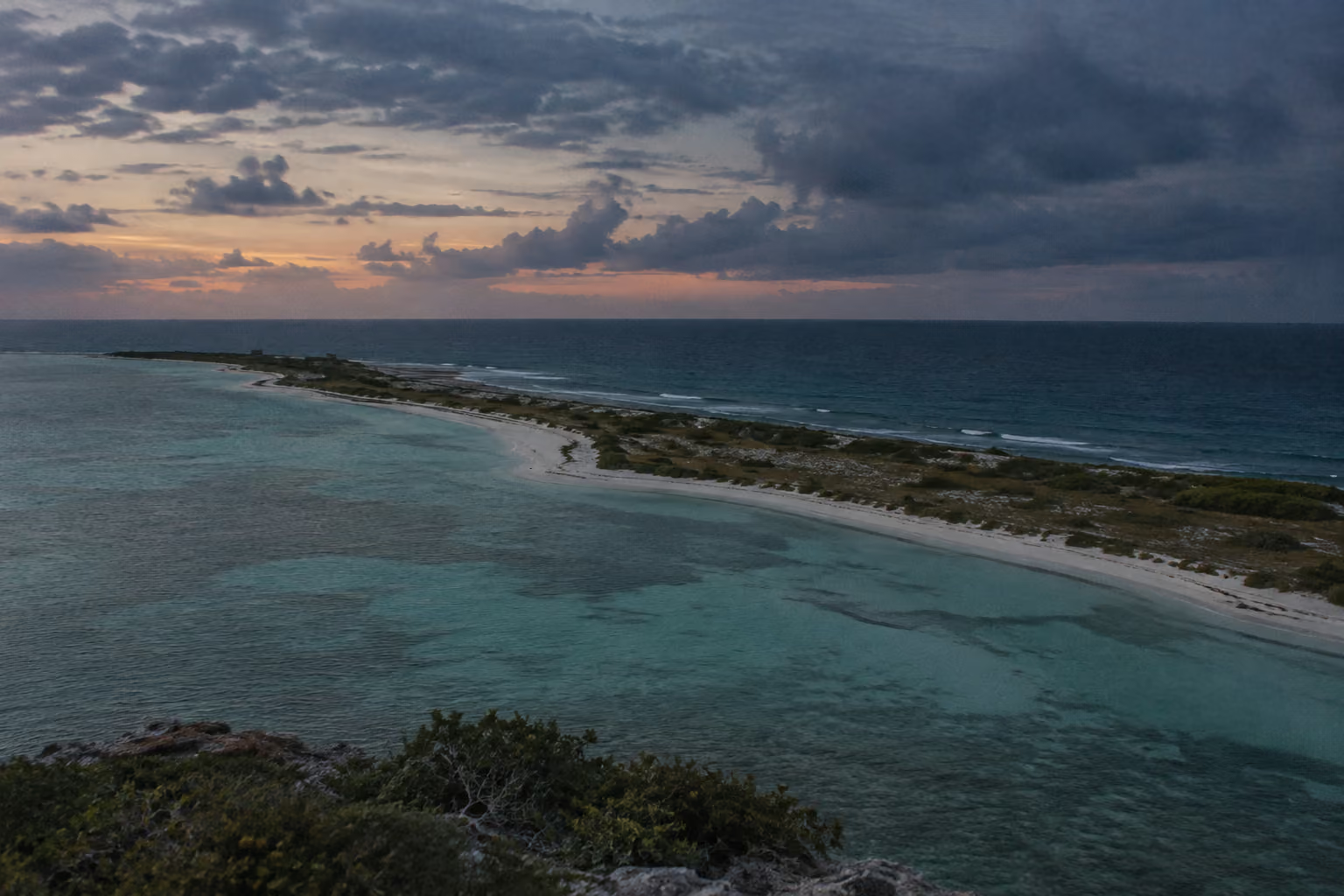
Dry Tortugas National Park sits about 70 miles (113 km) west of Key West, and you can reach it only by boat or seaplane (14). There is no bridge, no road and no walk-in entrance, so transport is the first decision you make. For most people that means choosing between the Yankee Freedom ferry, a Key West seaplane or a private boat, and the right choice depends on one question: are you staying overnight?
✓ Pros
- A compact visit combines a substantial historic fort with accessible snorkeling.
- The island feels different once the day boats leave, especially for campers.
- Choosing among ferry, plane and private boat lets visitors prioritize time, flexibility or overnight access.
✗ Cons
- Reaching the park takes a dedicated day and leaves little room for schedule changes.
- Weather can affect access, and the crossing is exposed open water.
- Camping requires advance transport coordination and carrying in everything you need.
Dry Tortugas National Park: Location, Access, and Hours
Dry Tortugas National Park covers a 100-square-mile (259 km²) area that is mostly open water, with seven small islands about 70 miles (113 km) west of Key West (14), and is part of Monroe County, Florida (16). Less than 1% of the park is dry ground (8), so plan your visit around time in the water. Key West is the first leg: a Florida Keys road trip from Miami ends where the ferry and seaplanes leave.
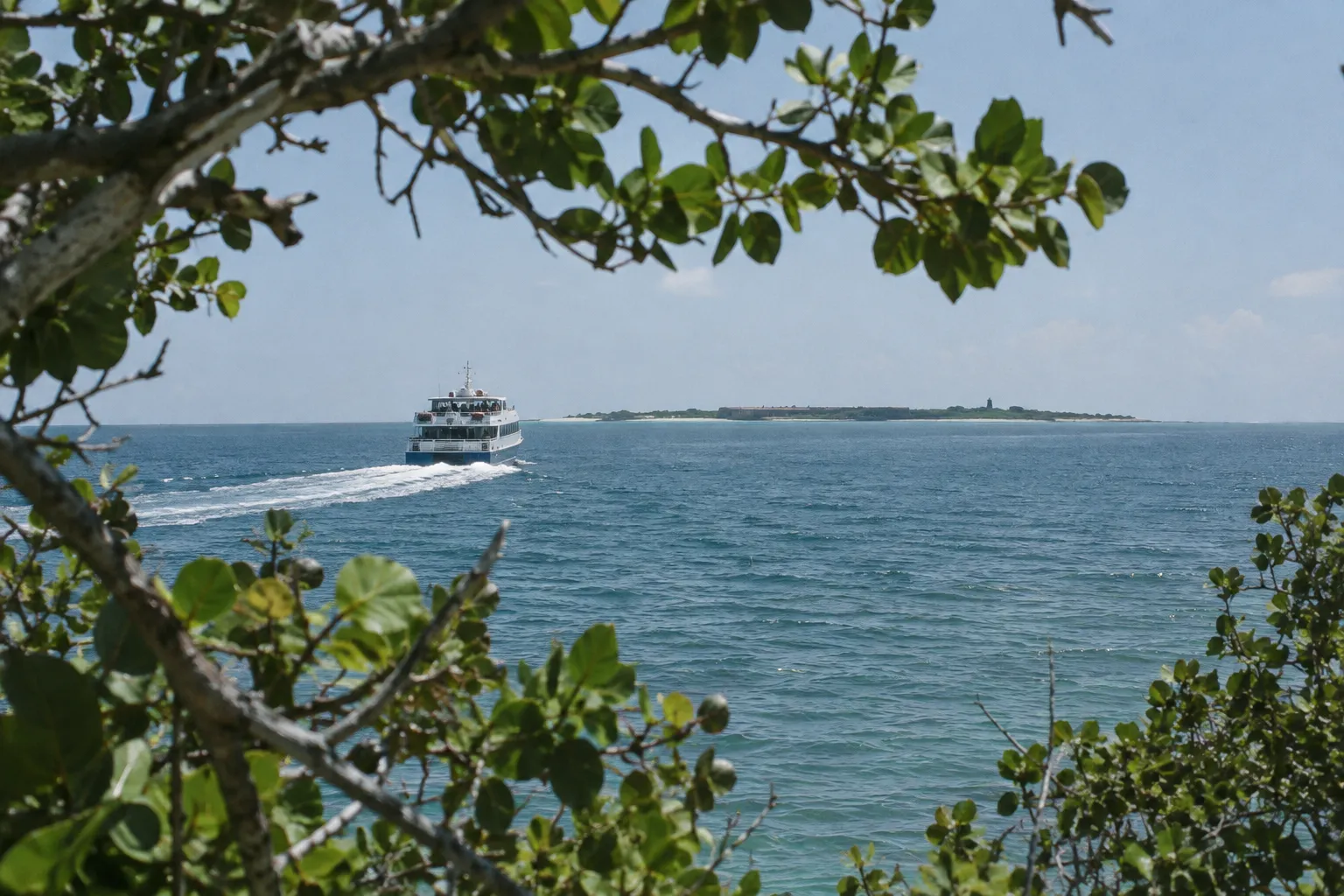
The seven keys are Garden, Loggerhead, Bush, Long, East, Hospital and Middle (13). Almost every visitor sees only one of them. Ferry and seaplane passengers travel directly from Key West to Garden Key (3), the second-largest island at about 14 acres (5.7 ha). Garden Key holds park headquarters, the visitor center, the campground and Fort Jefferson (3). Neither the ferry nor the seaplane takes you anywhere else in the park. Because of travel time and limited schedules, day visitors generally don’t have time to reach Loggerhead Key (2).
Fort Jefferson is open from sunrise to sunset (1). There are no services in the park, so you bring everything you need and pack all garbage back out (12). The NPS safety page lists no public phones and no snack bars, and asks you to bring sunscreen, protective clothing and any medication, especially for motion sickness, because none of it can be bought on the island (9).
Best Time to Visit
The NPS flags the winter season and winter holidays as the busiest period for ferry camping space (1). If you want an easier booking, avoid the winter holidays and the busier winter season (1). The crossing is open water whatever the month, and the park says it is critical to stay informed of the weather year-round (11).
Fort Jefferson: History of the Unfinished Fort
Fort Jefferson was built between 1846 and 1875 and never completed (13), yet it contains more than 16 million bricks (14). The NPS describes it as the largest masonry fort in the western hemisphere (14). You see that scale as soon as the boat or plane rounds Garden Key: hexagonal brick walls rising straight out of turquoise shallows, ringed by a moat.
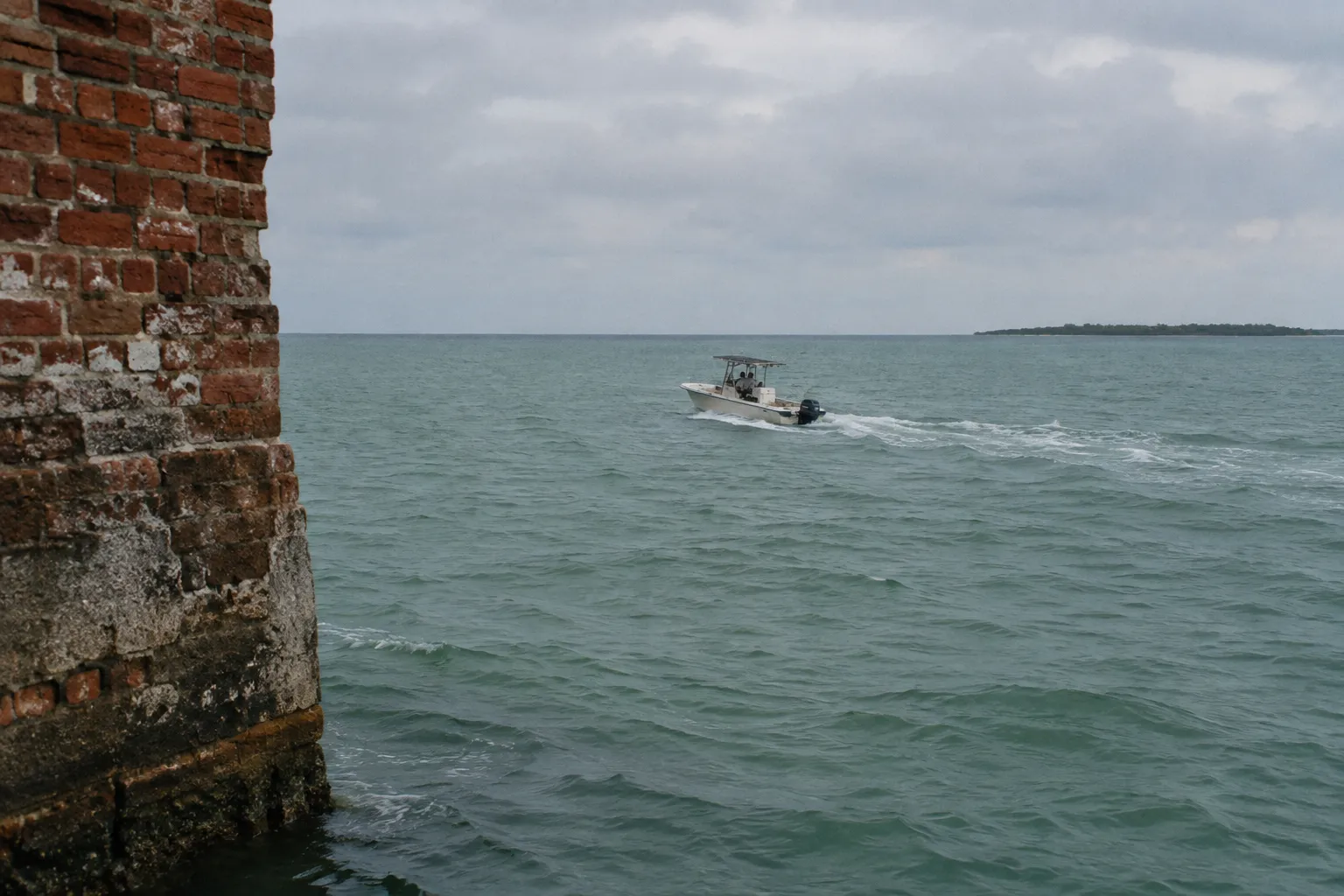
The location explains why anyone would build something that size so far from land. The Dry Tortugas sit on the edge of the main shipping channel between the Gulf, the western Caribbean and the Atlantic Ocean, and Spanish explorers and merchants used that channel long before the fort existed (13). Whoever controlled the anchorage controlled a chokepoint for Gulf Coast shipping.
What happened after construction is the more interesting part of the story. The fort never reached its intended form, but the unfinished brickwork became a protected site anyway. President Franklin D. Roosevelt designated Fort Jefferson National Monument under the Antiquities Act on January 4, 1935 (13). The monument was expanded in 1983 and re-designated Dry Tortugas National Park by an act of Congress on October 26, 1992 (13). The park was established to protect the island and marine ecosystems, preserve Fort Jefferson and submerged cultural resources such as shipwrecks, and allow regulated public access (13).
What to Prioritize on Garden Key
Not every part of a Garden Key visit deserves equal time, especially with a 2.5-hour seaplane window.
Worth the detour:
- The fort walls and casemates. The arched brick galleries are the reason the park exists, and they sit steps from the dock.
- The narrated fort tour. Ferry passengers get a 45-minute guided tour of Fort Jefferson (6). Take it before you snorkel, since the history makes the walls more than a backdrop.
- Snorkeling along the moat wall. Covered below; it’s the best use of a short visit after the fort.
Skip if short on time:
- Loggerhead Key. Day visitors generally can’t fit it in (2). It is realistic only for campers with a kayak or private boaters.
- Beach lounging. The swim beaches are pleasant, but if you only have a few hours, the water off the moat wall is a better use of them.
Yankee Freedom Ferry vs. Seaplane: Getting There from Key West
The seaplane’s full-day trip gives you at least 6.5 hours on Garden Key versus about 4.5 hours on the Yankee Freedom ferry day trip, but only the ferry carries campers (5)(6)(1).
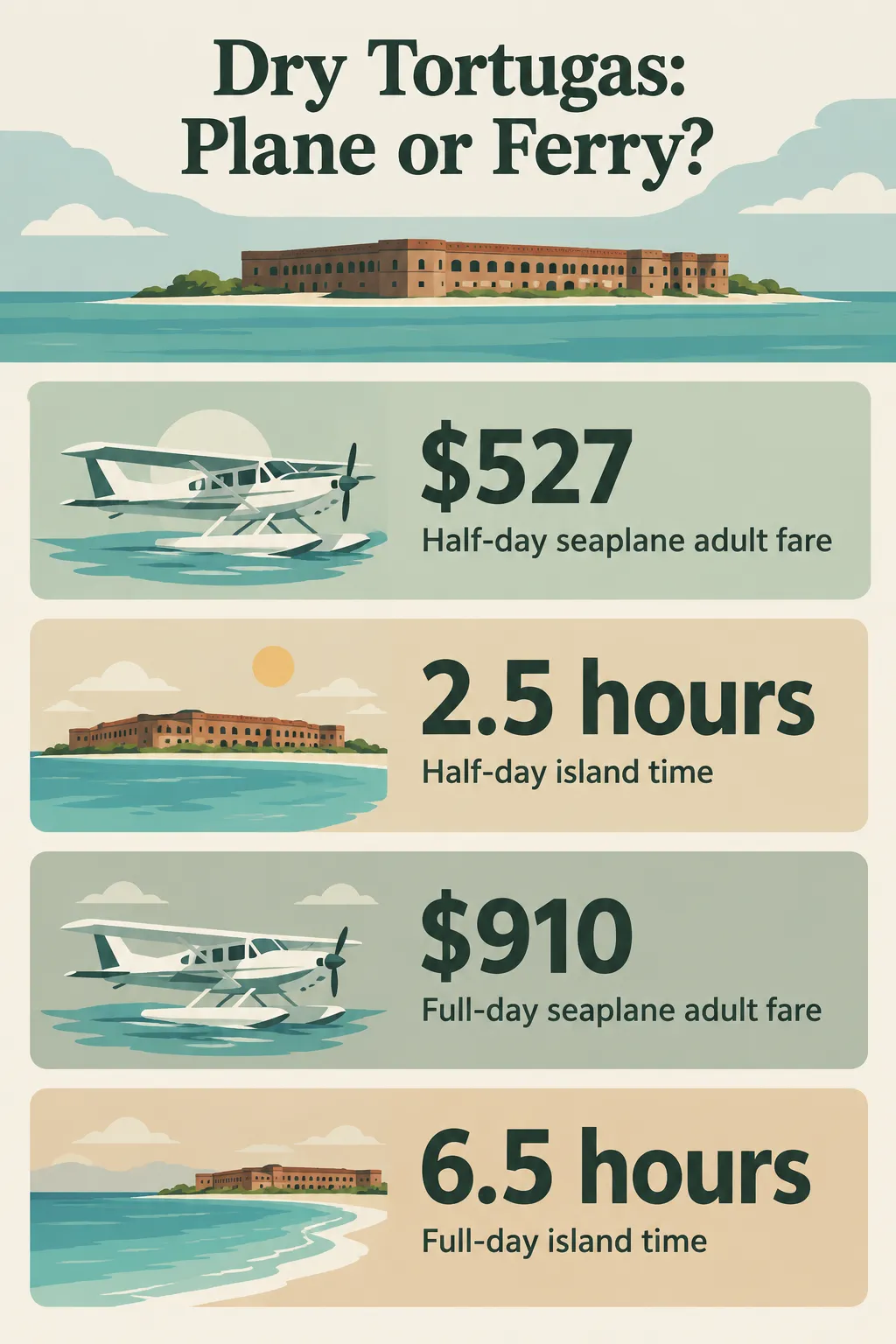 Dry Tortugas seaplane trips cost $527 per adult for at least 2.5 hours on the island or $910 for at least 6.5 hours (fares as of November 2026, park entrance fee extra), while the ferry provides about 4.5 hours in the park.
What a price comparison misses: the seaplane cannot take you camping. The NPS states that the seaplane does not transport campers (1), and camping transport is limited to private vessels, the commercial ferry and permitted tour guides (1). If an overnight is in your plan, the seaplane is off the table before you compare prices.
Here is how the four options compare:
- Yankee Freedom ferry: a full-day trip from 7 a.m. check-in to 5:30 p.m. return as of November 2026 (15), with about 4.5 hours in the park (6). It is the only scheduled option that carries campers, with limited space (4). Yankee Freedom day trips start at $260 and camping trips at $265 as of November 2026 (17), with the park entrance fee included in the day-trip fare (15).
- Seaplane, half-day: $527 per adult as of November 2026, just under 4 hours total, with at least 2.5 hours on the island (5). No campers.
- Seaplane, full-day: $910 per adult as of November 2026, just under 8 hours total, with at least 6.5 hours on the island (5). No campers.
- Private boat: your own schedule and the only realistic way to see more than Garden Key (2). It can carry camping gear, but dock and slip space is constrained (3).
Yankee Freedom Ferry Day-Trip Itinerary
The operator’s published schedule, as of November 2026 (15):
- Check in at 7 a.m. in Key West.
- Depart at 8 a.m.
- Arrive at Fort Jefferson at 10:30 a.m.
- Return to Key West at 5:30 p.m.
That leaves no room for Old Town on the same day, so keep what to do in Key West itself for another day of your stay.
The boat is a high-speed aluminum catamaran (6). The day-trip ticket includes a breakfast snack, a box lunch, snorkeling gear, the park entrance fee and the 45-minute fort tour (15). That bundle matters: you don’t need to rent snorkel gear in Key West or pack lunch. The operator recommends sun protection, sturdy walking shoes and a change of clothes (15). Add motion-sickness medication if you need it, because the crossing is open sea and you can’t buy any on the island (9).
Booking mechanics: the NPS strongly recommends reservations, which you can make online through the operator or by calling 800-634-0939 (6). Camping spots on the ferry sell out months in advance (1).
Key West Seaplane Half-Day and Full-Day Options
Key West Seaplane Adventures, which operates as Key West Seaplane Charters, flies half-day and full-day trips, each with about 40 minutes of flight time each way (5). The operator describes itself as the only seaplane service permitted in the park (5).
The half-day trip costs $527 per adult as of November 2026, with children 12 and under at $421.60 and children under 2 free (5). The $15 park entrance fee, owed for everyone 16 and older, comes on top of the seaplane fare (5)(2). It runs just under 4 hours and gives you at least 2.5 hours at Fort Jefferson, with morning and afternoon departures (5). The full-day trip costs $910 per adult as of November 2026, with children 12 and under at $728 (5). It runs just under 8 hours, gives you at least 6.5 hours on the island, and departs in the morning only (5).
Pick the half-day only if about 2.5 hours on Garden Key is enough. That covers a fort walk and one snorkel session, not both done properly. The full-day price buys island time, not a different flight: you get the same 40-minute crossing either way (5). The full-day fare is $910 against $527 per adult, and the operator says the difference comes from holding both a morning and an afternoon seat for you (5).
Snorkeling at Garden Key: Where to Go and What to Avoid
The NPS recommends snorkeling at the designated area near the Garden Key campground, along the outside of the moat wall, or around the pilings of the south coaling dock (9). Those three spots cover nearly every visitor’s snorkel, and they’re all within a short walk of the dock. As of November 2026, though, the NPS lists sections of the moat wall closed for repairs after hurricanes Helene and Milton until winter 2026, and the South Coaling Dock ruins as closed, so follow posted signs and ask a ranger which stretches are open (11)(3).
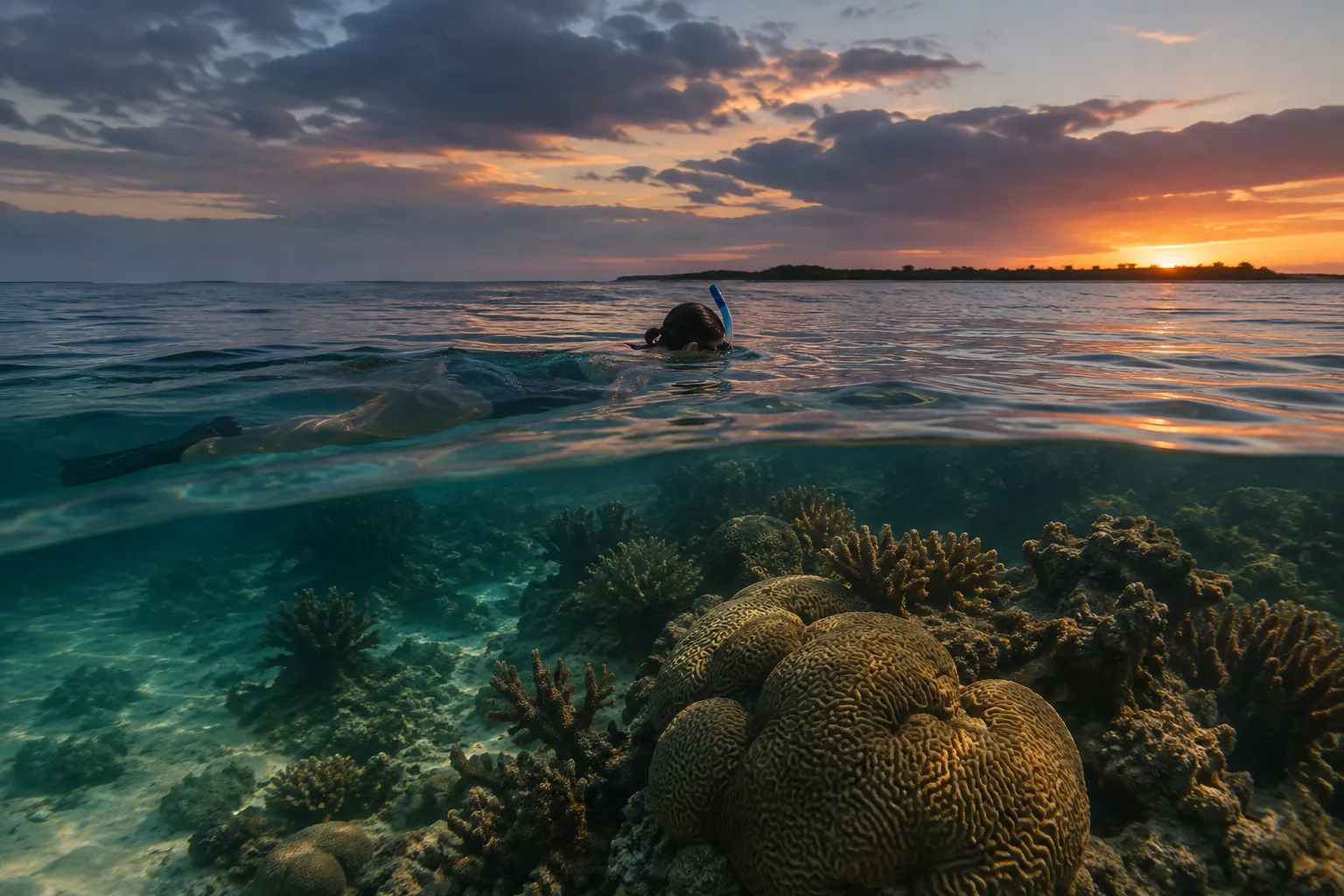
The reason to bother is the reef. The park sits at the southwest corner of the Florida Keys reef system, the third-largest reef system in the world (8). An easterly flowing current just south of the park brings more marine life, often in larger sizes, than you’ll see elsewhere in the Keys (8). Garden Key’s North, South and East beaches have a gradual slope and easy entry, which suits beginners (8).
Rules that matter:
- No lifeguards are on duty. You swim at your own risk (9).
- No swimming or snorkeling inside the moat, and no diving from the walls (9)(8).
- Display an approved dive flag at all times when snorkeling outside the designated area (9).
- Never snorkel alone. The NPS asks you to use the buddy system and warns of strong current (9)(8).
- If you need to stand up, stand on sand. Standing on coral or seagrass can kill it (9).
- All coral, living and dead, is protected, as are shipwrecks and historic artifacts (9).
Check that your mask and fins fit properly before you get in (9). On a ferry trip, test the included gear on the boat so you aren’t adjusting straps in the current.
If you’re camping and have a kayak, the designated swim area on the northwest side of Loggerhead Key holds a coral formation called Little Africa, named for its shape seen from above (8). It’s worth the paddle for campers and out of reach for day-trippers.
As of November 2026, most of Bush Key has reopened, but a small area on its north side, all of Long Key and all vegetation stay closed to protect nesting frigatebirds (11).
Dry Tortugas Camping: Permits, Campsites, and Booking Ahead
Dry Tortugas camping happens at the primitive Garden Key campground, which has eight regular sites for up to six people each, plus one reservable group site for 10 to 20 people (1). You can stay overnight in the park, but you have to plan for it. The hard part is transport, not the campsite.
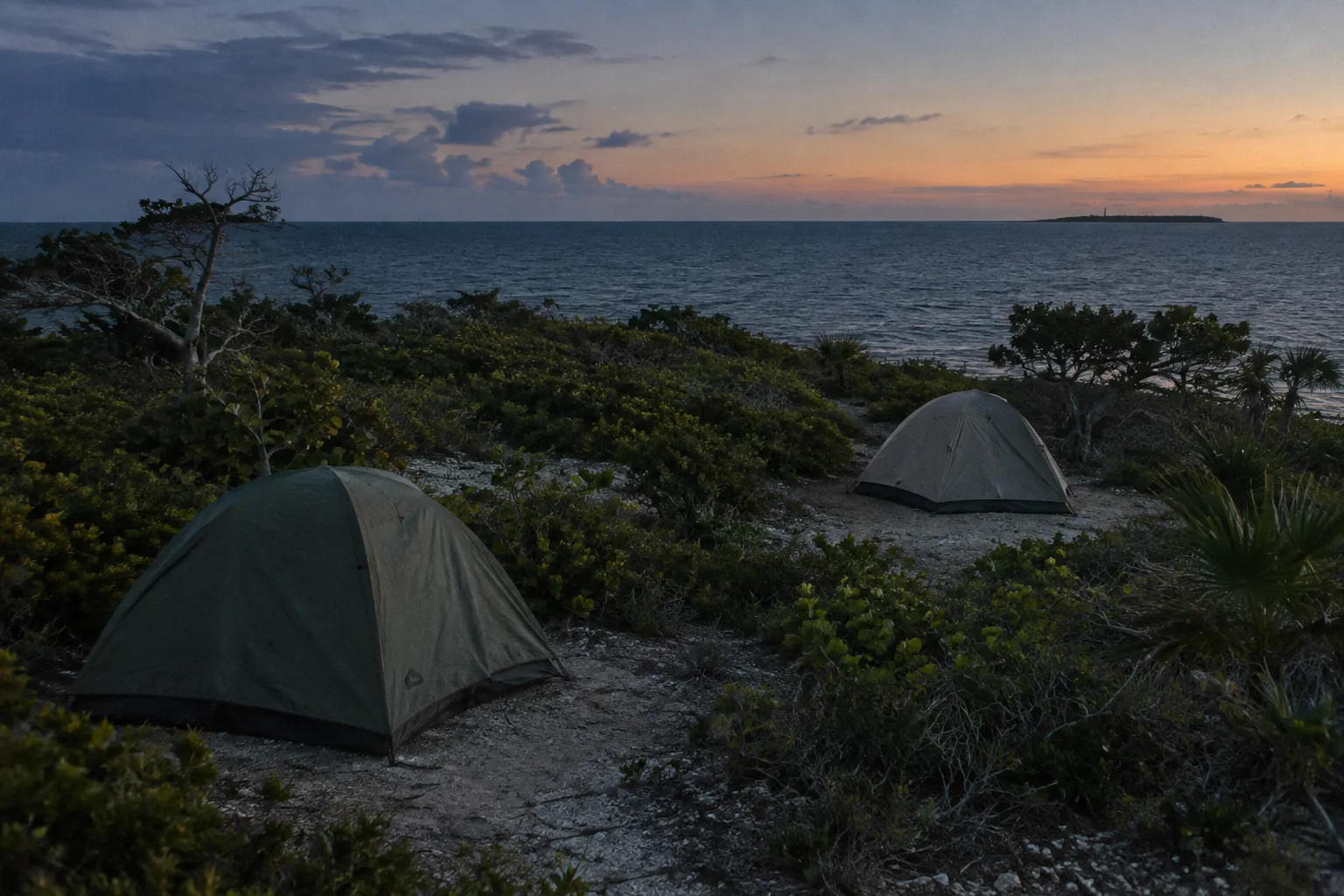
The campground is primitive. Bring a tent, food, water and every supply you need, and pack out all your trash (1). Ferry campers cannot bring compressed gas canisters aboard, so plan on match-light charcoal for the campsite grills (1). There is no public Wi-Fi, cellular service or electric hook-up (1), and there are no public phones (9), so download maps, tide charts and anything else you need before leaving Key West. The NPS also highlights the stargazing, sunsets and snorkeling (1). Campers get the island after the last boat and plane leave.
Individual Campsites (First-Come, First-Served)
Individual campsites cannot be reserved; they are first-come, first-served when you arrive at Garden Key (4). As of November 2026, fees are $15 per site per night, paid on Garden Key through the Recreation.gov Scan & Pay app, so set up the app before you leave (1).
The lack of reservations sounds risky, but the NPS says it does not turn away campers and keeps an overflow area for when the eight sites fill (4). Your real constraint comes earlier: getting a camping seat on the boat.
Camping passage is booked directly through the Yankee Freedom ferry, not the park, and those limited camper spots sell out months in advance, especially around winter holidays (1)(4). Boat, kayak and canoe rentals are not available in the park, so a kayak has to come with you through the ferry’s gear arrangements (2).
A kayak is the main upgrade to a camping trip, since it is the only way campers reach nearby snorkel sites and islands beyond Garden Key (2).
Group Site Reservations (10 to 20 People)
The Garden Key group site serves parties of 10 to 20 people and must be reserved in advance with the park (1)(4). Parties of 10 or more fill out the park’s group campsite reservation form ahead of time (4).
That reservation covers only the campsite. If your group is taking the ferry, you still need to book everyone’s camping passage through the Yankee Freedom ferry, and the ferry’s limited camper capacity applies to groups too (4): the NPS puts it at 10 camping passengers per day (1). Group activities of 20 or more fall under special use permits, a separate process (4).
How to Plan a Dry Tortugas Camping Trip
Coordinate the campsite, transport and gear before traveling to Garden Key.
- 1
Choose your campsite type
Use the first-come individual sites for a smaller party, or request the Garden Key group site in advance for 10 to 20 people.
- 2
Secure transport before relying on a campsite
For ferry travel, book camping passage with the Yankee Freedom; limited camper capacity can sell out months ahead.
- 3
Confirm what you can bring
Ask the ferry directly about gear limits and arrange any kayak through the operator before departure.
- 4
Prepare for a primitive stay
Bring food, water and camping supplies, pack out your trash, and download maps and other information before leaving Key West.
Getting There by Private Boat: What’s Still Limited After Hurricane Ian
Private boat access to Garden Key is extremely limited because some docks and slips remain closed after Hurricane Ian damage (3). Bringing your own vessel still offers the most freedom in the park. It’s the only practical way to explore beyond Garden Key (2), but don’t count on tying up at the fort.
Visitor boat slips are first-come, first-served and intended for unloading camping gear or taking a walking tour of the fort (12). As of November 2026, though, the NPS lists the finger piers and slips, the dinghy beach next to them and the South Coaling Dock ruins as closed, with limited space for personal vessels east of the Yankee Freedom pier (3), so plan to anchor and shuttle in. Private boaters should buy a digital entrance pass in advance on Recreation.gov for everyone age 16 and older (2). Boats only transiting the park without stopping don’t need one (2). Privately owned seaplanes require a special use permit (4).
Before you leave Key West:
- Check the NPS Current Conditions page for alerts close to your departure date (11). As of November 2026, they include an extinguished Garden Key Harbor Light, so do not count on it after dark (11).
- Pull the offshore forecast and the tide and current forecast. The park stresses weather monitoring for everyone, and especially for private vessels (11)(12).
- If you bring a dog, keep it leashed. Bait boxes on the island contain rodenticide as part of an ongoing rat management plan (11).
The trip covers more than 68 miles (109 km) of open sea, and it’s a long way to the hospital (9). Prepare for that before you cast off.
Frequently Asked Questions
- Do you need a passport to visit Dry Tortugas?
- No passport is needed for a trip from Key West; Dry Tortugas is within the United States, so the journey does not involve an international border crossing.
- Is Dry Tortugas worth the trip if you do not snorkel?
- It can be, if Fort Jefferson is your priority; travelers who do not plan to swim should decide whether the fort and the long crossing justify a full travel day.
- Can you stay overnight in Dry Tortugas National Park?
- Yes, but plan transport and campsite arrangements as separate bookings; the seaplane does not carry campers, and individual sites are assigned on arrival.
- Can bad weather cancel a Dry Tortugas trip?
- Yes. Open-water conditions can affect travel, so check the operator and the park's current conditions close to departure rather than treating a reservation as a weather guarantee.
- Can you visit Loggerhead Key on a day trip?
- Usually not on a standard ferry or seaplane day trip; reaching it is more realistic for campers with a kayak or visitors traveling by private boat.
- What should visitors arrange before going offline at the park?
- Download maps and trip information and tell someone your plans before leaving Key West, since you cannot rely on connectivity at Garden Key.