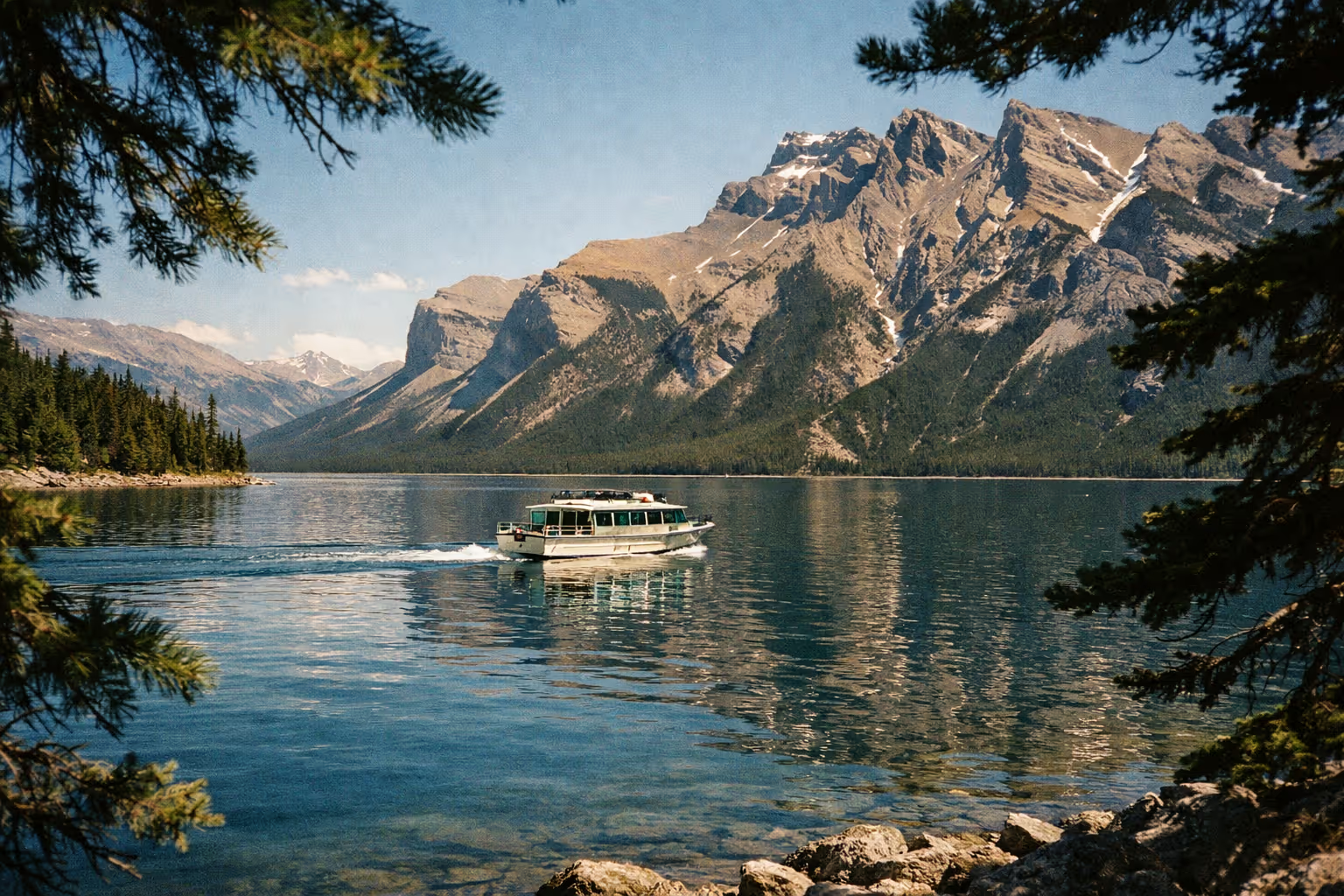
Banff is a working mountain town sitting inside Banff National Park, not next to it, which changes how you plan a trip here. When considering things to do in Banff, most activities cluster within 20 to 30 minutes of the town centre, but the distances are deceptive and the summer crowds are real. Calgary International Airport is about 130 km away, roughly a 90-minute drive via the Trans-Canada Highway in good conditions (18); the airport sits on the far side of the city, so the run from downtown Calgary is marginally shorter. This guide covers the headline experiences and the logistics that make or break them: timing, seasonal windows, and the recent changes most guides skip.
The core tension is simple. The scenery is genuinely world-class and reachable without technical hiking, but the same attractions everyone wants to see (the gondola, Johnston Canyon, Moraine Lake) become bottlenecks in July and August. Plan around the crowds and the whole park opens up. Ignore them and you’ll spend your PTO hunting for parking.
Is Banff Worth the Hype? Pros and Cons
Banff delivers mountain scenery you can access without ropes or altitude training, but it demands planning around crowds and seasonal closures to enjoy properly.
On the plus side: the scenery is legitimately among the best in North America, and much of it is reachable by gondola, boat, or short walk. The programming runs year-round, so skiing, festivals, hot springs, and the gondola fill every season. Many top attractions sit 20 to 30 minutes from Banff Avenue, some walkable. The range of effort levels is wide, from a zero-effort gondola ride to Via Ferrata routes. Newer evening products like Nightrise add options beyond daytime hiking.
The downsides are equally concrete. Peak summer brings serious congestion at Johnston Canyon, Moraine Lake, and the gondola, with parking and trail crowding to match. On relative cost: the gondola is the priciest single ticket of the main Banff attractions, the Lake Minnewanka cruise sits in the mid-range, and the hot springs are the most affordable ticketed option, though a Parks Canada pass is required on top of all of them (13). The Lake Minnewanka cruise runs only from early May to mid-October (14). Distances to outlying stops like the Columbia Icefield are longer than a map suggests. And the hot springs came back from a seven-month shutdown in spring 2026, so if you are reading an older guide, check the current hours rather than the closure notice (20).
✓ Pros
- Genuinely world-class mountain scenery accessible without technical hiking
- Year-round programming: skiing, festivals, hot springs, and gondola rides
- Many top attractions within 20-30 minutes of town centre, some walkable
- Wide range of effort levels from gondola rides to Via Ferrata
- New evening experiences like Nightrise add options beyond hiking
✗ Cons
- Peak summer crowds cause congestion and parking issues
- Banff Upper Hot Springs runs afternoon-to-evening hours only, 1 p.m. to 10 p.m.
- Lake Minnewanka cruise operates only from early May to mid-October
- Distances to outlying attractions are longer than they appear
- Parks Canada entry fees add to overall costs
Things to Do in Banff: The Short Version
The core things to do in Banff break down into six categories: a gondola ride up Sulphur Mountain, canyon and mountain hikes, a lake cruise, a hot springs soak, scenic wildlife drives, and town-based walks, plus a full seasonal events calendar.
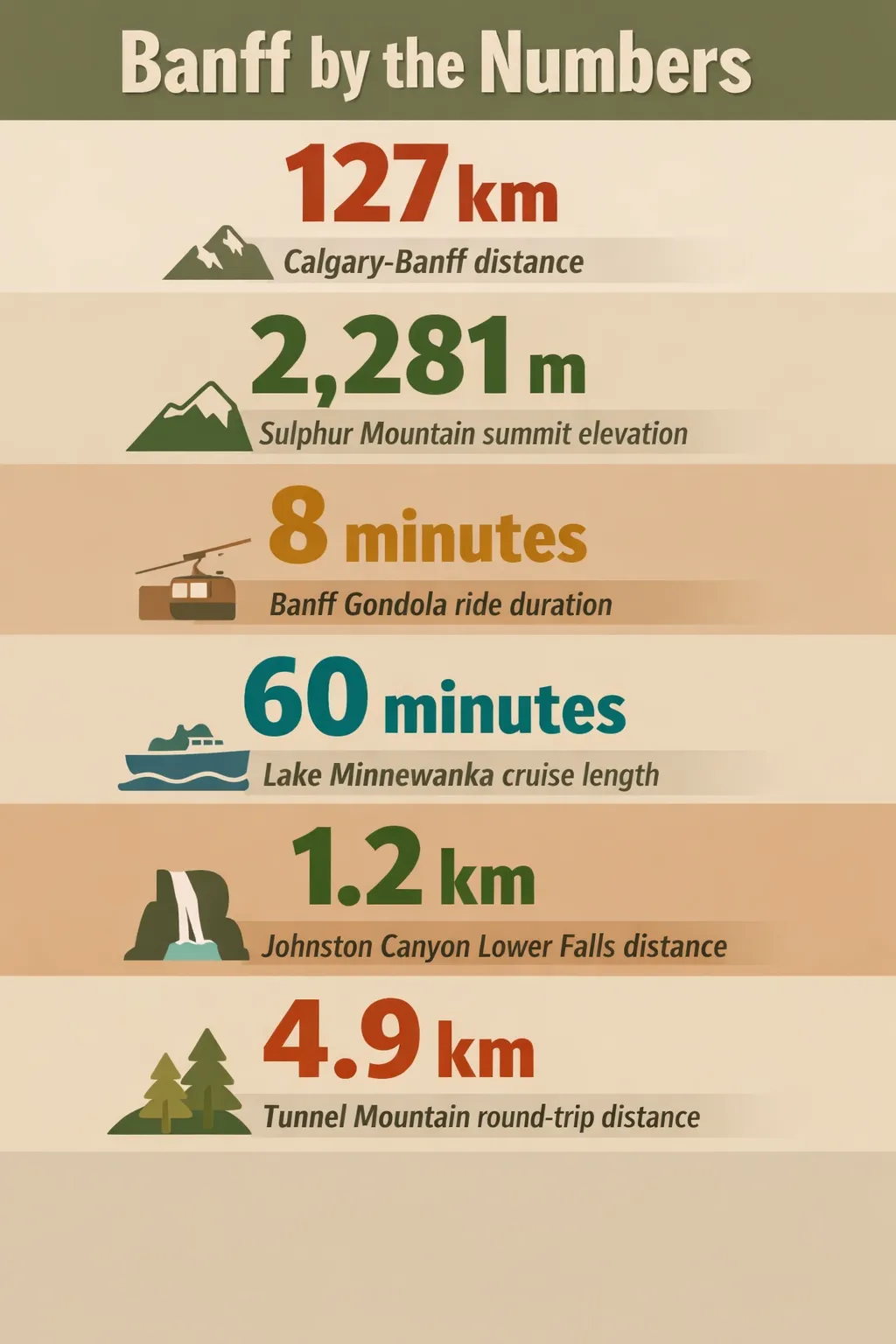 Banff by the numbers: 127 km Calgary-Banff; Sulphur Mountain 2,281 m; Gondola ride 8 minutes; Minnewanka cruise 60 minutes; Johnston Canyon Lower Falls 1.2 km; Tunnel Mountain 4.9 km.
The range runs from zero effort to full commitment. You can ride the Banff Gondola to 2,281 m without lifting a boot, or book a half-day Via Ferrata route near the Icefields Parkway. In between sit the crowd-pleasers: Johnston Canyon’s catwalks, the Lake Minnewanka cruise, Tunnel Mountain, and the Bow River walk to Bow Falls.
This guide focuses on experiences within or close to Banff town, not full Icefields Parkway itineraries, though we cover the most common day trips toward Lake Louise and the Columbia Icefield near the end. Summer is peak season for full access, but every season has a specific draw: shoulder-season quiet in May and September, winter festivals and skiing from December through March.
A quick note on effort and logistics. The gondola, Lake Minnewanka cruise, and hot springs are all low-effort, but you need wheels of some kind to reach them, whether that’s a car or a Roam Transit bus. Johnston Canyon and Tunnel Mountain are moderate hikes. The Bow River walk needs nothing but shoes. The cruise is the only major attraction here that shuts entirely for the off-season; most of the rest run year-round with seasonal caveats. Below, each gets the detail it deserves, ranked by what’s worth prioritizing versus what you can skip if you’re short on time.
Riding the Banff Gondola: What to Expect at the Summit
The Banff Gondola climbs to the summit of Sulphur Mountain at about 2,281 m (7,486 ft) in an 8-minute ride, no hiking required.
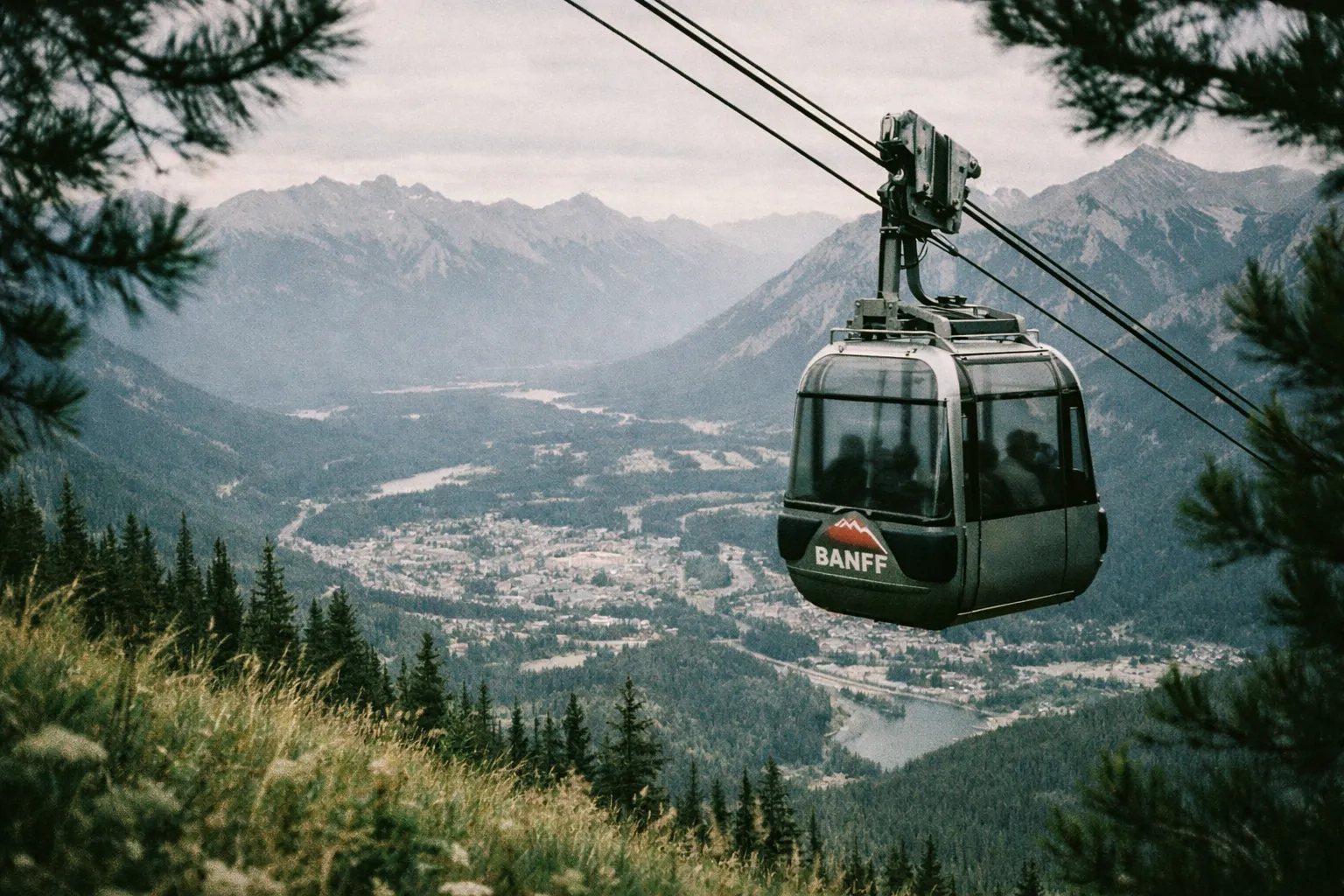
At the top, a summit boardwalk leads along the ridge to the 1903 weather station, one of the oldest high-altitude weather stations in Canada. The walk is short and worth doing: it gets you away from the immediate summit building and its crowds, with wide ridge views in both directions. Plan 2 to 3 hours total, including transport from town, the ride up and down, the boardwalk, and the interpretive centre.
The base station sits at the foot of Sulphur Mountain, reached by vehicle or shuttle from Banff town. A gondola ticket is required. Dress in layers regardless of the forecast in town, because summit temperatures run significantly colder and the ridge is exposed to wind.
The crowd strategy matters here. Midday in summer means queues at the base and a packed summit deck. Arrive near opening, or flip the whole thing and book the evening Nightrise experience instead.
Nightrise: The After-Dark Summit Experience
Nightrise is a ticketed evening experience at the gondola summit, co-created with the Stoney Nakoda Nation, layering multimedia light and sound installations focused on Indigenous stories across the summit after dark (2).
Worth considering over a standard daytime ride for three reasons: the crowds are thinner, the atmosphere is entirely different, and the cultural dimension gives the visit more depth than a viewpoint photo op. It works especially well in winter, when darkness falls early and you don’t have to stay up late for it. Check the current schedule before you plan around it, because it runs on set evenings, not nightly.
The Lake Minnewanka Cruise: Banff’s Best Easy Water Day
The Lake Minnewanka cruise season runs from May 8 to October 12 in 2026, weather permitting (14). This is a hard seasonal cutoff, not a soft guideline.
Pick your boat carefully, because the two options are not the same trip. The Classic Cruise is a one-hour interpretive loop, heavy on the stories of the drowned resort village of Minnewanka Landing (15). The longer Explorer Cruise is the one that reaches Devil’s Gap, the glacial corridor at the far east end of the lake near the Ghost Lakes, where the captain cuts the engine so you can take in the amphitheatre of peaks around you (16). If Devil’s Gap is why you’re booking, the one-hour ticket won’t get you there.
Lake Minnewanka sits roughly 10 to 15 km from Banff town by road, reached via the Lake Minnewanka Scenic Drive, close enough for a half-day outing including transit. The cruise is the most accessible way to experience the lake without committing to a long shoreline hike, and the scale of the surrounding landscape reads very differently from the water than it does from the parking lot. That’s the actual selling point here, not the boat itself.
Booking ahead is strongly recommended in peak summer. Mid-week and early-morning departures are noticeably less crowded than weekend afternoons. Factor in the drive from town on top of your time afloat.
The common mistake is assuming the cruise runs year-round. It does not. If your trip falls outside the May-to-October window, the lake is still worth a drive for the shoreline and picnic areas, but the boat won’t be running.
Johnston Canyon: Waterfalls, Catwalks, and Crowd Reality
Johnston Canyon is accessed from the Bow Valley Parkway (Highway 1A), about 25 minutes’ drive west of Banff town, and reachable in summer by the Roam Transit bus for those without a car.
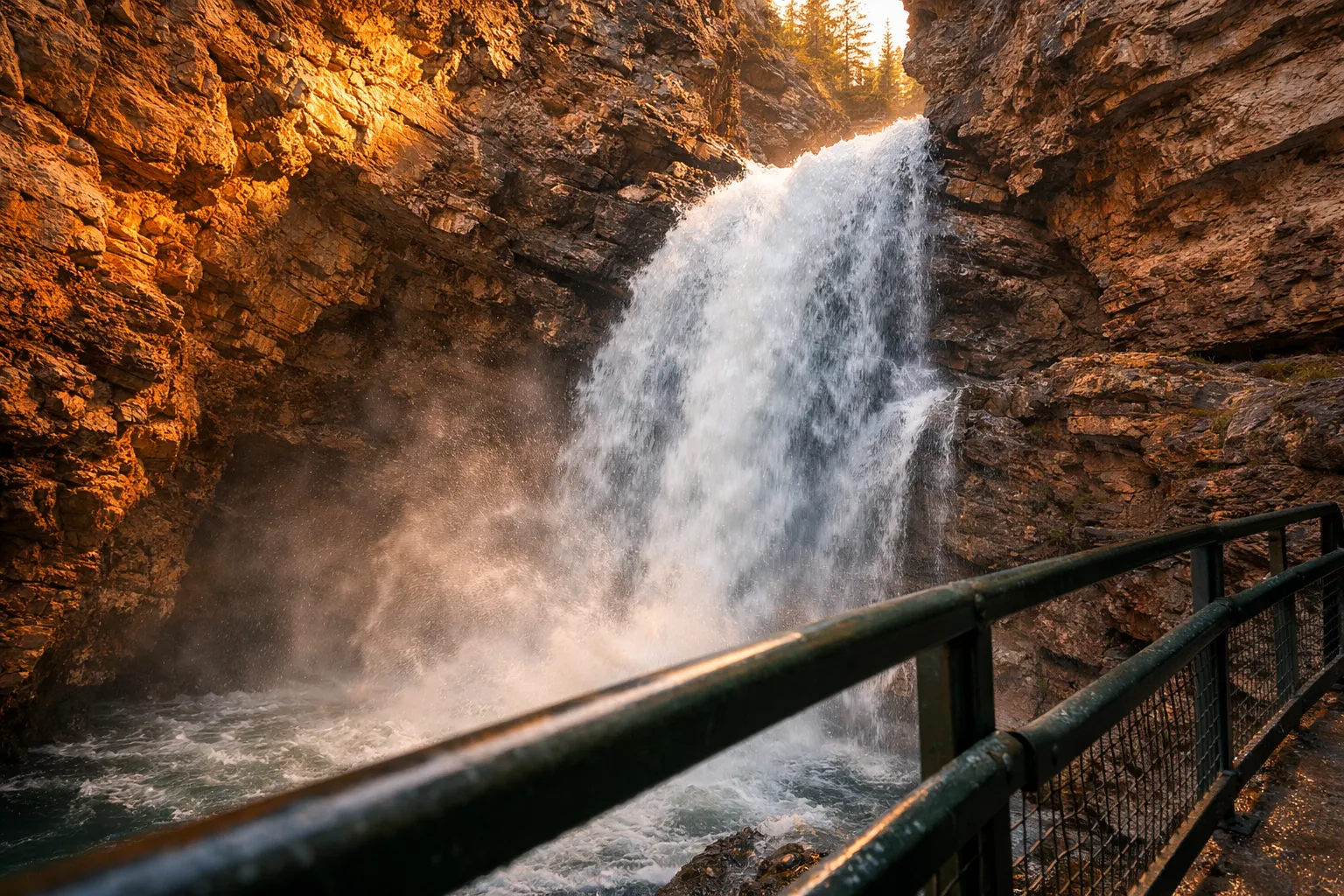
The trail is not a standard dirt path. It follows a narrow canyon on metal catwalks bolted to the cliff walls, which turn slippery when wet or icy, so footwear with grip matters more here than on most Banff trails. There are two main targets: the Lower Falls at about 1.2 km one way, and the Upper Falls at about 2.5 km one way from the trailhead. Most visitors do both as a single out-and-back, taking 2 to 3 hours at a reasonable pace including stops.
Now the honest part. Johnston Canyon is one of the most visited trails in the Canadian Rockies. Midday in July and August means narrow catwalks packed shoulder to shoulder: the scenery holds up, but the experience does not. Visit in early morning or late afternoon, or in the shoulder months of May, June, or September, and it’s a completely different trail. Parking fills fast; arriving before 8 a.m. or taking the bus is the practical move.
How to Plan a Johnston Canyon Visit Without the Crowds
2-3 hoursSteps to avoid peak congestion and enjoy Johnston Canyon safely
- 1
Check the Bow Valley Parkway travel restriction
From March 1 to June 25, the 17 km stretch past Johnston Canyon is closed to travel between 8 p.m. and 8 a.m. for wildlife. Daytime driving is unaffected.
- 2
Arrive early or late
Get to the trailhead before 8 a.m. or after 4 p.m. to avoid peak crowds.
- 3
Start with Lower Falls
Hike 1.2 km each way to the Lower Falls before crowds build.
- 4
Continue to Upper Falls if able
Proceed 2.5 km each way to Upper Falls if time and energy allow.
- 5
Return the same way
No loop option exists; pace yourself for the full out-and-back.
- 6
Wear proper footwear
Metal catwalks can be slippery when wet; shoes with grip are essential.
Bow Valley Parkway: Wildlife, Viewpoints, and the Drive Itself
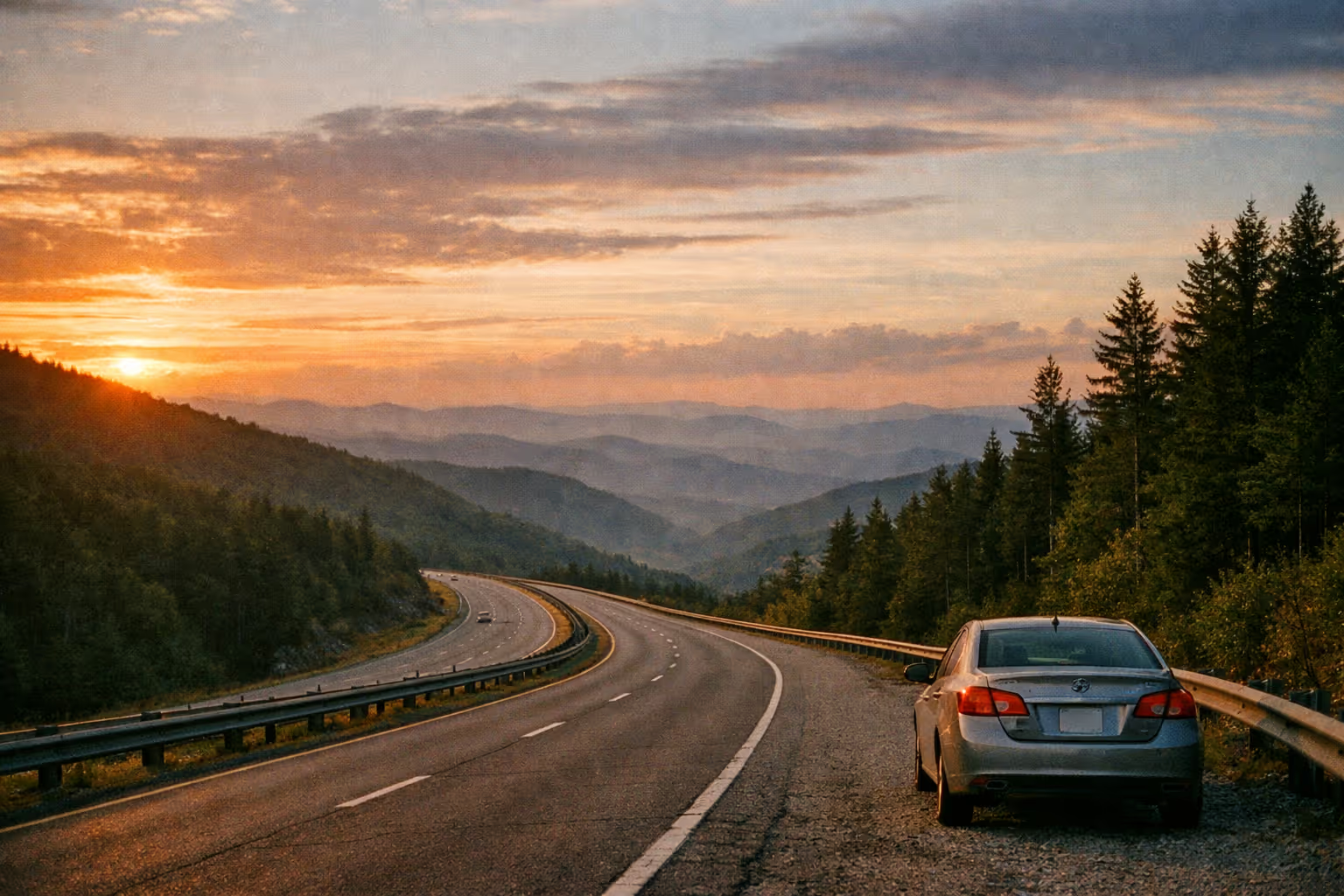
The Bow Valley Parkway (Highway 1A) is a 48 km paved road running between Banff and Lake Louise, parallel to the Trans-Canada but slower, quieter, and far better for wildlife and scenery (11).
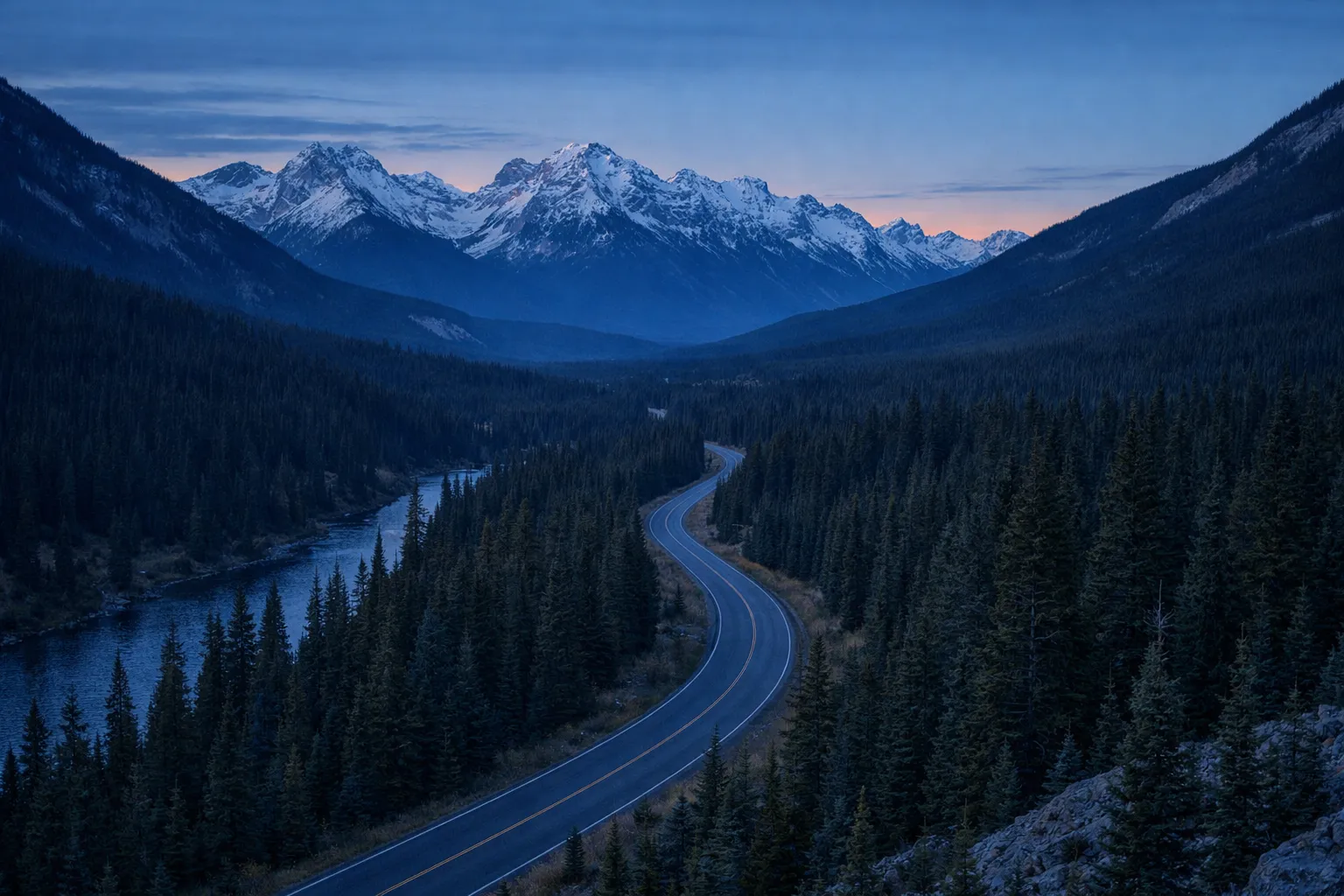
Bow Valley Parkway wildlife viewing is the main reason to take this road over the highway. Elk, wolves, cougars, and both grizzly and black bears live in the park, and the montane corridor this road runs through is prime habitat (11). The speed limit is the 60 km/h that Parks Canada applies to secondary roads unless otherwise posted (12), and there is a firm seasonal rule on top of it: from March 1 to June 25, travel is not permitted between 8 p.m. and 8 a.m. on the 17 km section from Johnston Canyon Campground to the Fireside Picnic Area, to keep that stretch usable as wildlife habitat (11). Daytime driving in that window is unaffected, which is the part most guides get wrong.
Pull-out etiquette is straightforward. Stop only at designated pull-outs, stay in or near your vehicle when wildlife is close, and never approach animals on foot. If you spot an animal from the road, slow down and flash your hazards to warn the cars behind you, and assume there are others nearby (12).
One stop worth the short detour from town: Surprise Corner viewpoint, which frames the Fairmont Banff Springs Hotel against the Bow River valley from an elevated roadside lot. It’s the best single photography stop near town, and it’s free. The parkway also feeds directly into the Johnston Canyon trailhead, so you can combine both in one half-day drive.
Wildlife Viewing on the Bow Valley Parkway: What You Might Actually See
Expect black bears (especially in spring as they emerge from winter), elk year-round, mule deer, and the occasional wolf. Parks Canada’s own driving guidance is to be especially cautious at dusk and dawn, when many animals are most active and visibility is poor (12). Spring, roughly May to June, is prime bear season, and it is exactly why the overnight restriction exists.
The rules that actually matter: the 60 km/h limit, and the 8 p.m. to 8 a.m. spring restriction on the Johnston Canyon stretch. Check Parks Canada’s status before you drive. Mid-afternoon is the least productive time to look for animals, so if wildlife is your goal, go at first light.
Banff Activities by Effort Level and Time Required
| Banff Gondola | Lake Minnewanka Cruise | Johnston Canyon | Tunnel Mountain Hike | Banff Upper Hot Springs | Bow Valley Parkway Drive | Via Ferrata | Columbia Icefield | |
|---|---|---|---|---|---|---|---|---|
| Effort Level | Low | Low | Moderate | Low-Moderate | Low | Low | High | Moderate |
| Time on Site | 2-3 hrs | 1-1.5 hrs | 2-3 hrs | 1.5-2 hrs | 1-2 hrs | 2-4 hrs | Half-day | Full day |
| Car Required | ✓ | ✓ | ✓ | ✗ | ✗ | ✓ | ✓ | ✓ |
| Seasonal? | Year-round | May-Oct only | Year-round | Year-round | Year-round, 1-10 p.m. | Year-round* | Summer only | May-Oct |
Banff Upper Hot Springs: Soaking at 39°C Under the Rockies
Banff Upper Hot Springs is a naturally heated mineral pool kept between 37 and 40°C (98 and 104°F) (1), sitting at the base of Sulphur Mountain around 1,585 m elevation, one of Canada’s higher-elevation hot spring operations.
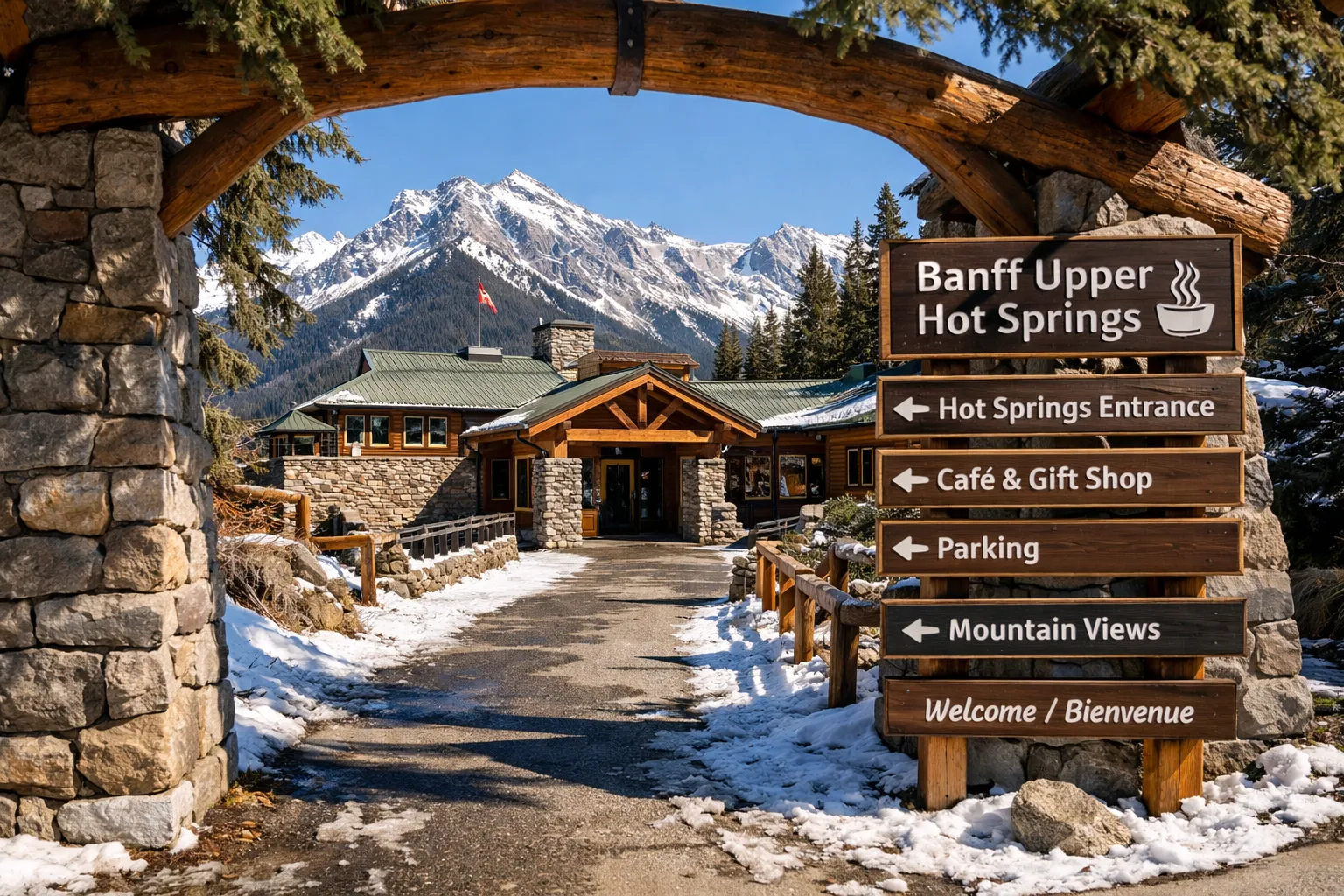
The water is the draw, but the setting is what makes it worth the trip: mountain walls rise on three sides of the pool. The facility is about 4 km from downtown Banff on Mountain Avenue, reachable by vehicle or on foot (a 20-to-30-minute uphill walk from town). Without a car, Roam Route 1 “Sulphur Mountain” leaves from downtown Banff every 20 minutes during opening hours (1). Bring swimwear; towel and locker rentals are typically available on site. Plan 1 to 2 hours including changing and soaking.
One current-status note that matters, because most guides still carry the old one. The springs closed in September 2025 for what became a seven-month renovation, covering the accessibility ramp, extensive tile work, and a new rainfall drain at the welcome building (3). They reopened in spring 2026 and now run daily from 1 p.m. to 10 p.m., with last entry at 9:30 p.m. (4)(20). Admission is first-come, first-served and can only be bought in person at reception, so the afternoon-only hours are the real planning constraint (1).
It pairs efficiently with the gondola: both sit on Sulphur Mountain, so you can stack a summit ride and a soak into a single half-day, and the 1 p.m. opening makes the gondola the natural morning half.
Hikes You Can Do Without a Car: Tunnel Mountain and the Bow River Walk
Tunnel Mountain is the most accessible summit hike in Banff: a 4.9 km round trip with about 261 m of elevation gain, starting from a trailhead walkable from central Banff Avenue.
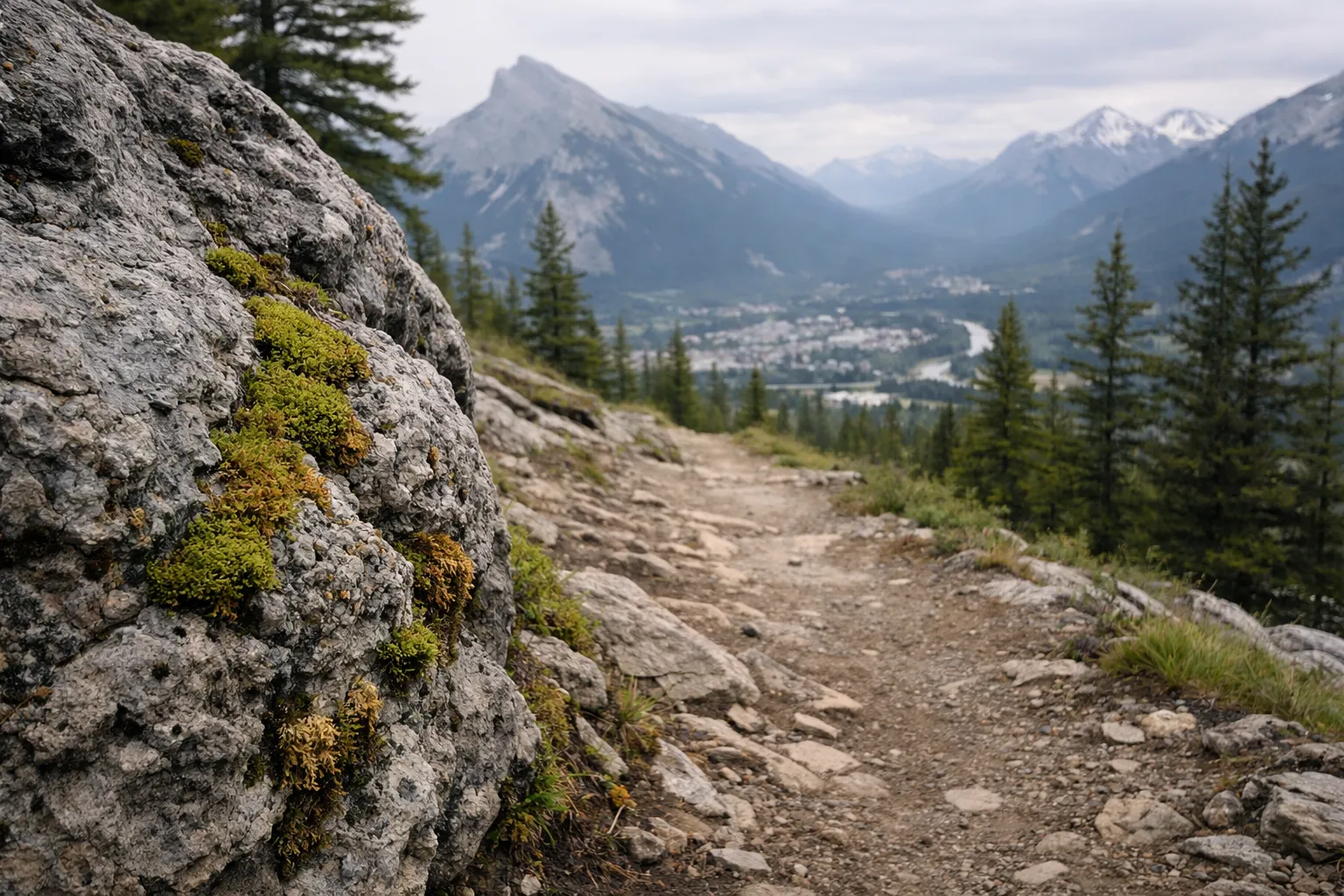
Most hikers take 1.5 to 2 hours round trip, including time at the top. The elevation gain is modest by Rockies standards, and the payoff is a wide view over the town and surrounding peaks. It’s the ideal core of a car-free day: hike Tunnel Mountain in the morning, then spend the afternoon on Banff Avenue for food and browsing.
The Bow River walk is the other town-based option, a riverside trail running about 1 km from central Banff to Bow Falls, which drops behind the Fairmont Banff Springs Hotel. Two access points: the main stone traffic bridge on Banff Avenue is the busier route. The quieter choice is the pedestrian bridge from Muskrat Street, which connects a residential area straight to the river path. Take that one for a calmer walk.
Bow Falls itself is short but worth the detour. The falls are more powerful than photos suggest, especially during spring runoff when snowmelt swells the river. Neither walk requires anything beyond walking shoes and a layer.
Winter in Banff: Beyond the Ski Slopes
Banff in winter is not only a ski destination. The town runs a structured festival calendar that makes it worth visiting even if you never touch a slope.
SnowDays is the main winter event, and it is not the single January week most guides describe: the next edition runs January 21 to February 7, 2027, with large-scale ice and snow sculptures and interactive outdoor activities downtown (19). The SnowNights component, added in 2025, brings illuminated sculptures and after-dark programming to it (2). Over at Lake Louise, a short drive from Banff town, the Ice Magic ice-carving competition runs February 3 to 7, 2027, with teams building sculptures on the lakeshore near the Fairmont Chateau Lake Louise (19).
Nightrise at the Banff Gondola works particularly well in winter, when darkness falls early and the summit installation lands differently than it does in summer. For skiers, Sunshine Village is the main resort near Banff, with Lake Louise Ski Resort as the other major option; both require a vehicle or shuttle.
Two practical warnings. Winter outdoor events mean sub-zero temperatures and wind exposure at elevation; mid-winter Banff often drops below -10°C, so gear rated for well below 0°C is not optional. And shorter daylight hours change your planning math, so build in earlier start times for anything outdoors, because the light fades fast in the afternoon.
Banff’s Cultural and Historic Side: Cave & Basin, Museums, and Festivals
Cave and Basin National Historic Site marks where thermal springs were first formally recognized in 1883, leading to the creation of Canada’s first national park in 1885: the origin story of the entire national park system.
This is genuinely interesting history, not just a warm pool to look at. The site includes indoor interpretive exhibits and access to the original thermal cave, with an admission fee set by Parks Canada. It’s a strong rainy-day option. So is the Whyte Museum of the Canadian Rockies, which covers the human history of the region, including Indigenous history and the early mountaineering era.
If your dates align, the Banff Centre Mountain Film and Book Festival runs October 31 to November 8, 2026, its 51st year: nine days of mountain films, books, workshops, and speakers on campus and downtown, and one of the largest events of its kind anywhere (17). Food-focused visitors have the Taste for Adventure festival and the Banff Food and Cocktail Festival, structured evening options most guides barely mention but that add real variety to a multi-day trip. For a reliable craft beer stop, Banff Avenue Brewing Co. is a solid known quantity, not a discovery, just a dependable one.
The rest of the calendar is a steady annual rhythm rather than a one-off: the Banff Half Marathon in mid-June, Canada Day celebrations on July 1, Pride in early October, and Christmas markets starting in late November (2).
Day Trips from Banff: Lake Louise, Moraine Lake, and the Icefields Parkway
Lake Louise sits about 57 km west of Banff along the Trans-Canada Highway, roughly 40 to 45 minutes by car in good conditions, with the more famous Moraine Lake a short distance beyond.
Both are the most-visited lakes in the Canadian Rockies, and both demand strategy. In peak season, Moraine Lake is closed to personal vehicles entirely: access is by shuttle or commercial transport only, a change Parks Canada made to manage crowds and parking. For Lake Louise, arrive before 7 a.m. in summer or plan on the shuttle. Show up midmorning and you’ll be turned away from the lots.
The Icefields Parkway (Highway 93) runs about 232 km between Lake Louise and Jasper through some of the most dramatic mountain scenery in North America. The marquee stop is the Columbia Icefield Discovery Centre, roughly 2 hours’ drive north of Lake Louise, and from Banff that adds meaningful time on top. Commercial glacier tours generally run May to October. This is a full day, not a half-day, once you account for viewpoint stops and the glacier walk itself.
The common mistake is stacking Lake Louise, Moraine Lake, and the Columbia Icefield into a single day. It looks doable on a map. In practice, the drive times and stopping time make it a rushed slog. Pick one anchor per day.
For those wanting more than a hike, Via Ferrata routes near the Icefields Parkway offer guided technical climbing on fixed steel systems bolted to cliff faces. It requires booking and basic fitness, and it’s a summer-only, half-day commitment.
Practical Banff: Timing, Getting Around, and What to Know Before You Go
The practical sweet spots for visiting Banff are May and September: most attractions are open, and the crowds are a fraction of what July and August bring.
Summer (June through August) gives you full access to everything, including the Lake Minnewanka cruise and Columbia Icefield tours, but at maximum congestion. Winter is for snow events and skiing, with the caveat that cold-weather gear is essential. For a first trip weighing scenery against crowds, the shoulder months are hard to beat.
Getting around comes down to whether you have a car. A vehicle gives full flexibility for the Bow Valley Parkway, Lake Minnewanka, and Icefields Parkway. Without one, Roam Transit buses connect Banff town to Johnston Canyon, Lake Louise, and the hot springs, among other stops, which is enough to cover the headline sights.
A few essentials:
- Park entry: A valid Parks Canada pass is required for anyone spending time in the park, from road trips and camping to picnic sites, viewpoints, and stops in town. The one exception is driving straight through without stopping. Daily passes are valid until 4 p.m. the day after purchase; the Annual Discovery Pass runs a full year (13). Buy it before you arrive to skip the gate queue.
- Crowd bottlenecks: Johnston Canyon, the gondola, and Moraine Lake are the three biggest chokepoints. An early start (before 8 a.m.) solves most of the problem at all three.
- Wildlife on roads: The 60 km/h secondary-road limit applies on the Bow Valley Parkway (12), and the 8 p.m. to 8 a.m. restriction holds on its Johnston Canyon stretch from March 1 to June 25 (11). Check Parks Canada’s BanffNow tool for real-time congestion and road status.
- How many days: 3 to 4 days covers the core Banff town attractions comfortably. 5 to 7 days lets you add Lake Louise, Moraine Lake, and a day on the Icefields Parkway without rushing.
Frequently Asked Questions
- How many days do you need in Banff to see the main attractions?
- Three to four days covers Banff town's core sights; 5 to 7 days needed to include Lake Louise, Moraine Lake, and Icefields Parkway.
- Is the Banff Gondola worth it if you're a hiker?
- The gondola offers summit views and a cultural evening experience; skippable if you prefer hiking and have budget constraints.
- When does the Lake Minnewanka cruise run?
- The 2026 season runs May 8 to October 12, weather permitting; no service outside those dates. Only the longer Explorer Cruise reaches Devil's Gap, not the one-hour Classic.
- Are the Banff Upper Hot Springs open right now?
- Yes. They reopened in spring 2026 after a seven-month renovation and run daily from 1 p.m. to 10 p.m., last entry 9:30 p.m.
- What's the best time of year to visit Banff for fewer crowds?
- May and September offer open attractions with significantly fewer visitors than peak summer.
- Can you do Johnston Canyon without a car?
- Yes, Roam Transit runs buses from Banff to Johnston Canyon, avoiding parking issues.
- What should you do in Banff in winter beyond skiing?
- SnowDays runs January 21 to February 7, 2027, with SnowNights after dark and Ice Magic at Lake Louise February 3 to 7. Add Nightrise at the gondola and the museums.
- Is Banff good to visit with kids?
- Yes, many low-effort activities suit families, but watch for crowds and winter cold.
How to Prioritize Your Days
Two days means stacking tight: the gondola or Nightrise on one evening, Johnston Canyon early on a morning, and the Bow River walk to Bow Falls plus Tunnel Mountain filling the gaps. All four are achievable without overextending, and none require driving far.
With five days, add the Lake Minnewanka cruise (if you’re in the May-to-October window), a dawn drive along the Bow Valley Parkway for wildlife, an afternoon hot springs soak, and a full day pointed toward Lake Louise and Moraine Lake. Save the Columbia Icefield for its own dedicated day; it doesn’t share well.
Before each day, check Parks Canada’s BanffNow tool for real-time conditions, especially for wildlife closures on the Bow Valley Parkway and parking availability at Johnston Canyon. The logistics here are manageable if you plan around the crowds. The attractions themselves hold up.