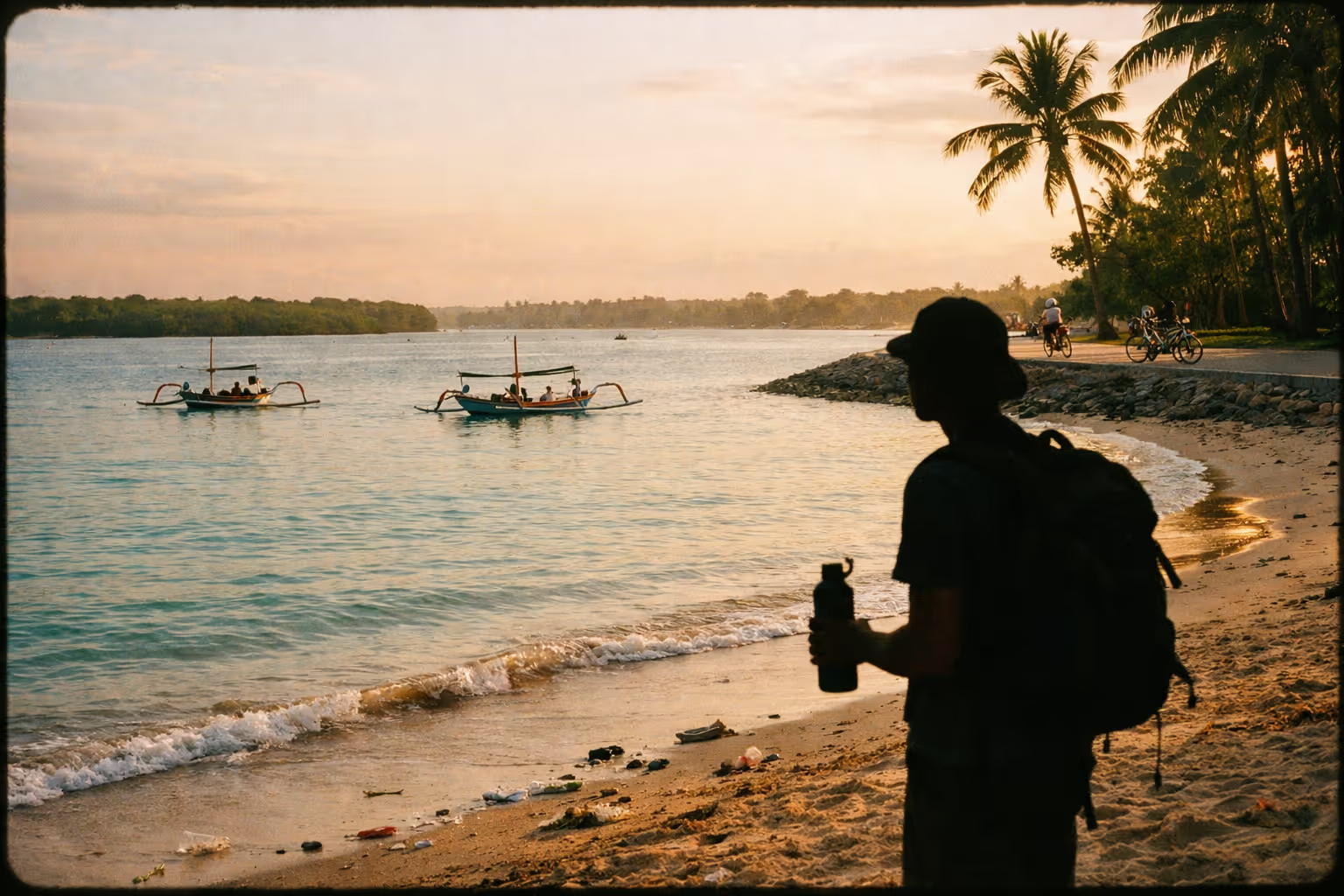
Sanur beach pollution is easy to miss at first, because resort crews rake the sand clean by 6 a.m. Walk 500 meters north or south of the hotel frontage, though, and the tide line fills with bottle caps and sachets; that gap is the real story. It gets worst in the wet season, from November to March, when river outflows flush inland waste onto the coast. Bali is banning single-use plastic bottles under a liter, so the habit that helps most is a filtered refill bottle.
Exploring Sanur Beach and the Plastic Threat Bali’s East Coast Carries
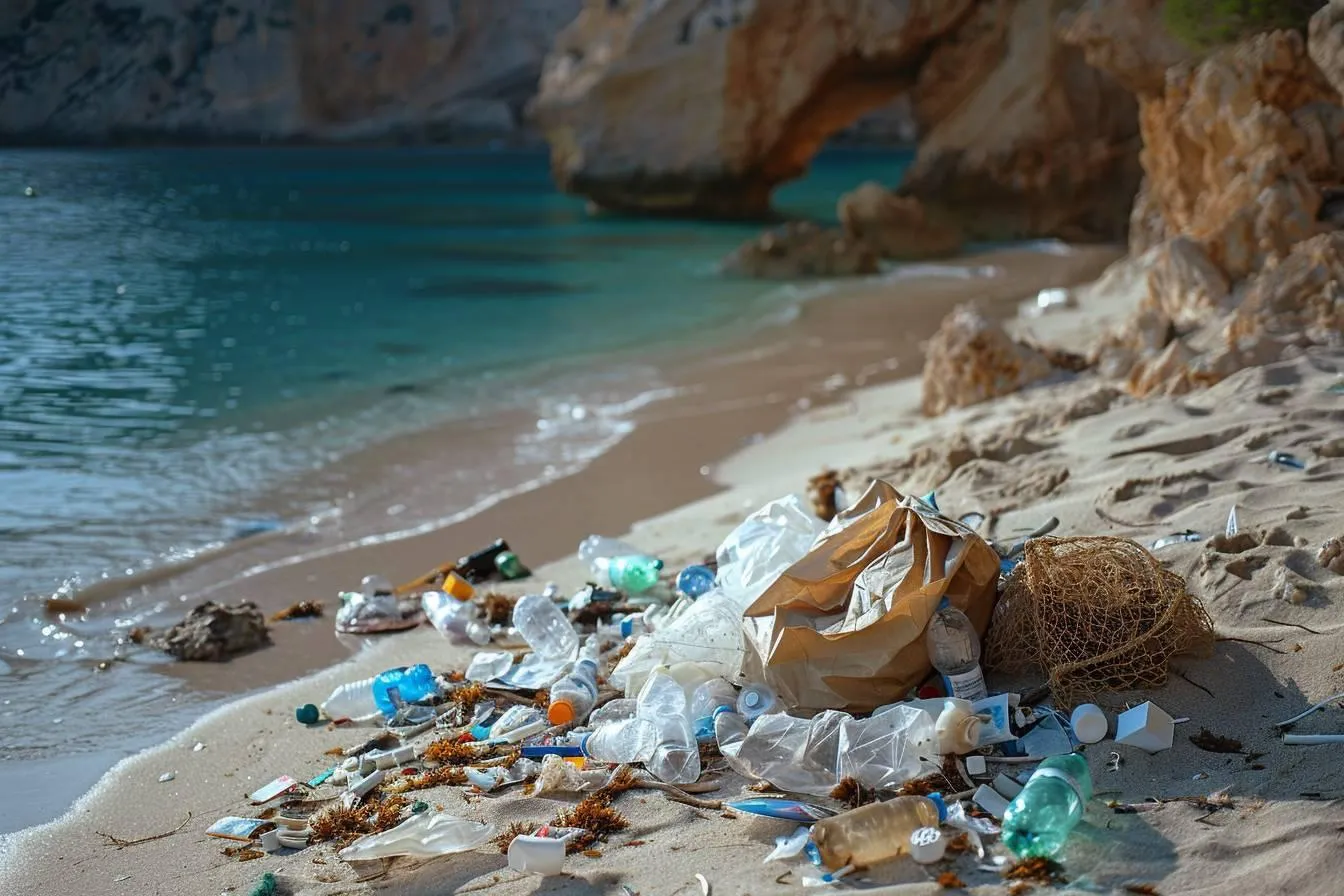
Sanur Beach runs roughly 5km along Bali’s southeast coast, from the mangroves near the new Sanur Port down to Mertasari in the south. While the area is known for its calm waters and family-friendly atmosphere, visitors should be aware of the plastic problem Sanur faces, as plastic pollution increasingly impacts the shoreline beyond the well-maintained resort zones. The protected reef offshore keeps the water calm - which is why families and older travelers tend to prefer it over the surf beaches further west.
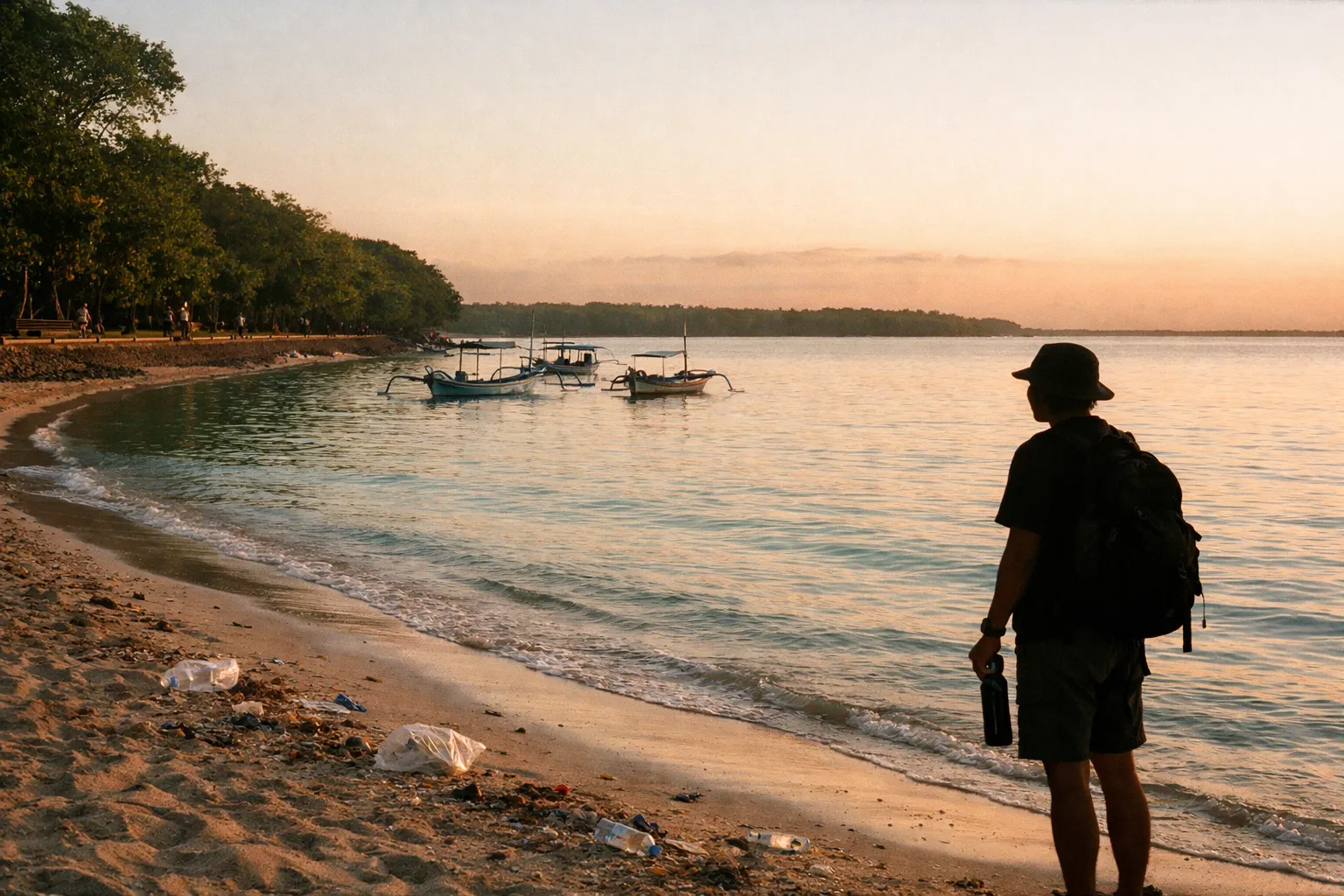
The paved cycle path running behind the sand makes for an easy morning walk or bike ride (rentals around IDR 30,000-50,000 per day, roughly USD 2-3). Traditional outrigger fishing boats - jukung - line the shore in clusters, painted in fading blues and yellows. The sunrise here is genuinely worth setting an alarm for. Sanur faces east, unlike most of the well-known Bali beach strips, which means you get the full show while the west coast is still in shadow.
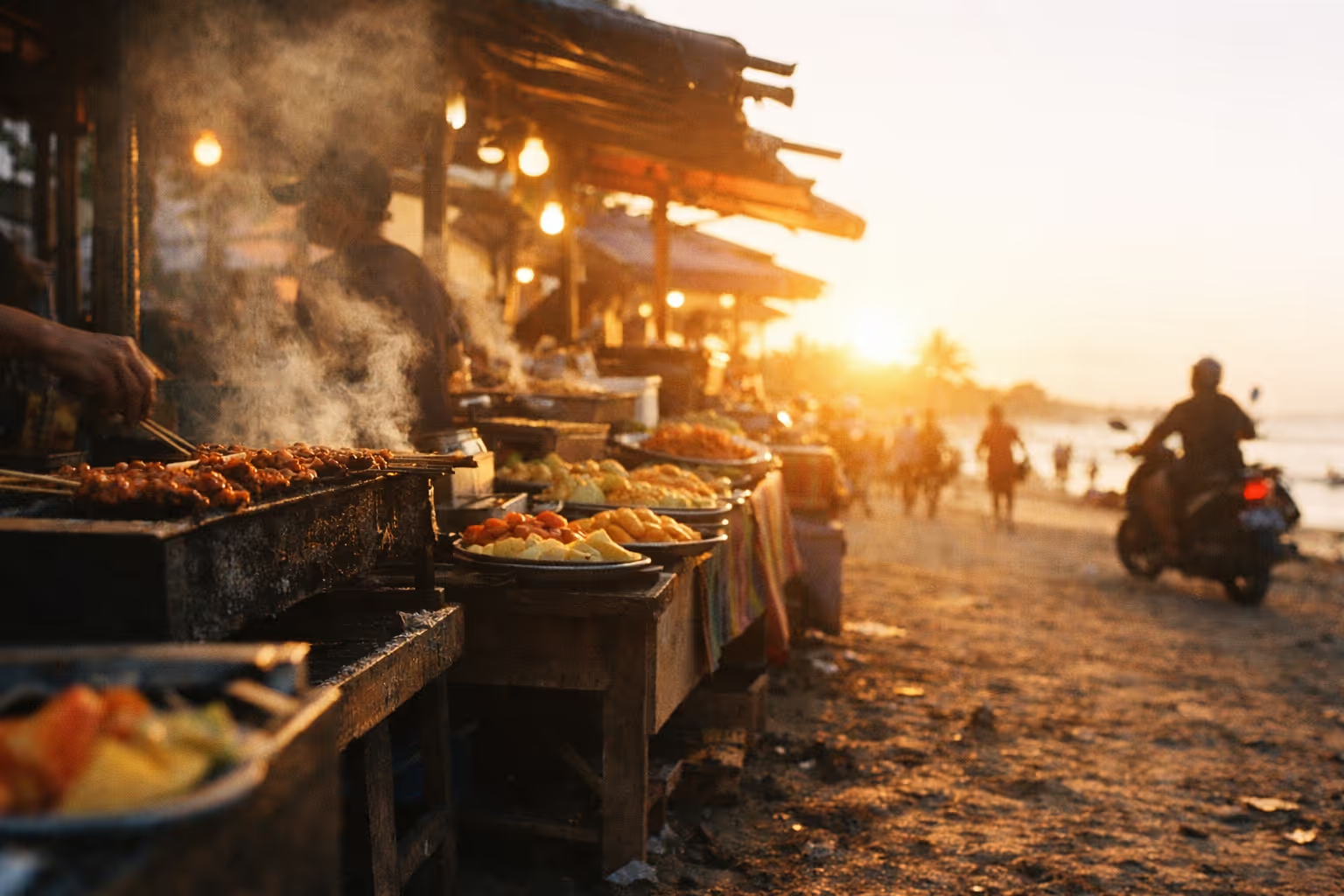
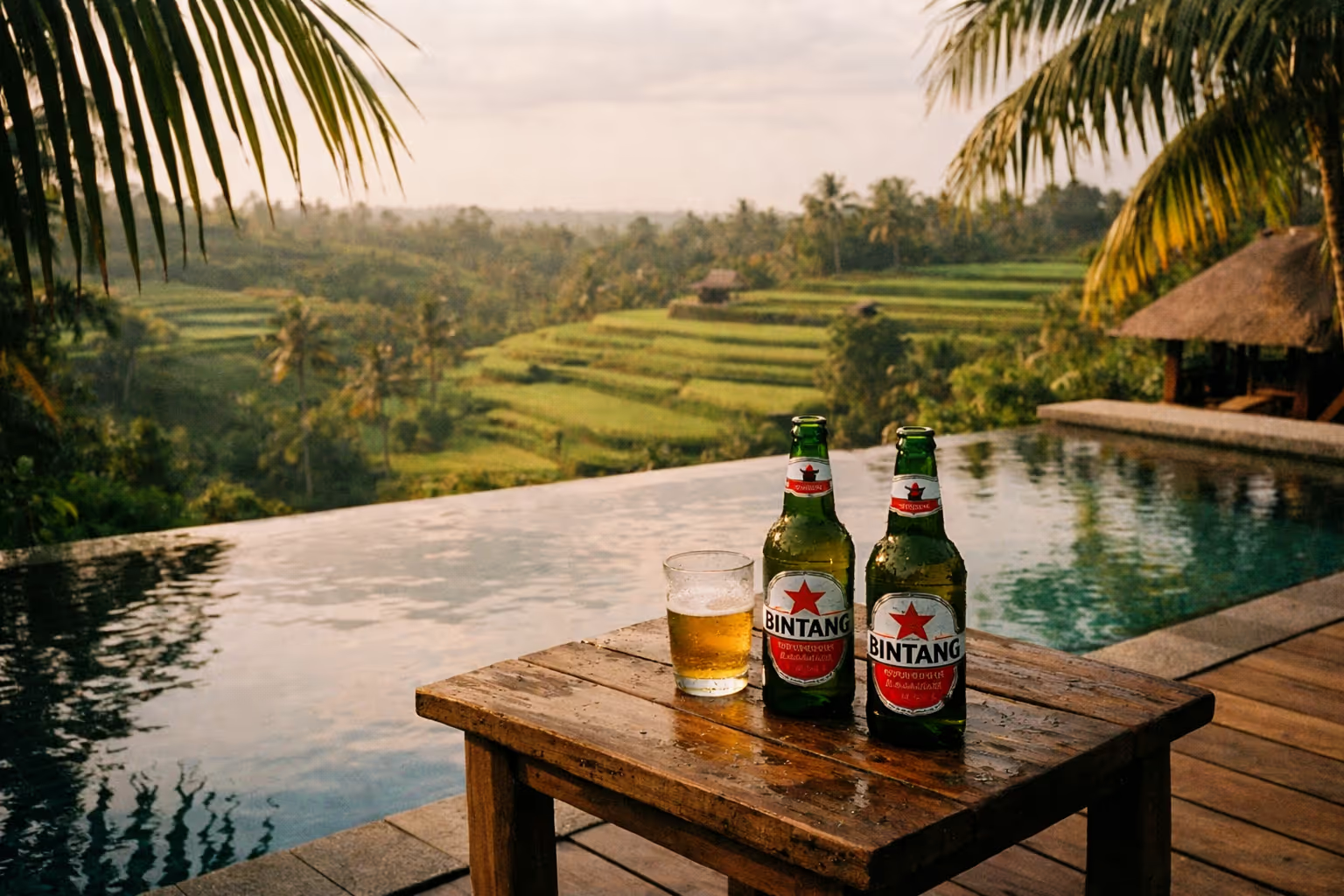
The beachfront is dotted with warungs and bars where you can sit for hours over a Bintang (IDR 35,000-50,000, around USD 2.20-3.20) or a fresh coconut (IDR 25,000, around USD 1.60). The hotels along this stretch - Hyatt Regency, Hotel Tandjung Sari, Maya Sanur - front their own well-tended sections, and the cycle path knits them into a continuous public corridor that’s easy to navigate on foot.
The contrasting realities of Sanur’s coastline
The maintained beach in front of the resorts looks postcard-clean. Keep walking - north past the Sindhu morning market area, or south past Mertasari toward the mangroves - and the picture changes. The sand turns greyer and coarser, the rake marks disappear, and the tide line starts carrying things it shouldn’t: bottle caps, sachet packaging, snapped flip-flops, polystyrene fragments.
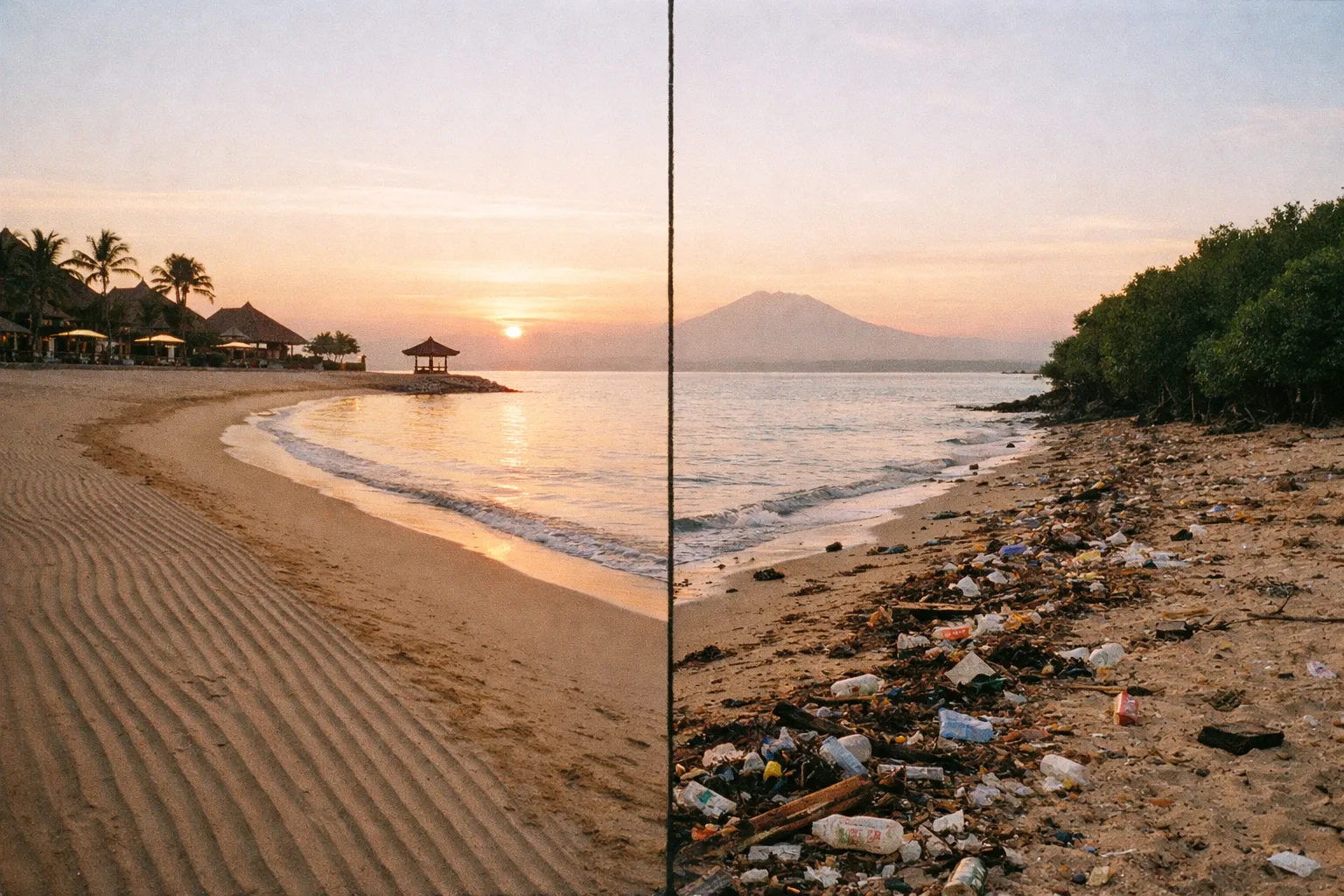
Sanur shows this gradient particularly clearly because the resort zone and the unmanaged zone sit so close together. Drone reporting from 2024 documented a landfill site near Sanur encroaching on mangrove ecosystems just inland, with waste trucks operating close to wetlands that feed the coastal waters (2). Whatever doesn’t get buried properly tends to migrate seaward, especially during the November-March wet season when rivers flush a season’s worth of inland debris onto the east coast.
The honest takeaway: the part of Sanur most tourists see is genuinely lovely. The part most tourists don’t see is where Bali’s plastic crisis is most visible.
Is Sanur Beach polluted?
Yes, partially - and the answer depends on which 500-metre stretch you’re standing on, and what time of year.
Water quality in Sanur’s lagoon is better than in heavily industrial or port-adjacent zones around the island, and the reef provides some natural filtration. But plastic debris on the sand is a recurring issue, particularly:
- After heavy rain (December-February peak), when river outflows along the east coast dump inland waste into the sea, which then washes ashore
- Near river mouths and the mangrove fringe, where waste collects rather than dispersing
- On unmaintained stretches beyond the resort cleaning crews, where nobody is raking at dawn
The resort sections you’ll see in marketing photos are cleaned daily by hotel staff before guests are awake - typically between 5:00 and 6:30 a.m. Walk the beach at sunrise and you’ll see the operation in progress. After 7 a.m., the visible debris is largely gone from those sections. By mid-afternoon, especially with onshore wind, smaller plastics start reappearing along the high-tide line even on the maintained parts.
If pristine water is your priority, Sanur in the dry season (May-September) is reasonably reliable. If you’re visiting in January and want to snorkel, expect to see floating plastic in some sessions and plan around it.
Is plastic pollution a concern in Bali more broadly?
It’s the dominant environmental story on the island right now. A few numbers worth knowing:
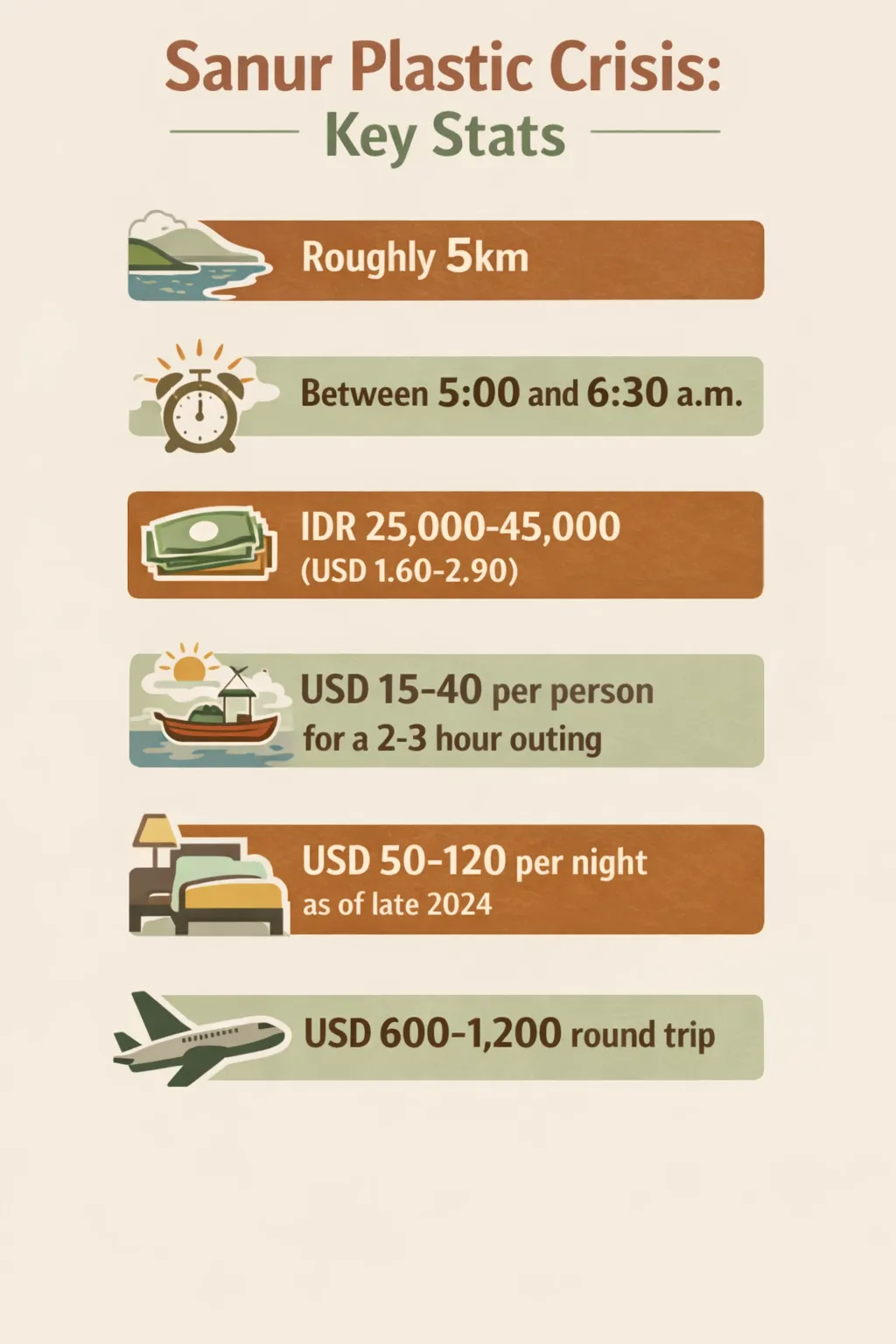 Sanur’s east coast reveals a 5km shoreline with early-morning cleanups, a 1L plastic ban moving toward enforcement, and typical costs from meals (IDR 25,000-45,000) to flights (USD 600-1,200).
- Bali’s provincial government issued Circular Letter No. 9 of 2025, banning the production, distribution, and provision of single-use plastic bottled drinking water under 1 litre - including plastic cups and 500ml bottles (1).
- The ban covers government offices, traditional villages, hotels, restaurants, schools, markets, and places of worship, with full enforcement (including malls and hotels) targeted for January 2026 (1).
- 96% of Bali’s roughly 1,500 traditional villages have adopted customary regulations aligned with the plastic restrictions, effective July 2025 (1).
- The Bali Clean Waste Movement, launched March 2025, targets a waste-free island by 2027 (1).
The policy direction is clear. Enforcement, like everywhere, lags the rules. Landfills around Denpasar and the south have been reported at critical overcapacity, and waste-to-energy infrastructure is still developing. The practical reality during a 2025 or 2026 visit: you’ll see plastic on beaches and in rivers, you’ll see refill stations in hotels and cafés, and you’ll see warungs that have already switched back to traditional packaging. All of it at once.
Banana leaves and the traditional alternative
One of the more hopeful threads in Bali’s anti-plastic story is how much of the solution already exists in the local culture. Banana leaves - daun pisang - have been used for centuries to wrap food, line plates, and assemble the daily Hindu offerings (canang sari, the small woven trays of flowers, rice, and incense) you’ll see on every doorstep and shrine.
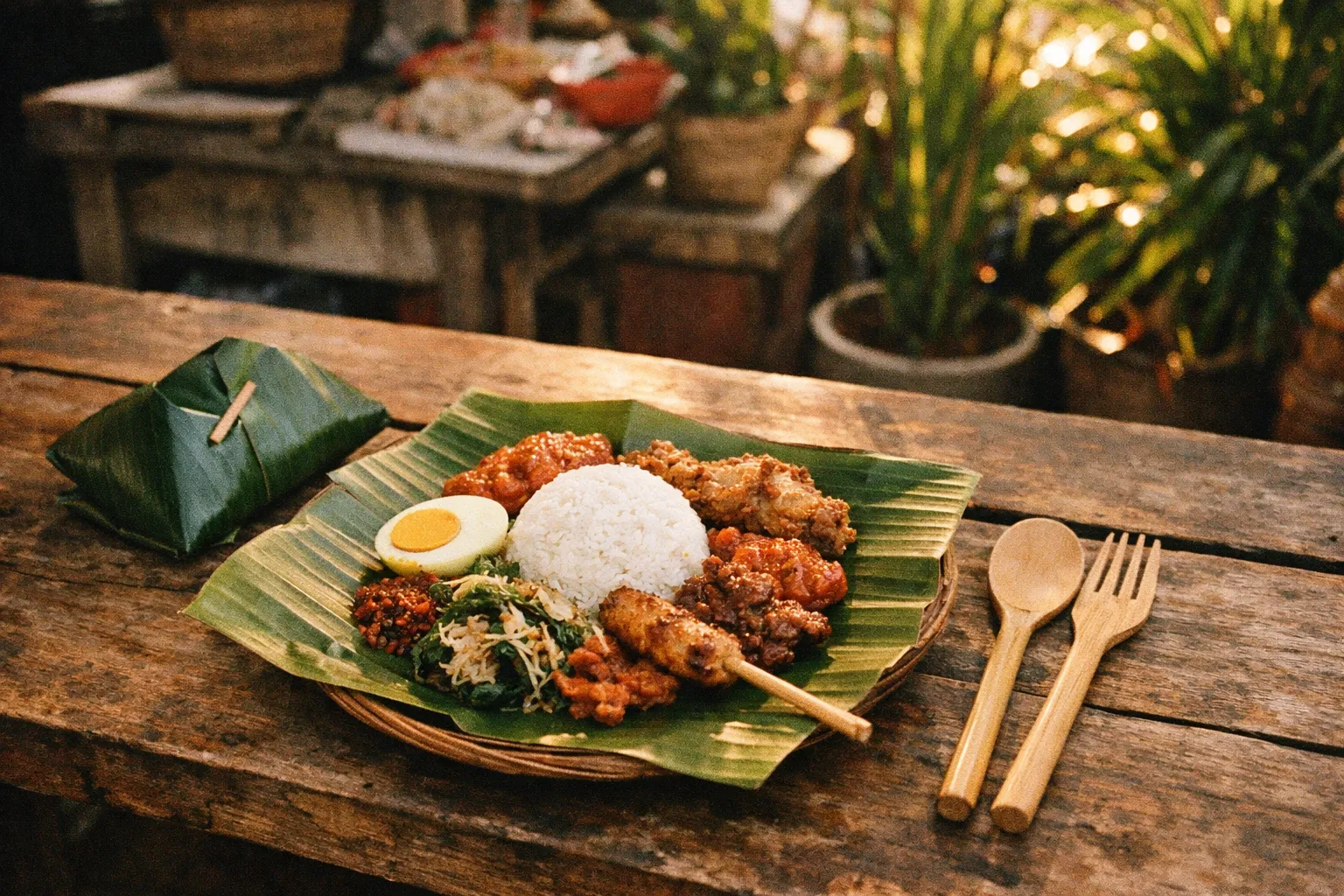
In practical terms for a Sanur visitor:
- Many warungs serve nasi campur (mixed rice with vegetables, tempeh, and a protein) on banana-leaf-lined plates or wrapped in bungkus (takeaway) parcels tied with bamboo string. Cost: IDR 25,000-45,000 (USD 1.60-2.90) for a full plate.
- Traditional markets - Sindhu Market in the morning, Pasar Sanur - sell sweets, sticky rice, and steamed cakes wrapped in banana leaf instead of cling film.
- Some eco-focused restaurants around Jalan Danau Tamblingan, Sanur’s main spine, have made banana-leaf service a deliberate choice and will mention it on the menu.
Choosing these options is a small but direct way to reduce your footprint and put money toward businesses that haven’t defaulted to plastic. It also tastes better - there’s a faint grassy note that banana leaf gives to warm rice that plastic clamshells absolutely do not.
One etiquette note worth knowing: those small woven trays you’ll see on the pavement carrying flowers, rice, and incense are made from coconut leaf and banana leaf. Step around them, not over them. Photographing them is fine; moving them is not.
Is Sanur, Bali safe for tourists?
Yes - Sanur is generally one of Bali’s safer and more family-oriented beach areas. Violent crime against tourists is rare, and the atmosphere skews calm rather than party-driven. The real safety considerations are practical rather than dramatic:
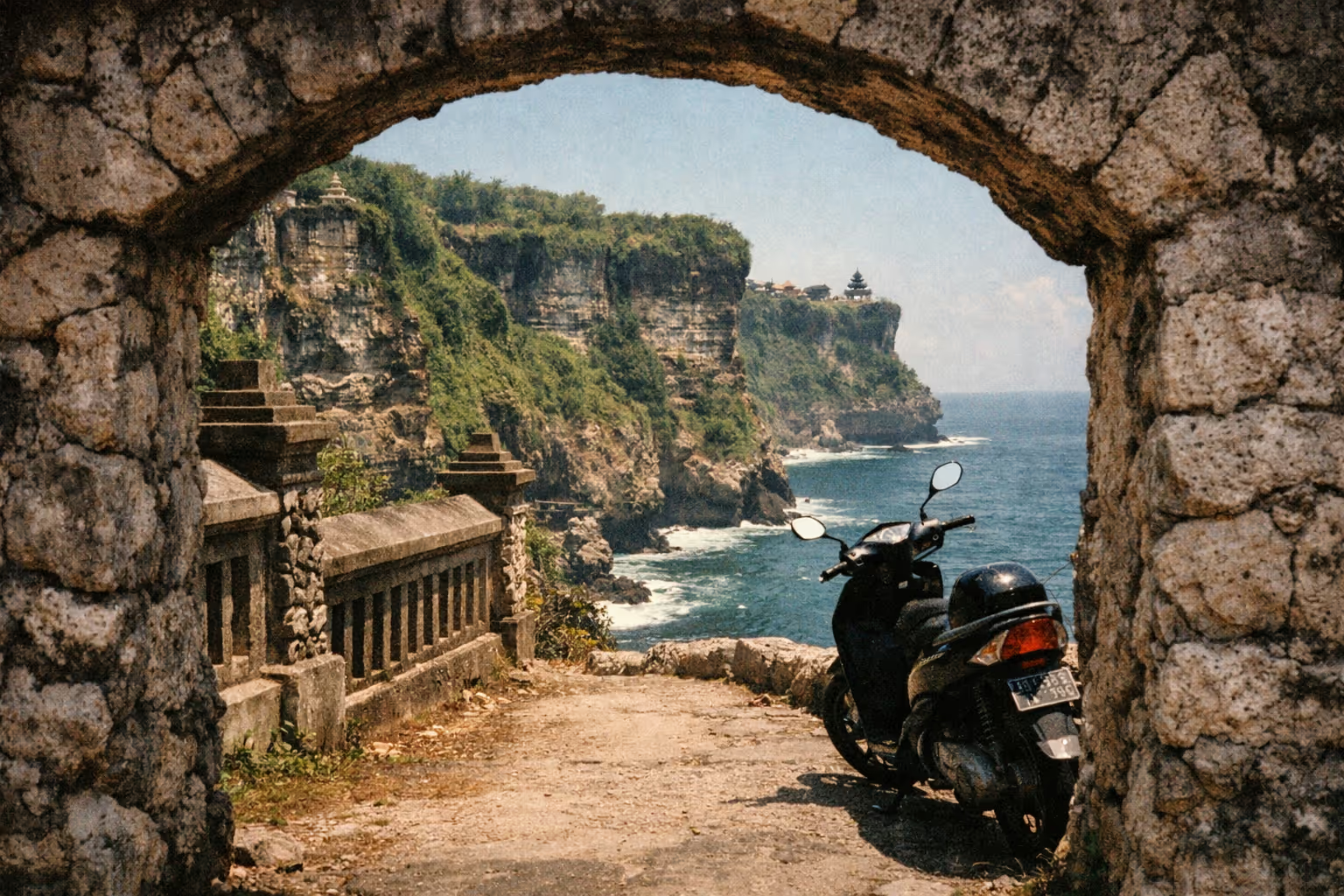
- Traffic. Crossing Jalan Danau Tamblingan during peak hours requires patience. Scooter rentals are cheap (IDR 70,000-100,000/day, USD 4.50-6.50) but Bali’s accident rate is high, and travel insurance often excludes scooter injuries if you don’t hold a valid motorcycle licence at home. Verify your policy before you rent.
- Sun and heat. Equatorial UV is intense year-round. SPF 30+ minimum, reapply often, and pick reef-safe sunscreen (non-nano zinc oxide formulas, USD 12-25 per 100ml) to avoid adding chemical load to the lagoon ecosystem.
- Marine pollution and water-borne illness. During wet-season flush events, water quality drops. Avoid swimming for 24-48 hours after heavy rain, especially near river mouths. Bali International Hospital in Sanur handles routine vaccinations and emergencies - an adult polio vaccine runs around IDR 735,000 (roughly USD 45-50) (4).
- Petty theft. Standard precautions: don’t leave a phone on a beach lounger when you swim, lock scooter compartments, keep valuables in the hotel safe.
- Stray dogs. Mostly indifferent to humans, but rabies is present on Bali. Don’t approach, and if bitten or scratched, seek post-exposure vaccination immediately.
Solo female travellers report Sanur as one of the more comfortable Bali bases - quieter streets, earlier nightlife wind-down (most bars close by midnight), and a long-stay expat community that fills the cafés along Jalan Danau Tamblingan.
Can you show cleavage in Bali?
On the beach and at the resort pool, yes. Bikinis, bandeau tops, and cleavage-revealing swimwear are completely normal in Sanur and at any Bali beach destination. No one will look twice at standard beachwear within the beach zone.
The rules shift the moment you leave it:
- In temples (pura), both men and women must cover shoulders and knees, and wear a sarong and sash. These are usually provided at the entrance for free or for a small donation (IDR 10,000-20,000, USD 0.65-1.30). Cleavage-revealing tops are inappropriate even with shoulders technically covered.
- In traditional villages and during ceremonies, modest dress is expected. A t-shirt and shorts to the knee is the minimum.
- In restaurants and shops away from the beach strip, swimwear alone isn’t appropriate - throw on a cover-up.
- During Nyepi (Bali’s Day of Silence, March 2026 falls on March 19), everyone, including tourists, stays inside their accommodation. Dress code is irrelevant because you’re not going anywhere.
The underlying principle: Balinese Hindu culture is genuinely religious, not performatively so. Dress norms aren’t enforced by police, but ignoring them visibly hurts the community goodwill that supports everything else - including the village-level cooperation now driving plastic regulations.
How to travel Sanur with less plastic
Concrete steps that work, based on what’s actually available on the ground in late 2024 and into 2025:
Before you arrive:
- Pack a reusable 0.75-1L water bottle with a built-in filter (LifeStraw Go, Grayl, or similar). Bali tap water is not drinkable, but filtered refill stations are now widespread.
- Bring a reusable shopping bag (a packable nylon one weighs nothing). Bali banned thin plastic bags in 2019; reusable bags at shops now cost IDR 2,000-5,000 (USD 0.15-0.35).
- Bring reef-safe sunscreen from home - the selection in Bali is limited and expensive.
At your accommodation:
- Ask before booking whether the property offers free filtered water refills in rooms and at restaurants. Under the 2025 regulations, this is increasingly standard; eco-certified Sanur hotels typically include it.
- Decline daily linen changes - towels on the floor mean wash, on the rack means reuse.
- Skip the in-room single-use toiletries if you brought your own.
At restaurants and warungs:
- Order drinks without straws (“tanpa sedotan”). Bamboo and stainless straws are common but only used if requested.
- Choose warungs using banana leaf or ceramic over plastic-lined paper.
- For takeaway, hand over your own container - most warungs will fill it without comment.
On the beach:
- Carry a small bag for the walk back; pick up five pieces of plastic per session. It’s the lowest-effort form of clean-up and the cumulative impact across thousands of visitors is real.
Joining a Sanur beach clean-up
Organised clean-ups happen frequently along the east coast, and Semawang Beach in southern Sanur has been a recurring site for the annual Bali’s Biggest Clean-Up, coordinated by the Coral Triangle Center and partners (3). The 7th annual edition included Semawang directly.
What to expect if you join one:
- Time commitment: 1-3 hours, usually starting between 7:00 and 8:00 a.m. to beat the heat.
- What to bring: Sturdy closed-toe shoes (broken glass and sharp plastic are common), reusable work gloves if you have them, a hat, sunscreen, and a refillable water bottle. Bags and additional gloves are normally provided.
- Cost: Many community clean-ups are free; some NGO-run events request a USD 5-20 donation per participant to cover logistics, sorting, and transport of collected waste.
- What you actually do: Sweep a designated stretch, separate recyclables from non-recyclables, and often photograph branded waste for brand-audit databases that feed into policy advocacy (3).
Smaller weekly clean-ups run out of co-working spaces and dive shops - Sanur’s beachfront cafés often post upcoming events on chalkboards. If you’re staying more than a week, one morning is easy to spare.
Mangrove tours and seeing the landfill story firsthand
The Ngurah Rai mangrove forest, just north of Sanur toward Benoa, is the ecosystem most directly threatened by the Sanur-area landfill encroachment documented in recent reporting (2). Guided mangrove walks and kayak tours run from operators on the Sanur side and cost roughly USD 15-40 per person for a 2-3 hour outing.
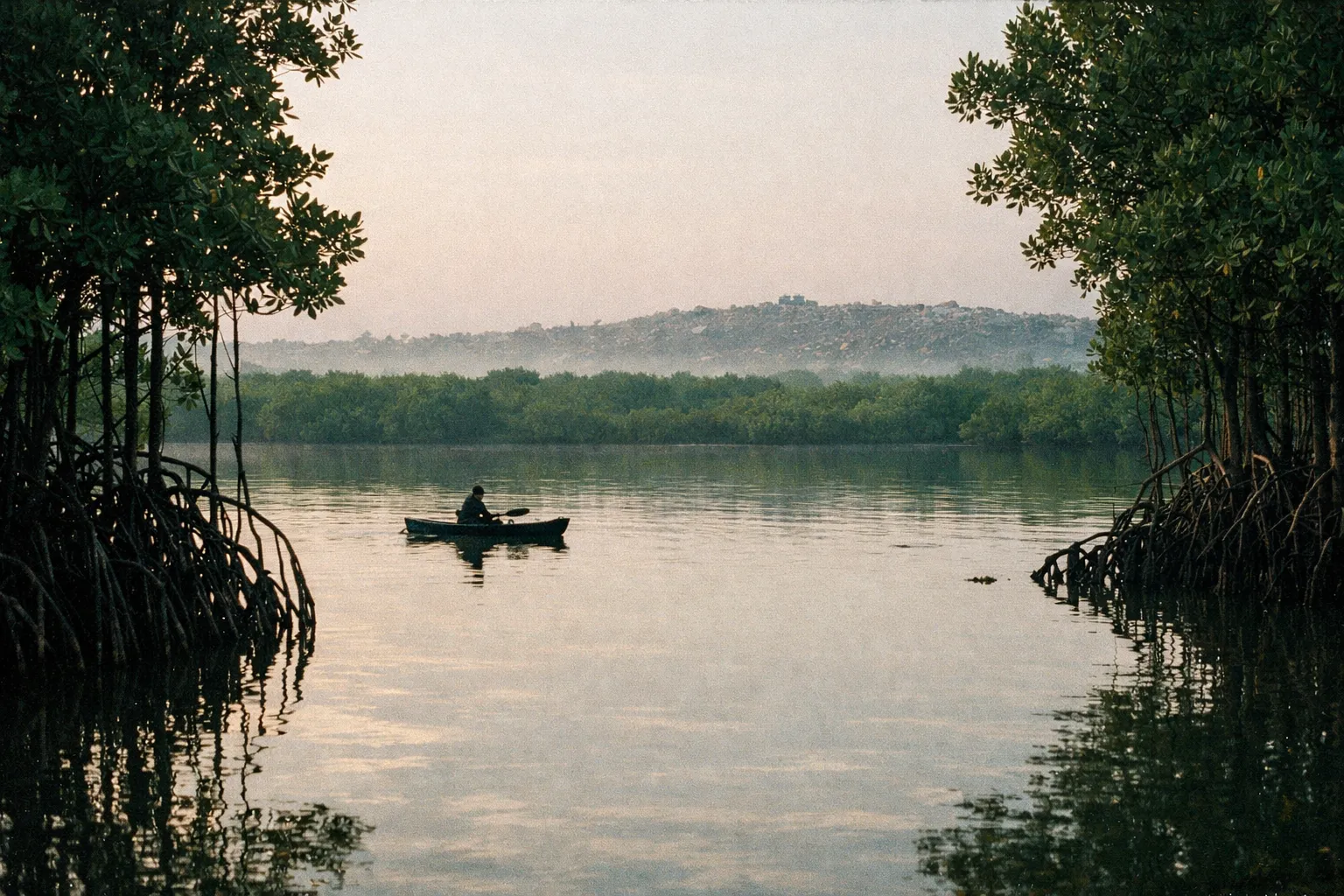
A good guide will explain the link between solid-waste mismanagement upstream and what ends up in the mangrove channels, point out the bird and crab species that depend on the wetland, and often include a light clean-up component along the boardwalks.
This is the single most useful 3 hours you can spend in Sanur if you want to understand the waste crisis beyond the beach itself. Drone reporting tells one part of the story; standing in the wetland tells the rest (2).
Supporting independent photojournalism on Bali’s plastic crisis
Most of what the wider world knows about Bali’s landfill encroachment, riverborne waste, and seasonal trash surges comes from a small group of independent photojournalists working with drones and on-the-ground access. Their reporting often pre-dates government action by years and feeds directly into NGO campaigns and provincial policy debate (2).
If you want to make a donation to support independent photojournalism on the island:
- Many Bali-focused photo and reporting projects accept recurring contributions of USD 3-15/month via Patreon, Substack, or independent project pages
- One-off donations of USD 20-100 typically fund a specific project - drone flights, a regional shoot, a printed report
- Commissioned work (if you’re a publication or NGO) runs roughly USD 150-400/day plus expenses
Reference month for all pricing here: November 2024. Exchange rates and operator fees shift; verify before booking.
Enforcement of the 2025 plastic regulations depends on public visibility of where the rules are and aren’t being followed. Photojournalism is the mechanism. Funding it is a low-friction way for a visitor to contribute to outcomes that outlast the trip.
Where to stay in Sanur if low-plastic matters to you
A few practical signals to look for when booking:
- The property explicitly states it does not provide single-use plastic water bottles under 1L (a 2025-2026 regulatory requirement)
- In-room glass carafes refilled daily, or filtered water dispensers on each floor
- Bulk-dispenser toiletries in showers rather than miniature bottles
- Compostable or banana-leaf packaging for any in-room snacks
- Reusable shopping bags or beach bags lent to guests
Mid-range Sanur hotels run USD 50-120 per night; eco-certified boutique properties tend to sit at the upper end of that band because they’re smaller-scale and absorb the cost of refill infrastructure. A 7-day Sanur stay combining eco-conscious accommodation, a mangrove tour, a clean-up morning, and normal eating and transport costs realistically lands at USD 700-1,500 per person, excluding international flights.
Flights to Denpasar (DPS) from Europe or the US West Coast run USD 600-1,200 round trip in mid-season; book 8-12 weeks ahead for the better fares.
Sanur Accommodation Options for Low-Plastic Travelers
| Premium Eco-certified Boutique Hotel | Mid-range Sanur Hotel | Budget Guesthouse | |
|---|---|---|---|
| Price Range (USD/night) | $90-120 | $50-80 | $30-50 |
| No Single-Use Plastic Bottles <1L | ✓ | ✗ | ✗ |
| Filtered Water Refills | ✓ | ✓ | ✗ |
| Bulk Toiletries | ✓ | ✗ | ✗ |
| Eco-Friendly Packaging | ✓ | ✗ | ✗ |
Common mistakes visitors make on the plastic question
- Judging Sanur by the resort frontage alone. What looks clean at 10 a.m. has been raked at 5:30 a.m. The unmaintained stretches tell the more accurate story (2).
- Assuming the 2025 ban means plastic is solved. Policy is in motion. Enforcement is uneven. Don’t outsource your own choices to government action (1).
- Buying 500ml bottled water out of habit. Aside from being targeted by the under-1L ban for full enforcement by January 2026, it’s the single highest-impact habit a tourist can change.
- Skipping village-area dress codes. Cooperation on waste at the village level depends on community goodwill. Showing up in beachwear at a temple corrodes that, even if no one says anything to you directly.
- Treating clean-up donations as a scam. USD 5-20 covers gloves, sorting, transport, and reporting infrastructure. It’s not a tourist tax (3).
- Visiting in wet season and being surprised by the trash. November-March visitors should expect periodic debris surges along the east coast. Pack expectations accordingly.
Frequently Asked Questions
- What should I bring to a Sanur beach clean-up?
- Bring sturdy closed-toe shoes, reusable gloves if you have them, sunscreen, a hat, and a refillable water bottle. Bags and additional gloves are usually provided by organizers.
- Are there guided tours to see the mangrove and landfill impact near Sanur?
- Yes, several operators offer guided mangrove walks and kayak tours costing roughly USD 15-40 for 2-3 hours, which include education on waste impacts and sometimes light clean-up activities.
- How effective are Bali's plastic regulations so far?
- While the 2025 ban is a strong policy step, enforcement is uneven and landfills remain overcapacity. Progress is ongoing, with many villages adopting regulations and businesses shifting practices.
- Can solo female travelers feel safe staying in Sanur?
- Yes, Sanur is considered one of Bali's safer and quieter areas, with a family-friendly atmosphere and a supportive expat community, making it comfortable for solo female travelers.
- How can I support Bali's plastic crisis photojournalism?
- You can contribute via monthly Patreon or Substack donations (USD 3-15), one-off donations for specific projects (USD 20-100), or commission work if you represent an NGO or publication.
Sanur rewards visitors who pay attention. The cleaned resort beach is genuinely beautiful at sunrise, and the slower pace makes it a strong base for a longer Bali trip. But the unmaintained stretches, the mangrove encroachment, and the seasonal plastic surges are part of the same place. Ignoring them means missing the actual story of where Bali is in 2025. Pack a refillable bottle, eat off banana leaves where you can, dress for the village when you leave the beach, and spend one morning either on a clean-up or in the mangroves. That’s a more useful Sanur visit than another resort breakfast.