Choosing among the best cenotes Riviera Maya visitors can reach in a day is mostly a distance problem. Gran Cenote sits 4-5 km (2.5-3 mi) from Tulum town, while Dos Ojos is about 22 km (14 mi) north (10)(9). That gap shapes your schedule more than which pool looks better on Instagram. This guide sorts the main options by type (open, semi-open, cave), distance, what each ticket covers, and the rules you’ll face at the entrance.
The case for building a day around cenotes is simple. You get clear freshwater swimming a short drive from either Tulum or Playa del Carmen, and the sites carry centuries of Maya cultural weight. The case against is also real. Midday crowds pack the platforms, last-admission windows close before the posted closing time, and the cave sections are dark, enclosed water that not everyone enjoys.
✓ Pros
- Different levels of openness let groups choose how much cave swimming they want.
- Several sites can be paired with a town stay rather than requiring a separate overnight.
✗ Cons
- Some highway stops leave a hot final stretch between the colectivo drop-off and the entrance.
- Admission can be difficult to budget in advance where prices are only quoted at the gate.
What Is a Cenote? Formation, History, and Sacred Significance
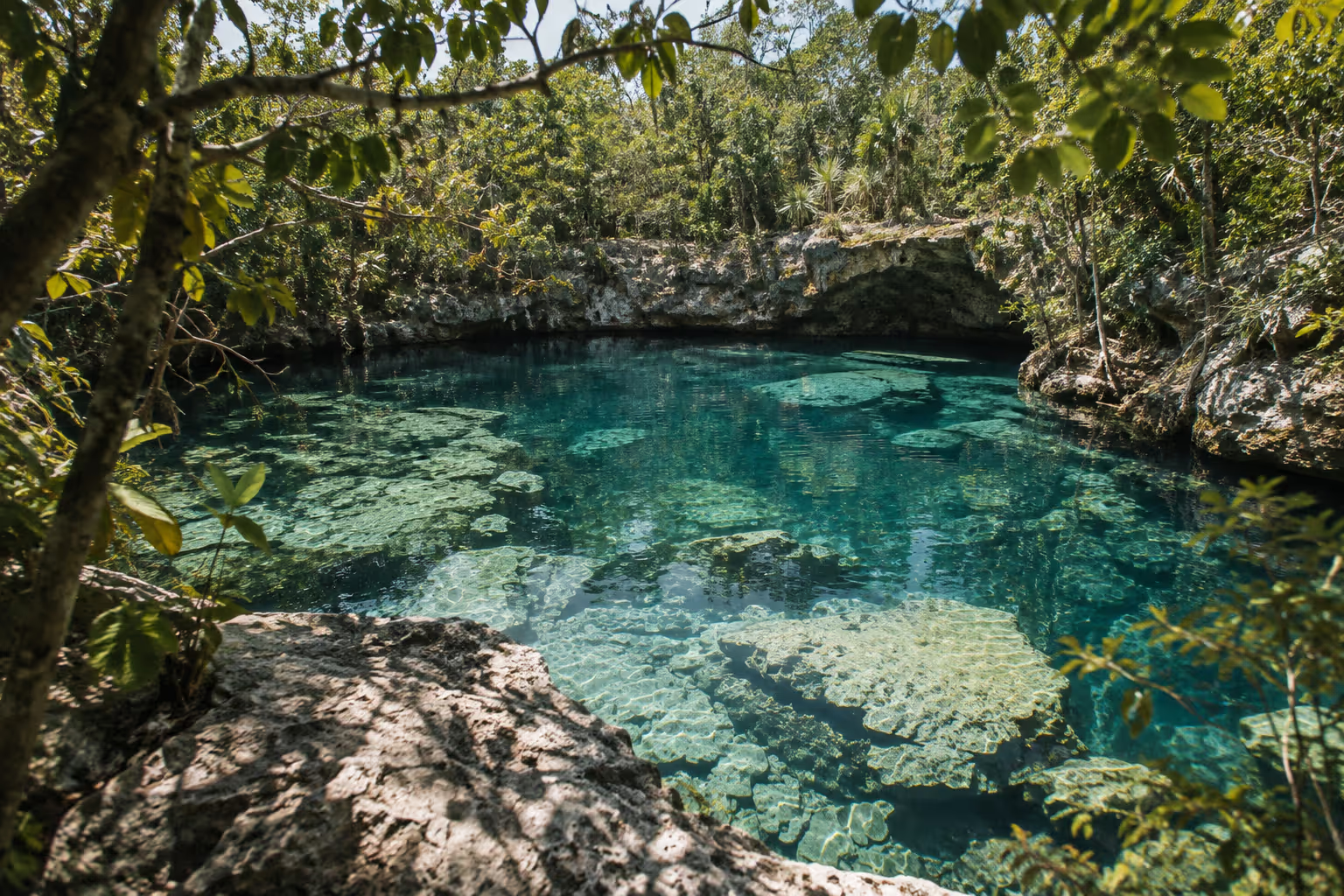
A cenote is a natural sinkhole that forms when porous limestone bedrock collapses and exposes the groundwater flowing underneath (11). Each one is a window into a network of flooded passages that reaches most of the way to the coast (9). The peninsula has no surface rivers to speak of. The water runs underground through the limestone, and a cenote is where the roof over that water gave way.
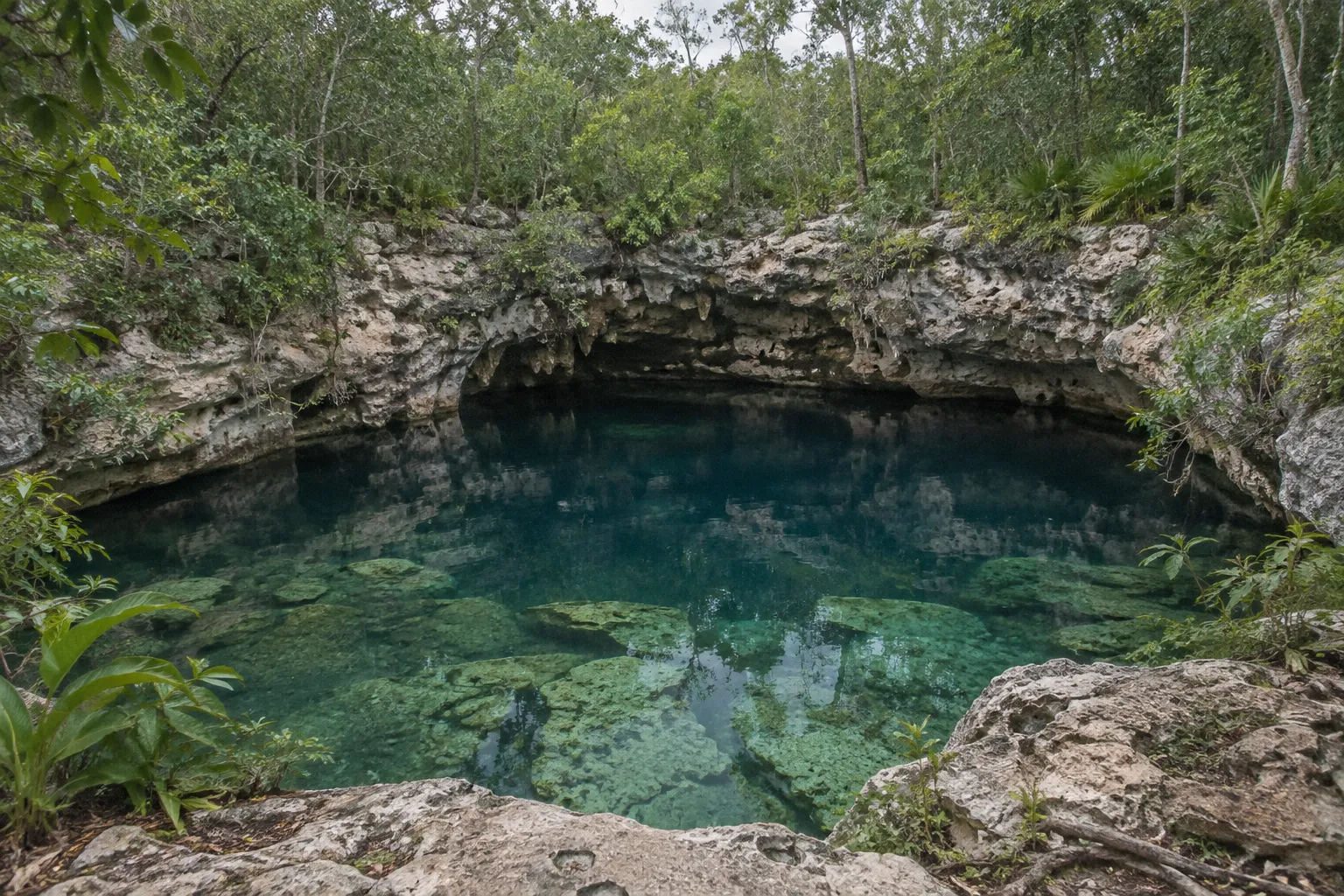
How cenotes form and why the water looks the way it does
The limestone dissolves slowly. Over a long time, underground channels widen into caverns until a section of ceiling can no longer hold and drops in. What’s left can be a wide-open pool under the sky, a partly roofed chamber with a hole of daylight, or a cavern that stays almost fully enclosed. Around Tulum, those collapses open onto the longest mapped flooded cave system in the world, and the water holds at about 24°C (75°F) all year (9).
That steady temperature affects your planning. There is no “warm-water month” for cenotes. The water feels cool on a hot day and roughly the same in January as in August. Pick your Riviera Maya dates for the beach weather and your budget, then pick your time of day for the cenotes, because crowd timing changes the visit far more than the season does.
Water sources and sacred sites
Cenotes were never just swimming holes. According to the University of North Carolina’s Research Laboratories of Archaeology, cenotes are central to Maya cultural and natural history, serving as water sources and sacred pilgrimage sites, and today they also support regional tourism economies (11). The best-known example is the Sacred Cenote at Chichen Itza, a long day trip inland. In a landscape without rivers, a cenote decided where a community could live. Many are still run by the ejido, the community landholding, whose land they sit on, which is why so few publish a price or a website (9).
How many cenotes are there?
Estimates for the whole Yucatán Peninsula run to more than 6,000 cenotes (10). The useful number for a trip is smaller: there are more than twenty swimmable cenotes within an hour of Tulum (9). That is far more than you can visit in one stay, which is why distance and ticket type should drive your choice.
The Best Cenotes Riviera Maya Visitors Can Reach: Open, Semi-Open, and Cave Picks
The best cenotes in the Riviera Maya for a first visit are Gran Cenote and Dos Ojos near Tulum for mixed open and cavern swimming, and Cenote Azul near Playa del Carmen for an easy open-air pool. Everything else on this list either fills a specific need or works as an add-on.
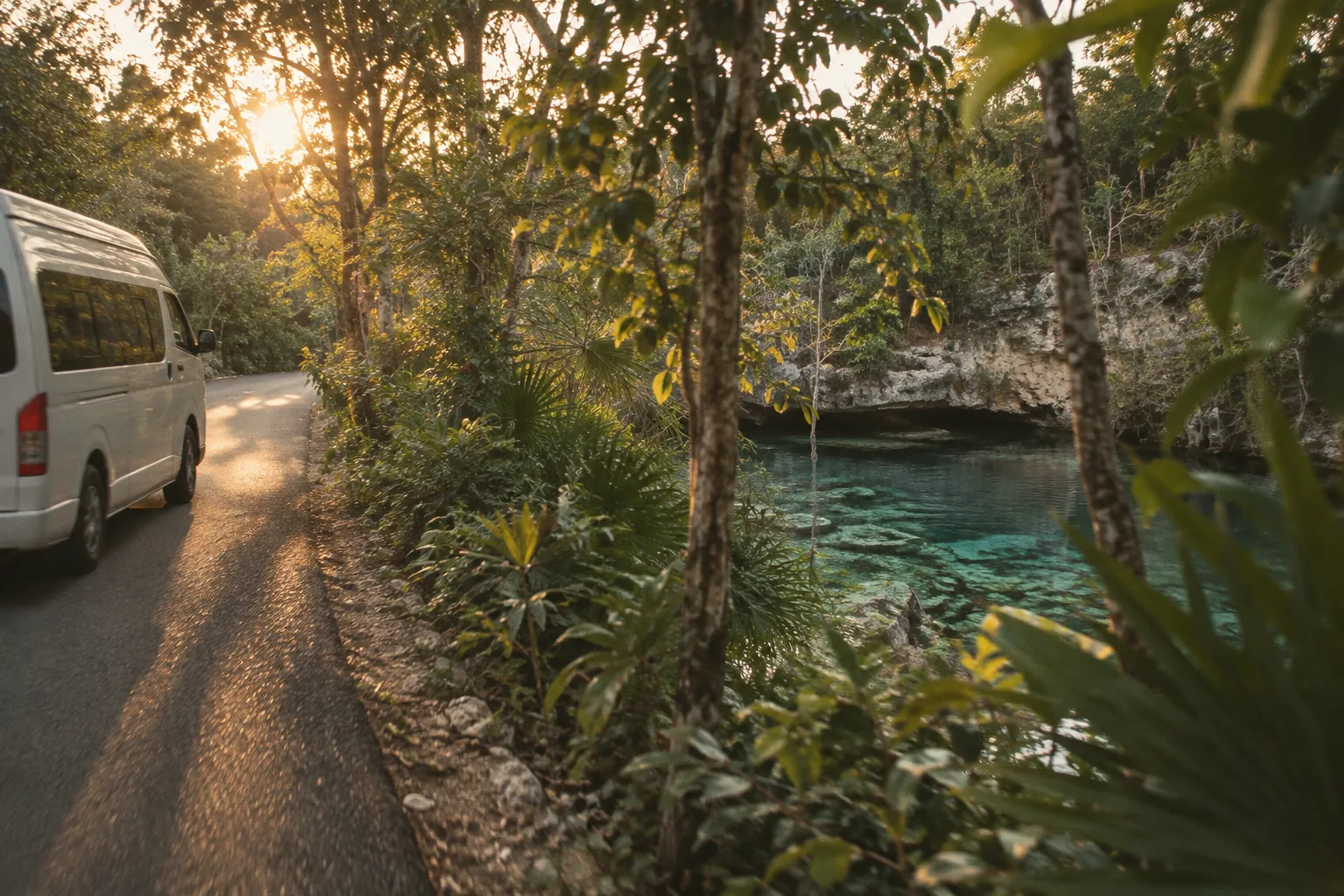
The three-type framework works like this:
- Open cenotes: no roof, full daylight, behaves like a natural pool. Easiest swimming, most sun exposure.
- Semi-open cenotes: part of the pool sits under a rock overhang or opens into cave sections. You get daylight and stalactites in the same swim.
- Cave or cavern cenotes: mostly enclosed, darker, and often guided.
Around Tulum, the cenotes fall into three groups: open pools you swim in, cavern systems you snorkel through, and deep shafts for certified divers (9). Dos Ojos shows the split inside a single park, because it keeps its swimming areas separate from its guided cave route (5).
Quick comparison of the featured cenotes
Gran Cenote is one of the closest high-quality swims to Tulum, and it’s semi-open with two pools joined by an underwater passage; no guide needed. Dos Ojos, well north of town, mixes marked-area cavern swimming with a guided Bat Cave, and you only need a guide for the cave routes. Cenote Azul is open-air, near Playa del Carmen, no guide needed. Casa Tortuga bundles a guide and a life jacket into one admission. Cenote Calavera is the closest of the group to Tulum and suits a short, independent stop. Full distances, prices and hours for each are in the table below.
Read the comparison by your constraint. If you have half a day in Tulum, the real choice is Gran Cenote versus Calavera. If you have a full day and a car, Dos Ojos earns the drive. If you’re staying in Playa del Carmen with kids, start with Cenote Azul.
Riviera Maya cenotes at a glance
| Gran Cenote | Dos Ojos | Cenote Azul | Casa Tortuga | Cenote Calavera | |
|---|---|---|---|---|---|
| Distance and direction | 4-5 km west of Tulum | About 22 km north of Tulum | About 20-25 km south of Playa del Carmen | Km 239 on Highway 307, north of Tulum | About 3 km west of Tulum |
| Type | Semi-open | Cavern swimming and guided cave route | Open-air | Four cenotes, guided | Jumping cenote, no shallow end |
| Entry price and reference period | MX$500 per person (February 2026) | MX$400 / MX$800 / MX$1,200 (November 2026) | MX$180 (April 2026 listing) | MX$650 basic package (November 2026) | Not published in advance |
| Hours / last admission | 08:10-16:45 / 16:15 | 08:00-16:00 / 15:30 | 08:30-17:00 / not published | 09:00-17:00 | Not published |
| Guide required? | ✗ | ✗ | ✗ | ✓ | ✗ |
Cenotes Near Tulum: Gran Cenote and Dos Ojos
The two most-visited cenotes near Tulum are Gran Cenote, 4-5 km (2.5-3 mi) from town, and Dos Ojos, about 22 km (14 mi) north. Dos Ojos is roughly four to five times farther from town (10)(9). On a tight schedule, that difference matters more than any photo comparison.
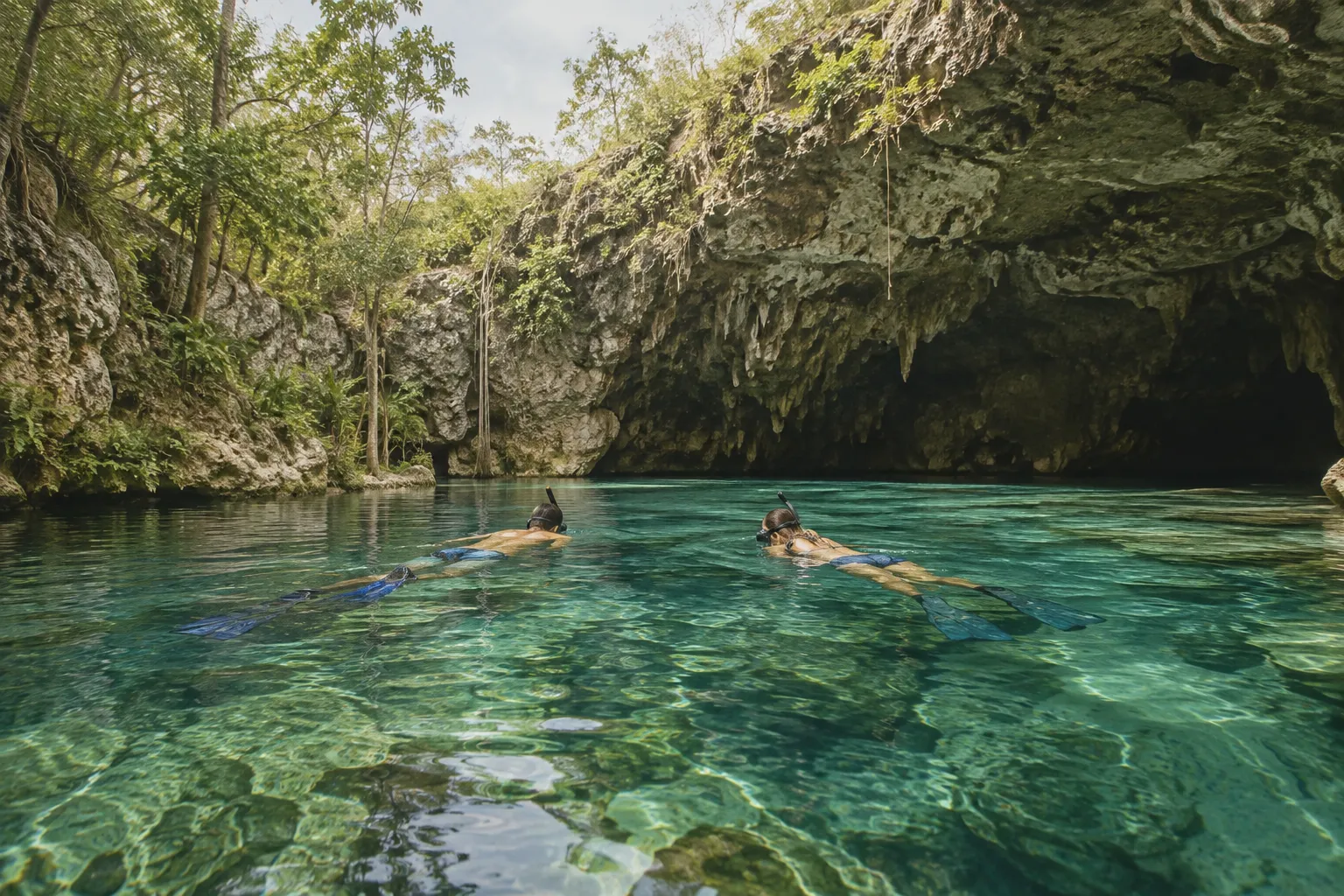
Both are worth the detour, but for different trips. Gran Cenote fits a morning swim before lunch in town. Dos Ojos is a half-day or full-day outing, especially if you add the guided cave.
Gran Cenote: open-water swim with cave corners near Tulum town
Gran Cenote is partially open and partially cave: two pools connected by an underwater passage, with stalactites overhead, turtles in the shallows, and clear visibility for snorkeling (10). It sits off the Cobá road west of town, about 4 km (2.5 mi) out and roughly a 15-minute bike ride (9).
A Tulum cenote guide updated in February 2026 listed the hours as 08:10-16:45, with last entry at 16:15, and entry at MX$500 per person with a life jacket included (7). The ejido that runs Gran Cenote publishes neither the price nor the hours, so you pay in cash at the gate (9). Bring pesos, and treat both figures as a snapshot.
Families do well here, with some caveats. Children are admitted, shallow ledges and mandatory life jackets help with safety, and toilets, changing rooms and outdoor showers are on site (4). Gear rentals are available, and shaded lawns and picnic areas give you somewhere to rest between swims (4). The downsides are deep caverns, cold water and many stairs, all of which call for close supervision of kids (4).
Visitor reviews point in both directions: some praise the clear water, the turtles and the masks included with entry, others report slippery stairs and awkward exits from the water (4). Wear water shoes and take the steps slowly.
Best time to visit Gran Cenote to avoid crowds
Arrive close to opening. Gran Cenote fills by late morning, and the crowd cuts into space on the platforms and docks (4). Early arrival is the single biggest crowd-control strategy on the Riviera Maya corridor (10). For Gran Cenote, that means being at the gate shortly after 08:10, not drifting in at 11:00 after breakfast.
The day of the week helps too: one Tulum cenote guide recommends going first thing in the morning on a weekday (7).
Here’s the honest take on Gran Cenote: at midday it’s overrated. You’ll queue on stairs and share narrow passages with tour groups. Early in the morning, it earns its reputation.
Dos Ojos: two sinkholes and three ticket tiers
Dos Ojos (“two eyes”) is two sinkholes roughly 70 m (230 ft) apart, linked by a cavern (5). The park entrance sits at km 244 on the highway north of Tulum (5). The wider park also includes Nicte-Ha, Jaguar, Cenote Monos and the dive site El Pit (5).
As of November 2026, the park lists its hours as 08:00-16:00 daily, with last admission at 15:30 (13)(12). This is the detail guides get wrong. Some still print a 17:00 closing time (5), and if you plan around it you reach the gate after the park has closed. Plan around 15:30, the last admission.
When you book, you choose one of three arrival slots: 08:00-11:00, 11:00-14:00 or 14:00-16:00. The slot is only a suggested arrival time, and you can stay until the park closes (12). For a quieter visit, book the first block, which is the quiet one (5). Combined with the drive from Tulum, you’ll need to leave town early.
Showers, toilets, life jackets and gear rental are all on site (5).
What each Dos Ojos ticket includes (and leaves out)
Dos Ojos sells three distinct tiers, and plain entry doesn’t include the cave experience most visitors picture. The adult tiers in the park’s own booking catalogue, as of November 2026, are (12)(5):
- MX$400 general admission: swimming in the marked areas only. Children aged 6 to 11 pay MX$200.
- MX$800 guided tour: Ojos 1 and 2 plus the Bat Cave.
- MX$1,200 guided full circuit: Ojos 1 and 2, the Bat Cave, Nicte-Ha and Jaguar.
The Bat Cave is part of the guided tour, not plain entry (5). It’s a dark chamber, and it may not suit visitors who are uncomfortable in enclosed water (5). If the cave is the reason you’re driving 22 km (14 mi), confirm that your ticket includes it before you pay.
Dos Ojos is also unusual in one useful way: it publishes its whole price list rather than just taking cash at a window (5). An independent guide read these prices from the park’s catalogue in September 2026 (5), and the park’s own booking catalogue still listed the same figures as of November 2026 (12). Treat them as a recent snapshot rather than a promise.
Worth the detour: the MX$800 tier if you’re comfortable in dark water. You get the brighter swim areas and the cave in one visit. Skip if short on time: the full circuit. It’s the most complete visit, but it eats most of a day you could split with a beach afternoon.
Cenotes Near Playa del Carmen: Cenote Azul and Nearby Options
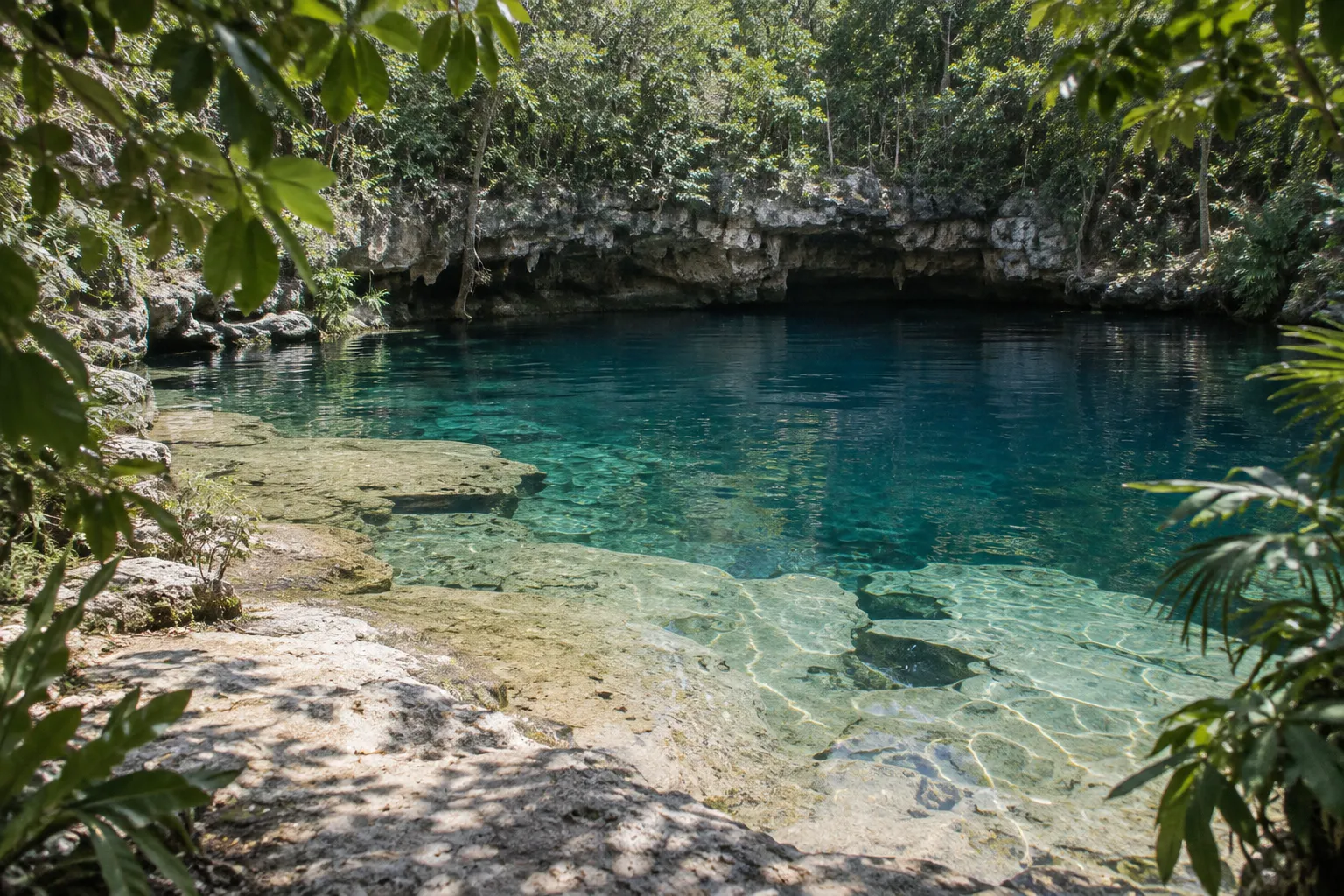
Cenote Azul is the most practical open-air cenote near Playa del Carmen. It’s an L-shaped pool about 20-25 km (12-16 mi) south of the city beside Highway 307 (8), close to Puerto Aventuras (7). Its address is Km 266 on the Cancún-Tulum highway (6). You can drive there in under half an hour from central Playa without a cave, a guide or a schedule block.
Is Cenote Azul worth it?
For the right trip, yes. Cenote Azul suits families, casual snorkelers and anyone who wants a cenote without ropes, helmets or a cave (8). A shallow limestone shelf makes it safe for young children and non-swimmers. A natural jump platform around 3 m (10 ft) high gives older kids and adults something to do (8).
Adult entry was MX$180 in a listing updated in April 2026, with life jacket rental, restrooms and parking on site (6). An August 2026 guide puts the usual range at 120-180 MXN, roughly $6-$9 USD (8). Hours are 8:30 AM to 5:00 PM daily (6).
It’s not the place for stalactites or cavern snorkeling. If you’ve already swum Gran Cenote or Dos Ojos, Cenote Azul will feel like a large, clear natural pool, pleasant but not dramatic. If it’s your first cenote, or you’re traveling with kids who just want to swim and jump, it’s one of the best value-for-effort stops on the coast.
Other cenotes near Playa del Carmen
Several cenotes near Playa del Carmen cover the other types. Listings for the area include Cenote Abierto, Cenote Chac Mool (semi-open, with snorkel and scuba), and the enclosed Cenote Chaak Tun and Cenote Chikin Ha (6). If you’re based in Playa del Carmen and want a cave experience without driving to Tulum, a semi-open or closed site from that group is the closer alternative. Check the current entry and opening details before you go.
Highway access from Playa del Carmen
Highway 307 is the spine of the whole corridor. Cenote Azul sits right beside it (8), which makes it the easiest cenote on this list to reach by car or by a colectivo running the highway. Heading south, Dos Ojos also lies off Highway 307 further down toward Tulum (9). From Playa you can pair Cenote Azul with Dos Ojos in one southbound day if you start early enough to make the Dos Ojos 15:30 cutoff (5).
Casa Tortuga, Casa Cenote, and Cenote Calavera: Other Options Worth a Stop
Casa Tortuga, Casa Cenote and Cenote Calavera round out the cenotes near Tulum. Casa Tortuga is the guided pick, and the other two are short independent stops.
Casa Tortuga: guided, with equipment included
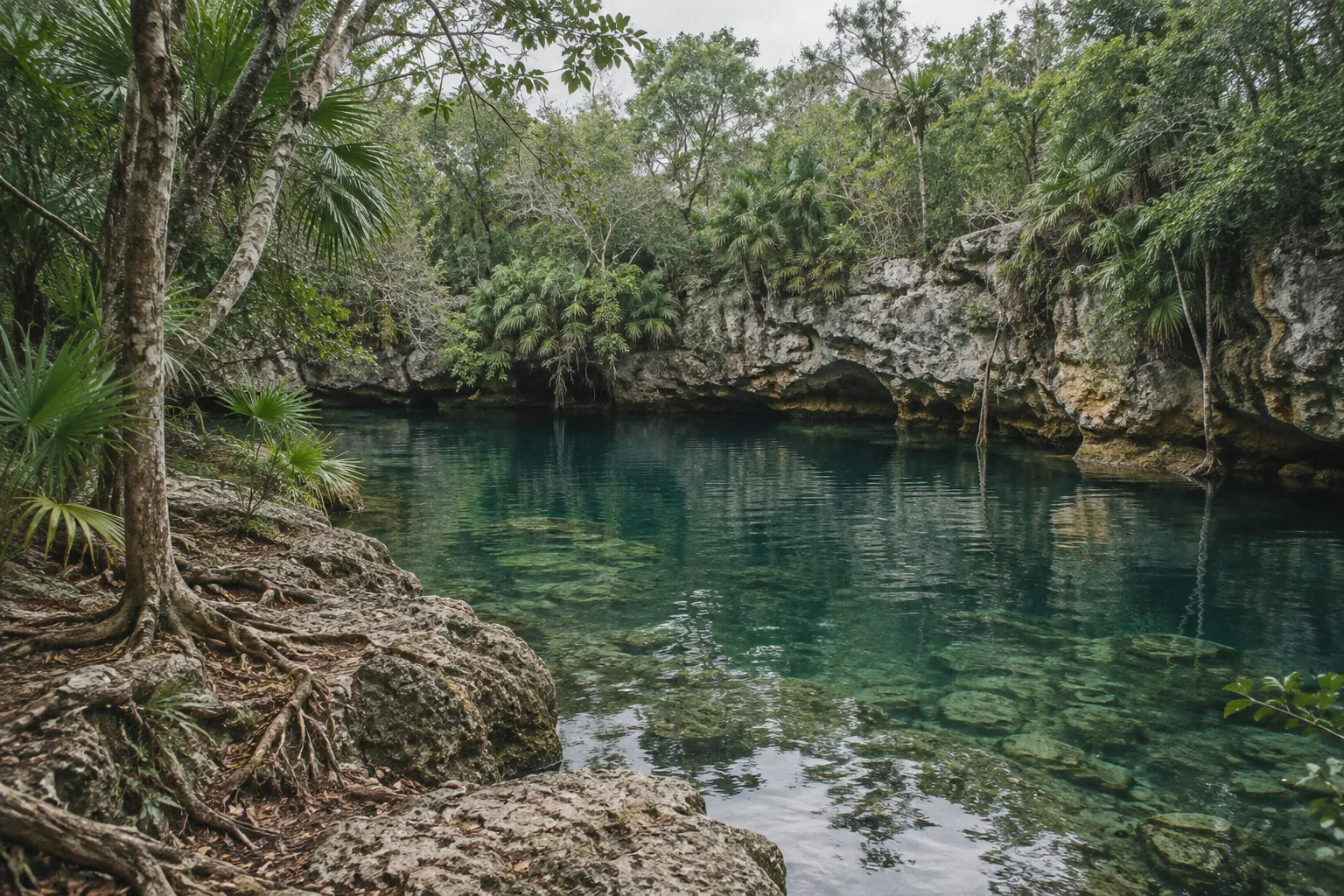
Casa Tortuga, at km 239 on Highway 307 north of Tulum, works differently from Gran Cenote or Cenote Azul: it is four cenotes on one site, and its basic package is MX$650 per person on the park’s own site as of November 2026, from 9:00 to 17:00 (14). That package includes a local guide and a life jacket (15). The bundle makes it a good fit if you’d rather not rent gear piece by piece or figure out the site on your own. It’s also a sensible first cenote for nervous swimmers who want someone leading the way.
Casa Cenote
Casa Cenote sits about 12 km (7.5 mi) north of Tulum on Highway 307, so you’ll need road transport rather than a bike (9). It lies on the same northbound run as Dos Ojos, about halfway out. That makes it a natural add-on if you’re already driving that direction and have time after your Dos Ojos block.
Cenote Calavera
Cenote Calavera is the closest to town of any cenote here, about 3 km (1.9 mi) west on the Cobá road and roughly a 10-minute bike ride (9). It is a jumping cenote: a ladder drops into a round chamber with no shallow end (9). It’s on the same road as Gran Cenote, so the two pair easily in a morning by bike.
Worth the detour: Casa Tortuga if you want gear and guidance handled for you. Skip if short on time: Casa Cenote, unless you’re already heading north to Dos Ojos.
Open, Semi-Open, and Cave Cenotes: Which Type Fits Your Trip
The right cenote type depends on how you feel about enclosed water. Open cenotes like Cenote Azul and Nicte-Ha suit easy swimming, semi-open sites like Gran Cenote mix daylight and caves, and cavern routes like the Dos Ojos Bat Cave are guided and dark (8)(5).
Match the type to the least comfortable person in your group:
- Non-swimmers and young kids: open cenotes with shallow shelves. Cenote Azul’s limestone shelf fits this (8).
- Confident swimmers who want caves without commitment: semi-open cenotes. At Gran Cenote you can stay in the daylight pool or swim toward the cave corners at your own pace (10).
- Snorkelers and the curious: guided cavern routes, such as Dos Ojos at the MX$800 tier (5).
- Certified divers: the deep shafts and dive sites, such as El Pit in the Dos Ojos park (9)(5). Certification is required (5).
What is the prettiest cenote?
It depends on the type, and the honest answer is that “prettiest” means three different things. For light and color, open cenotes win: full sun on clear water over pale limestone. For the classic cenote photo with stalactites, roots and light shafts, semi-open sites win. For a first cenote, the cavern swim at Dos Ojos is the one that looks like the photographs (9). Gran Cenote competes on stalactites and turtles (10).
Snorkeling versus enclosed-cave comfort
Snorkeling in a semi-open pool means you can surface into daylight whenever you want. A cave route takes away that option for a stretch. The Bat Cave is dark and enclosed (5), and the lack of an easy exit bothers some people more than the darkness. If you’ve never swum in a cavern, start with a semi-open cenote before you pay for a guided cave tier.
Cenote Locations and Getting There from Tulum or Playa del Carmen
The featured cenotes fall along two roads. Gran Cenote and Cenote Calavera sit west of Tulum on the Cobá road. Dos Ojos, Casa Cenote and Cenote Azul sit along Highway 307 north of Tulum toward Playa del Carmen (9)(8).
Here’s the layout by road:
- Cobá road, west of Tulum: Cenote Calavera (about 3 km / 1.9 mi), Gran Cenote (about 4 km / 2.5 mi), Cenote Zacil-Ha (about 8 km / 5 mi). All three are reachable by bike, though Zacil-Ha is a hot ride (9).
- Highway 307, north of Tulum: Casa Cenote (about 12 km / 7.5 mi) and Dos Ojos (about 22 km / 14 mi). Neither is practical by bike from town (9).
- Highway 307, south of Playa del Carmen: Cenote Azul, about 20-25 km (12-16 mi) from the city (8), close to Puerto Aventuras (7).
Colectivo versus rental car
Colectivos, the shared vans that run Highway 307, are cheap and frequent, but they don’t solve the last stretch. At Dos Ojos, a colectivo drops you about 2 km (1.2 mi) from the park gate (5). Your trip isn’t done until you walk that stretch in the heat or arrange a bike for it. Factor that in before you aim for the 08:00-11:00 quiet block, because a late walk can push you into the busier slot.
A rental car removes that problem and makes it easy to chain cenotes along Highway 307: Cenote Azul, then Dos Ojos, then Casa Cenote, all in one direction. For the Cobá road cenotes near Tulum, a bike is often the better tool, because the distances are short (9).
Cancun’s cenotes are a separate cluster
If you’re staying in Cancun, the cenotes in this guide are a long day trip, not a quick swim. The cenotes Cancun-based visitors usually reach form a separate group to the north, including the Ruta de los Cenotes near Puerto Morelos (10). That’s a different set of sites, roads and day-trip logistics.
Cenote Swimming Rules You Need to Follow
Cenote swimming rules center on two requirements: shower before you swim, and don’t put sunscreen or other products on your skin before entering the water. At Dos Ojos, only certified biodegradable sunscreen is allowed, and nothing should be applied before entering the water (5).
These rules can look fussy, but the pool you swim in is part of the aquifer that supplies drinking water across the peninsula (9). Anything on your skin goes straight into it.
Shower and sunscreen rules before you swim
At Dos Ojos, the park asks you to shower before you go in (12), and there are freshwater showers at the exit of every cenote in the park (5). Gran Cenote also has outdoor showers (4). Many gates will send you back if you arrive wearing sunscreen or repellent (9).
Sunscreen is where visitors get caught out. The Dos Ojos rule allows only certified biodegradable sunscreen, and it also says nothing should be applied before entering the water (5). In practice, “biodegradable” on your bottle doesn’t let you slather it on at the shower. Don’t apply sunscreen just before entering the water, even a reef-safe one (5). If you need sun protection for an open cenote like Cenote Azul, wear a rash guard or long-sleeve swim shirt instead. That gear choice beats arguing at the gate.
The same principle applies to insect repellent, lotion and makeup. If you put it on your skin, wash it off before you swim.
What to pack and what gear is allowed
For Dos Ojos, the recommended kit is a swimsuit already on, a towel, water shoes, dry clothes and cash for anything sold on site (5). That list works for every cenote in this guide:
- Water shoes: the wet limestone steps at Dos Ojos are specifically flagged as a hazard (5), and Gran Cenote’s stairs and rocky paths can be slippery too (4).
- Rash guard: sun protection that doesn’t break the sunscreen rule.
- Mask and snorkel: personal snorkel and dive gear is allowed at Dos Ojos, and rentals are available on site (5). Gran Cenote also has on-site rentals (4).
- Cash in pesos: most cenotes near Tulum take cash only at the gate (9).
- Dry bag: for phone and cash on the platforms.
Divers at Dos Ojos must bring proof of their certification (13). Life jackets are mandatory at Gran Cenote (4), available to rent at Cenote Azul (6) and provided at Dos Ojos (5), so you don’t need to bring your own.
Cenote Entrance Fees: From a Budget Swim to a Full Guided Circuit
Cenote entrance fees in the Riviera Maya range from MX$180 for adult entry at Cenote Azul (April 2026 listing) up to MX$1,200 for the full guided circuit at Dos Ojos (November 2026) (6)(12). A simple swim costs a fraction of a full guided cave day.
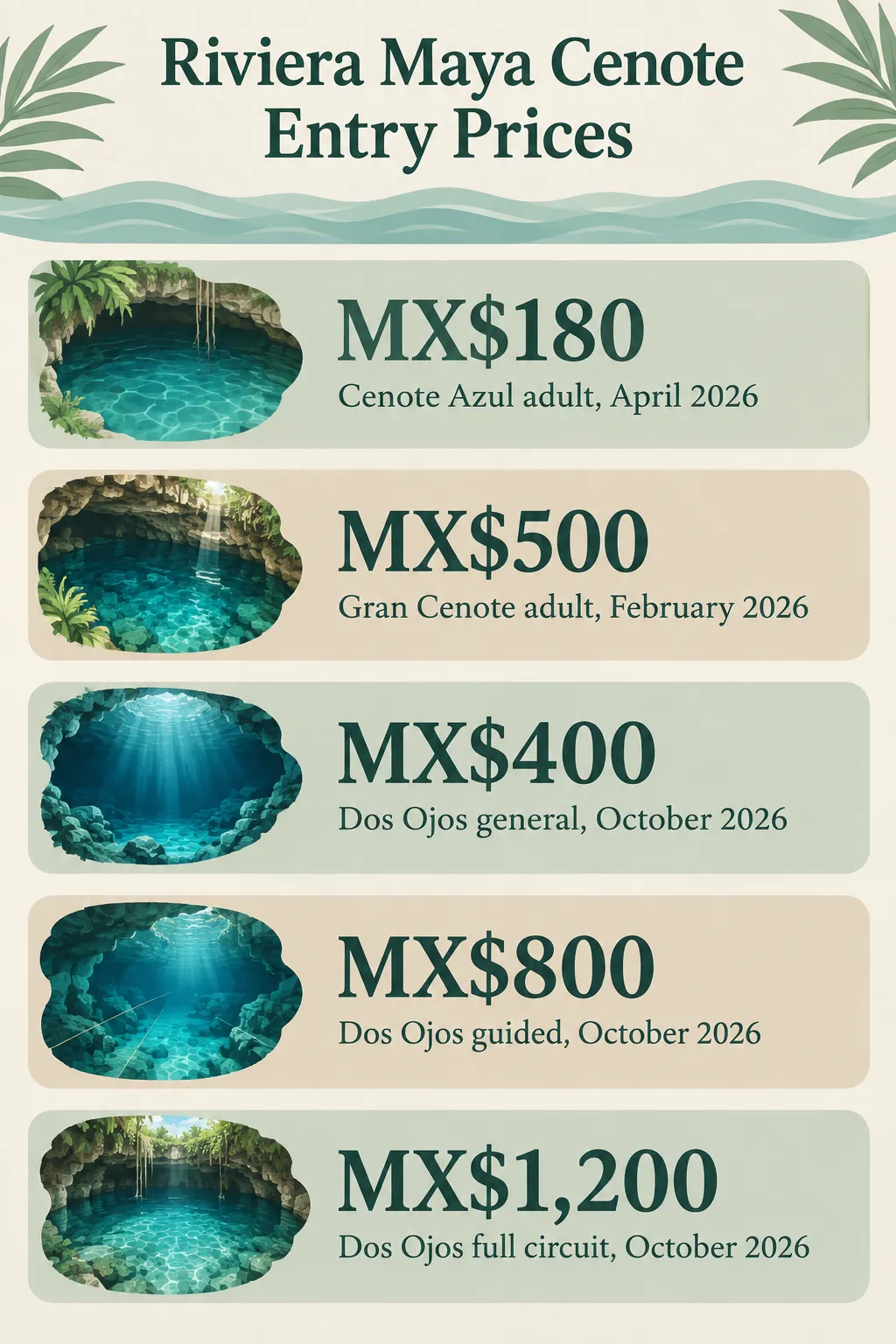 Recent listings put adult entry at MX$180 for Cenote Azul (April 2026), MX$500 for Gran Cenote (February 2026), and MX$400, MX$800, or MX$1,200 for Dos Ojos tiers (October 2026, unchanged in November 2026).
Two cautions. First, Dos Ojos and Casa Tortuga publish their prices online (12)(14). At most other gates near Tulum you pay cash and the price isn’t posted in advance (9), so carry more pesos than you think you’ll need. Second, entry fees and schedules change seasonally (10). Treat every figure above as a recent snapshot, and check before you go if you’re planning a tight budget.
If you’re budgeting a multi-cenote day, gear and transport will add to the bill. Bringing your own mask and choosing a package that includes the life jacket and guide, like Casa Tortuga’s, both help.
Frequently Asked Questions
- Which Riviera Maya cenote is prettiest?
- The best-looking cenote depends on whether you prefer open sky, stalactites, or a dark cavern; choose the setting that suits your comfort in water.
- Which cenote should Cancun visitors choose?
- Cancun visitors should plan around the northern cenote cluster near Puerto Morelos; Tulum-area sites are a separate outing with different road logistics.
- Why can a cenote stop selling tickets before its closing time?
- Ticket sales stop early enough to leave visitors time inside; check the admission cutoff separately because a posted closing time does not guarantee entry.
- Is Cenote Azul a good choice for a first cenote visit?
- Cenote Azul is a straightforward first visit for people who want open water without a guided cave; choose another site if stalactites are the priority.
- What should I pack if I plan to visit more than one cenote?
- Pack quick-drying swim clothes and a rash guard so you can move between stops without relying on sunscreen or changing facilities at every site.
- Which cenote is the simplest fit for a mixed-age family?
- Cenote Azul is the simpler family choice when some swimmers want shallow open water and others want a jump, while cave routes require more comfort.
- Can I visit Dos Ojos without booking a guided cave tour?
- Yes, visitors can swim in Dos Ojos' marked areas without a cave guide; buy a guided tier only if the Bat Cave or full circuit is part of the plan.
- Why do cenotes close at 5?
- Many cenotes near Tulum are run by the local ejido and keep daytime hours; Dos Ojos closes even earlier, at 16:00 as of November 2026, and stops selling tickets at 15:30, so plan around the last-admission time.
Planning Your Cenote Day
The right cenote comes down to two things: how far you’re willing to travel, and how comfortable you are in enclosed water. From Tulum, choose Gran Cenote for an early-morning swim 4-5 km (2.5-3 mi) from town, or Dos Ojos for a half-day cavern outing about 22 km (14 mi) north (10)(9). From Playa del Carmen, Cenote Azul gives you a family-friendly open-air swim beside Highway 307 (8).
Before you leave, run three checks. Confirm the last admission time, not just the closing time, because Dos Ojos stops selling tickets at 15:30 (5). Confirm that your Dos Ojos tier includes the Bat Cave if that’s why you’re going. And bring pesos, water shoes and a rash guard so the cash-only gates and the sunscreen rule don’t cut your swim short.