A road trip from Pennsylvania to Tennessee runs longer than the map suggests: Philadelphia to Nashville is 803 miles and 13 to 15 hours door to door with Baltimore-DC traffic. Split it over two days with a night near Roanoke rather than pushing through. Then choose your route: the fast I-81 slab, or the scenic Skyline Drive and Blue Ridge Parkway that adds hours but earns them. Go in spring or October for the foliage. And buy the Smokies Park It Forward parking tag online before you arrive.
How Long Is the Road Trip from Pennsylvania to Tennessee?
Planning a road trip from Pennsylvania to Tennessee requires more time than the map suggests. The distances and driving times vary depending on your starting point and destination within these states, but expect longer hours on the road than just the direct mileage indicates.
If you’re searching “how far is Tennessee from Pennsylvania” — the one-way driving distance is roughly 700–800 miles depending on your exact start and end cities. A Philadelphia-to-Nashville drive is 803 miles; Pittsburgh to Nashville is closer to 560 miles. Driving from Philly to Tennessee (Nashville or Knoxville) is a full-day commitment of 10–15 hours depending on route and traffic.
- Philadelphia → Nashville: 803 miles, 12 hours 14 minutes direct driving via I-95, I-495, I-66, I-81, and I-40 (2). With traffic around Baltimore and DC, fuel stops, and meals, plan 13 to 15 hours door-to-door.
- Pittsburgh → Nashville: ~560 miles, about 10 hours via I-79, I-64, and I-65 (4).
- Harrisburg → Pigeon Forge: ~500-530 miles, 8.5 to 9.5 hours on I-81 through Maryland, West Virginia, and Virginia (1).
- Philadelphia → Knoxville: ~690 miles, roughly 10.5 hours.
- Pittsburgh → Memphis: ~770 miles, around 11.5 hours via I-70 and I-65.
Most travelers should not attempt this in a single push. NHTSA driver fatigue guidance suggests capping continuous driving at 8 to 9 hours and taking a 15-minute break every 2 to 3 hours. Splitting Philadelphia-Nashville into two days, with an overnight near Roanoke, Virginia, is the standard play.
If you’ve got the time, stretch it to four or five days. That’s where this route earns its reputation.
Choosing Your Route: Direct vs. Scenic
You’re basically picking between three approaches.
The fast interstate route (12-13 hours of driving): I-95 → I-495 → I-66 → I-81 → I-40. This is the spine of the trip - flat, fast, and packed with truck traffic. Use it if you’re trying to get to Nashville in two days flat.
The scenic mountain route (16-20+ hours of driving): Pick up Skyline Drive in Front Royal, Virginia ($30 per vehicle for a 7-day pass), connect into the Blue Ridge Parkway (469 miles of free but slow road, speed limits 35-45 mph), drop into Asheville, then cross I-40 into the Smokies. This adds 4 to 8 hours of drive time over interstates, but you get Shenandoah National Park and the Blue Ridge in one shot.
The city-hopping route (5 to 10 days): Philadelphia → Hershey → Gettysburg → Baltimore → Washington DC → Charlottesville → Asheville → Great Smokies → Nashville. This is the route most readers actually want. You’re driving a maximum of 3 to 4 hours a day and spending real time in places.
Choosing Your Route:
- Direct (Faster, Fewer Stops): Best for time-poor travelers. Use Google Maps, Apple Maps, or Waze. Build in one overnight in Roanoke or Wytheville, Virginia.
- Scenic (Slower, More Stops): Best for fall foliage trips and travelers who’d rather see the country than make miles. Sections of the Blue Ridge Parkway and the Natchez Trace Parkway deliver the views.
- City-hopping: Best for a 5- to 10-day vacation combining history, food, and mountains.
Plan stops in advance once you’ve settled on a route. This saves money - unplanned pit stops mean overpaying for gas at highway exits and eating whatever fast food is closest.
If you’re traveling with kids, plan frequent rest stops so everyone can get out and stretch. State welcome centers along I-81 in Maryland, West Virginia, Virginia, and Tennessee are clean, free, and often have picnic areas.
Planning Your Stops:
- Use itinerary apps: Roadtrippers offers tiered plans starting at about $35.99/year (Basic), Wanderlog Pro is around $39.99/year, and Google My Maps is free. All three let you see your itinerary and your map in one view.
- Set a daily drive cap: 4 to 5 hours max per day on a leisure trip. The tools above will auto-suggest overnight cities based on the cap you set.
- Factor in travel time and interests: Stops that cater to history buffs (Gettysburg, Antietam, Chattanooga battlefields), families (Hersheypark, Dollywood, aquariums), or outdoor types (Shenandoah, Blue Ridge, Smokies) shape where you should overnight.
Create Your Ultimate Travel Itinerary
The mistake most trip planners make is listing 40 stops with no day-by-day structure. Here’s how to actually build the trip based on how many days you have.
Build Your Pennsylvania to Tennessee Road Trip Itinerary
Up to 10 daysDay-by-day planning based on trip length and interests.
- 1
3-Day Sprint (Philadelphia → Nashville)
Day 1: Philadelphia → Gettysburg (140 miles, 2.5 hrs). Spend 3 to 4 hours at the battlefield, then push to Harrisonburg or Staunton, Virginia (~3.5 hrs from Gettysburg). Total drive: ~6 hours. Day 2: Staunton → Asheville via I-81 and I-26 (~4.5 hrs). Afternoon in downtown Asheville. Overnight there. Total drive: 4.5 hours. Day 3: Asheville → Nashville via I-40 through the Smokies (~5 hours, more with stops). Arrive evening.
- 2
5-Day Balanced Trip
Day 1: Philadelphia → Hershey (1.5 hrs). Hershey's Chocolate World morning, drive to Gettysburg (~1 hr). Overnight Gettysburg. Day 2: Gettysburg battlefield tour morning, drive to Washington DC (~1.5 hrs via US-15/I-270). Afternoon on the National Mall. Overnight DC or Arlington. Day 3: DC → Charlottesville (~2.5 hrs). Monticello afternoon. Continue to Roanoke (~2 hrs). Overnight Roanoke. Day 4: Roanoke → Asheville (~4 hrs via I-81/I-26, longer via Blue Ridge Parkway). Biltmore or downtown Asheville. Overnight Asheville. Day 5: Asheville → Gatlinburg → Nashville (~6.5 hrs total with a Smokies stop). Or skip the Smokies and arrive Nashville mid-afternoon.
- 3
7- to 10-Day Ultimate Itinerary
Layer in Baltimore (Inner Harbor, National Aquarium), a second DC day, and a full day in the Smokies (Cades Cove loop, a hike, the chairlift in Gatlinburg). Add Pigeon Forge for Dollywood if you're traveling with kids, and Chattanooga as a final stop before Nashville if you want to break up the I-40 stretch. Build the whole thing in Wanderlog or Roadtrippers, set your daily drive limit, then export the route to Google Maps for turn-by-turn navigation.
Your Itinerary and Your Map in One View
Trying to manage a multi-day drive from Pennsylvania through to Tennessee in your head is how you end up at a dead motel at 11 p.m. Use one of these:
- Wanderlog (free / Pro ~$39.99/year): Strong for road trip use specifically. Drop pins, get drive times between each stop, and the app suggests where to overnight based on your daily drive cap. Prices can vary by region and promotion — check Wanderlog’s pricing page for your current rate.
- Roadtrippers (plans from ~$35.99/year): Similar functionality with a built-in database of quirky roadside stops. Roadtrippers now offers tiered paid plans (Basic ~$35.99/year, Pro ~$49.99/year, Premium ~$59.99/year). The free tier limits you to 7 waypoints, which isn’t enough for this trip.
- Google My Maps (free): Most flexible if you don’t mind doing the work yourself. Create layers for “drive route,” “lodging,” “must-see,” and “maybe.” Share the map with whoever’s riding shotgun.
Pro move: build the itinerary in Wanderlog or Roadtrippers for the planning phase, then export the daily route to Google Maps each morning for navigation. Cell coverage drops in the Smokies and along stretches of the Blue Ridge Parkway, so download offline maps before you leave the hotel.
Items to Pack: Clothes, Maps, Survival Equipment, and a First-Aid Kit
Clothing: Pack for diverse weather. Layers matter - you could leave Philadelphia at 75°F and hit 50°F at Newfound Gap in the Smokies the same week. Rain shell, fleece or light jacket, and at least one pair of decent walking shoes (you’ll log real miles in DC and on Broadway in Nashville).
Navigation: GPS apps cover 90% of the trip, but cell service drops on stretches of I-81 in West Virginia, along the Blue Ridge Parkway, and inside Great Smoky Mountains National Park. Download offline Google Maps for the entire route and consider a paper road atlas as backup.
Emergency kit: Jumper cables, basic first-aid kit, flashlight with spare batteries, tire pressure gauge, a quart of motor oil, drinking water (at least one gallon), and a phone charger. In winter (December-February), add a blanket, ice scraper, and small snow shovel - I-81 ices over fast in the Appalachians.
Documents: Driver’s license, vehicle registration, current insurance card. International visitors should carry their home license plus an International Driving Permit (about $20 through AAA).
Money: Most places take cards, but small parkway entrances, some campground self-pay stations, and rural diners are still cash-only. Carry $50-$100 in small bills.
Is It Cheaper to Fly or Take a Road Trip?
Depends on your group size and trip length. Here’s the math.
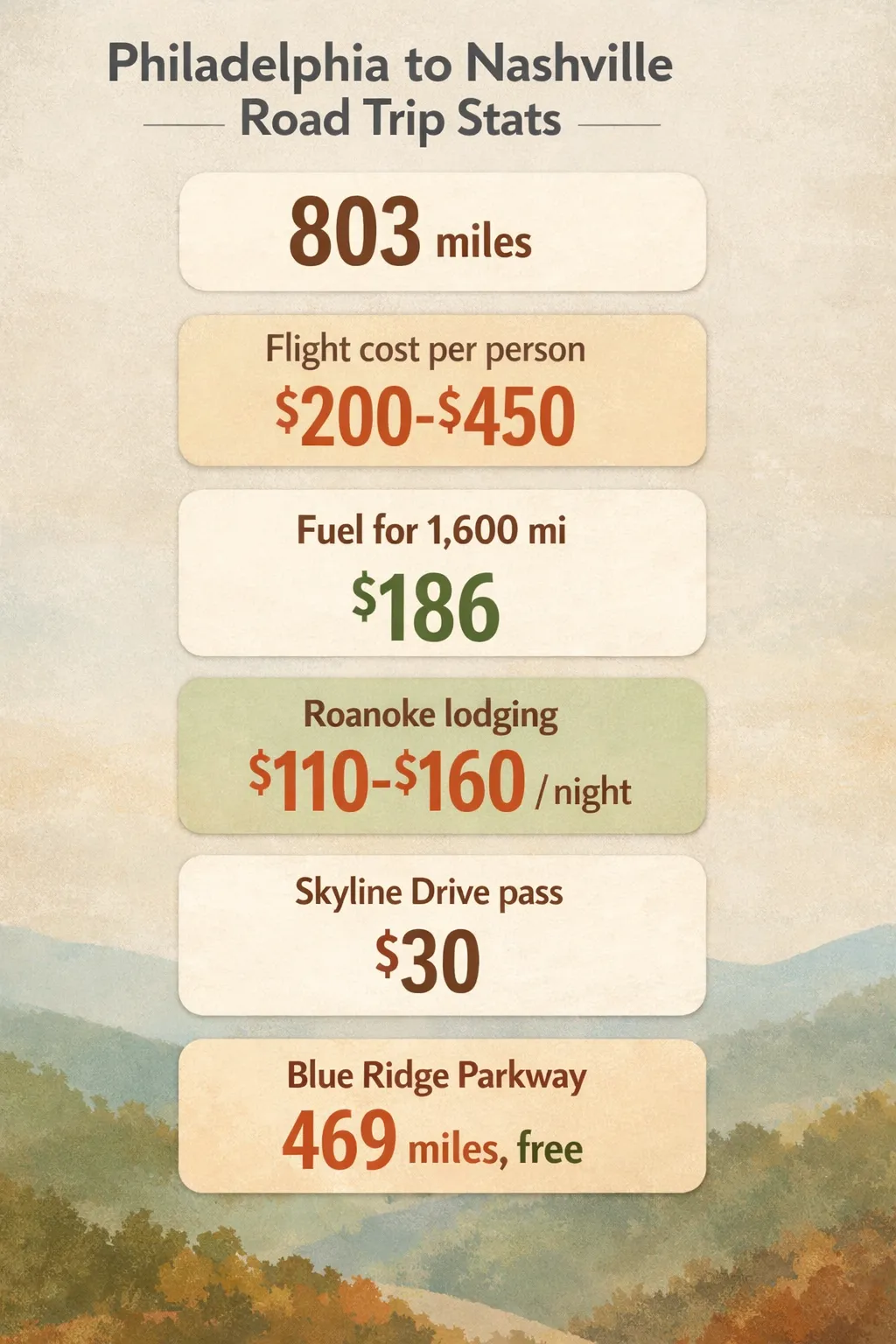 Road trip stats from Philadelphia to Nashville: 803 miles, flight $200-$450 per person, fuel $186 for 1600 miles, Roanoke lodging $110-$160/night, Skyline Drive $30, Blue Ridge Parkway 469 miles free.
Flying Philadelphia or Pittsburgh to Nashville (BNA): Round-trip basic economy runs $200 to $450 per person depending on season. A family of four is looking at $800 to $1,800 in airfare alone, plus a rental car at Nashville (often $400-$700 for a week with fees), plus airport parking or rideshare on the home end.
Driving 800 miles each way (1,600 total) in a 30 mpg car at ~$4.15/gal (AAA national average, September 2026): About $221 in fuel. Even at 20 mpg, you’re at $332. Add hotels for the road days (2 nights each direction at $140/night = $560), and the total trip-transit cost lands around $780 to $890.
The math by group size:
- Solo traveler, 3-day trip: Flying is often cheaper or close.
- Couple, 5-day trip: Driving wins by $300-$700, and you get stops along the way.
- Family of 4, 5- to 7-day trip: Driving wins by $800-$1,500, sometimes more.
Driving also gives you the car you need on the ground - Nashville, Gatlinburg, and Asheville are not walk-everywhere cities. The flight-plus-rental-car combo eats most of the airfare savings.
The catch: time. Flying gets you there in 2 hours plus airport overhead. Driving costs you two days each way unless you push through. If you’re vacation-day constrained, fly. If you’ve got the week, drive.
What’s the Best Month to Go to Tennessee?
The short answer: April-May or late September through October.
Spring (April-May): Highs in the 65-80°F range, dogwoods and redbuds blooming through the southern Appalachians, fewer crowds than summer, and lodging prices haven’t yet hit peak. The Smokies wildflower bloom peaks in mid-April.
Summer (June-August): Hot and humid (highs 85-95°F, dew points in the 70s). Peak crowds and peak prices in Gatlinburg, Pigeon Forge, and Nashville - hotels regularly $200-$350+ per night. The upside: every attraction is open and operating full hours.
Fall (mid-September-late October): This is the sweet spot. Crisp temperatures (60-75°F), lower humidity, and peak fall foliage hits the Smokies between mid- and late-October. Book lodging 6 to 8 weeks ahead - leaf-peeper weekends sell out.
Winter (December-February): Cheapest lodging, smallest crowds, but I-81 can ice over in Pennsylvania, Maryland, West Virginia, and Virginia. The Blue Ridge Parkway closes sections during ice events. Many seasonal attractions run reduced hours, though Biltmore Candlelight is a genuine winter draw and Skyline Drive stays open weather-permitting.
Avoid major holiday weekends (Memorial Day, July 4, Labor Day, Thanksgiving) unless you’ve booked everything months out. That’s when I-81 backs up worst around Roanoke and the DC beltway.
What Is Halfway Between Philadelphia and Nashville?
By distance, the halfway point of the 803-mile Philadelphia-Nashville drive (2) lands around mile 400 - which puts you in the Roanoke, Virginia area on I-81. Roanoke is the practical overnight stop for two-day drivers.
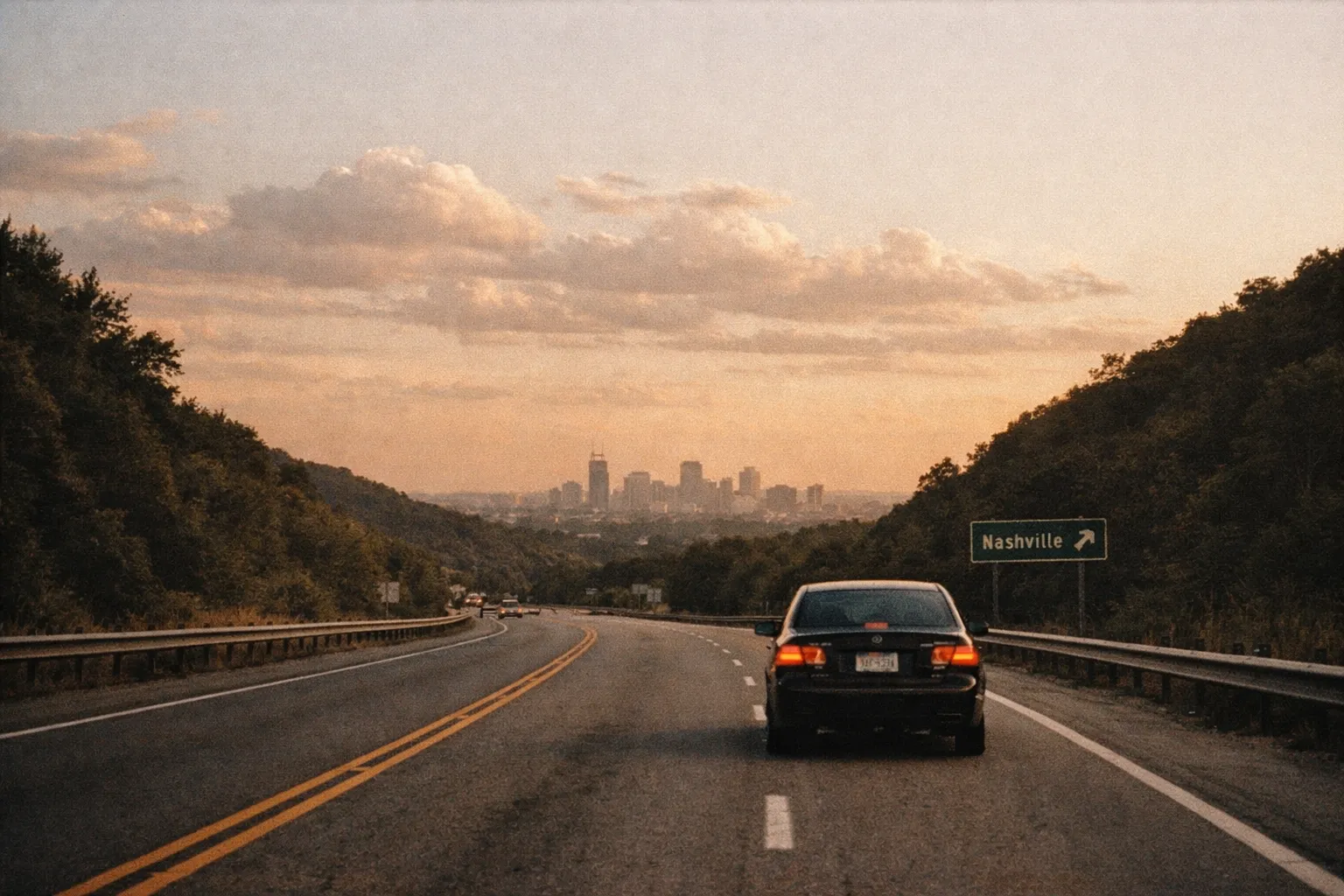
Why Roanoke works:
- Plenty of mid-scale hotels along the I-81 corridor ($110-$160/night midweek).
- Decent food scene downtown (Lucky, Bloom, Fork in the Alley).
- Mill Mountain Star overlook for a stretch-your-legs view at sunset.
- Easy back on the interstate the next morning.
Alternative halfway stops:
- Wytheville, VA: Smaller, cheaper ($80-$120/night), purely a sleep stop. About 70 miles past Roanoke heading south.
- Bristol, VA/TN: Right on the state line, a bit past halfway. Country music history (Bristol is the “Birthplace of Country Music”).
- Harrisonburg or Staunton, VA: Before Roanoke if you got a late start. Small college-town feel, walkable downtowns.
If you’re coming from Pittsburgh instead of Philadelphia, Charleston, West Virginia or Lexington, Kentucky make better halfway overnights depending on which route you take.
Stops in Pennsylvania
Two worthwhile stops sit within Pennsylvania before you cross into Maryland.
Hershey
If your route runs through central Pennsylvania, Hershey is a 1- to 4-hour stop depending on how deep you go.
Hershey’s Chocolate World is free to enter and includes the chocolate factory tour ride (free). Pay for add-ons individually: Create Your Own Candy Bar (~$25), 4D Chocolate Mystery (~$10), Trolley Works tour (~$22). Plan 1.5 to 2.5 hours total. Arrive before 10 a.m. to beat the bus tours.
Hersheypark is the full theme park - 70+ rides including ZooAmerica. One-day tickets typically run $60-$85 at the gate with frequent online discounts; the park drew 3.3+ million visitors annually pre-pandemic. Plan a full day if you’re going in. Open seasonally (roughly late April through New Year’s, with Hersheypark Christmas Candylane in winter).
Insider call: If you’re passing through and only have half a day, skip the park and do Chocolate World plus the Hershey Story Museum (~$15 admission, 1 hour). You’ll still hit the highlights without burning a full day.
Lodging in Hershey: The Hotel Hershey is the splurge option ($300-$500+/night). Hampton Inn Hershey and Country Inn Hershey are reasonable mid-range plays ($130-$180).
Gettysburg
Gettysburg National Military Park is the most reliable historical stop on this route. The Museum & Visitor Center alone is worth 2 to 3 hours.
Tickets: The Museum, film (A New Birth of Freedom), and Cyclorama painting combo runs about $18-$20 per adult. Battlefield bus tours from the Visitor Center start around $40 per adult.
Best way to see the battlefield: Hire a Licensed Battlefield Guide for a 2-hour private car tour - they ride with you in your vehicle and the cost is about $75-$90 for a carload (not per person), which makes it the best value for couples and families. Book ahead online; same-day availability is unreliable in summer.
Time budget:
- 2 hours: Visitor Center museum + film + Cyclorama.
- 4 hours: Add a licensed guide battlefield tour.
- Full day: Add the Eisenhower National Historic Site (Eisenhower’s farm, adjacent to the battlefield) and the Shriver House Museum in town.
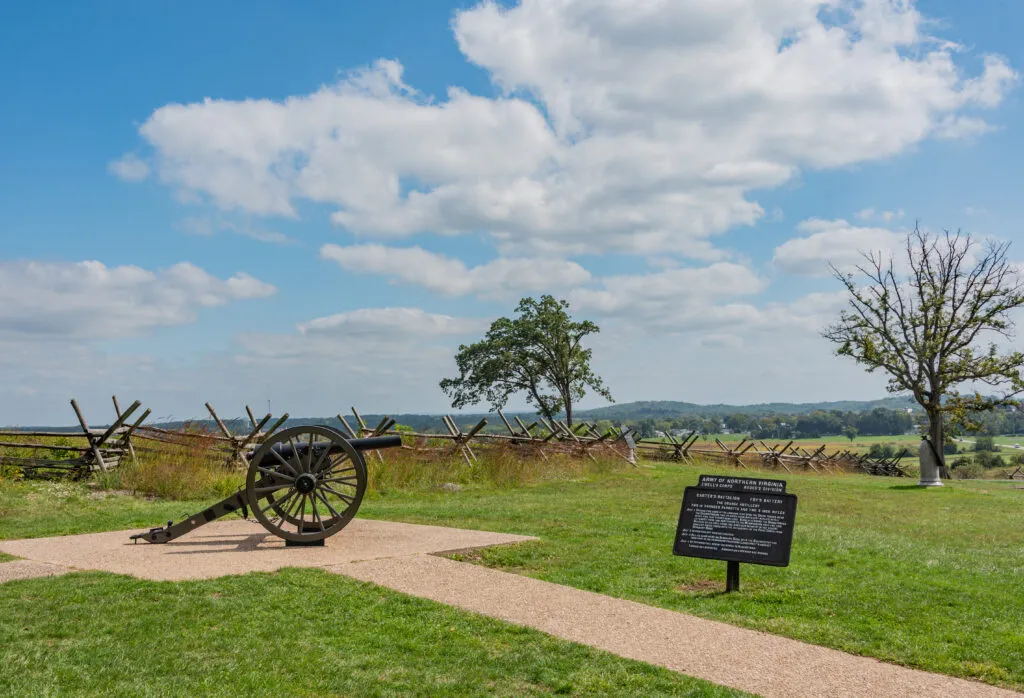
Artillery Position near the Peace Memorial, Gettysburg, Pennsylvania, USA
Stops Between Pennsylvania and Tennessee
The middle leg through Maryland, DC, Virginia, and North Carolina holds the trip’s densest cluster of stops.
Baltimore
Baltimore is 60 miles south of Gettysburg, about 1.25 hours via US-15 and I-795. If you’re routing through DC, it makes a strong half-day or overnight stop.
The reliable stops:
- Inner Harbor: Walkable, the National Aquarium ($45 adult, allow 2-3 hours) anchors the area, restaurants nearby.
- Fort McHenry National Monument: Where Francis Scott Key wrote the Star-Spangled Banner. ~$15 entrance, 1.5 hours.
- Fells Point: Cobblestone streets, bars, seafood. Best for evening.
- B&O Railroad Museum: ~$25 adult. Worth it if you’ve got rail-curious kids.
- Oriole Park at Camden Yards: Game tickets from $15. One of the best ballparks in the country.
Parking: Inner Harbor garages run $20-$35/day. The Pier 5 and Pier 6 garages are most convenient.
Lodging: Mid-range hotels in the Inner Harbor area run $150-$250. Federal Hill and Fells Point have smaller boutique options.
Washington
DC is 40 miles south of Baltimore - about an hour without traffic, two hours during weekday rush. The Smithsonian museums are the headline, and they’re free, which is rare in a major city.
Top free Smithsonian picks for a road trip stop:
- National Air and Space Museum: Currently undergoing renovation in phases; check what’s open. The Steven F. Udvar-Hazy Center near Dulles Airport has the overflow collection including the Space Shuttle Discovery.
- National Museum of Natural History: Hope Diamond, dinosaurs, the big draws.
- National Museum of American History: Star-Spangled Banner, First Ladies’ inaugural gowns.
- National Museum of African American History and Culture: Free but requires timed-entry passes; book a month or more ahead.
Other essentials: Lincoln Memorial, Vietnam Veterans Memorial, World War II Memorial, Washington Monument (timed tickets required), the Capitol (tours by appointment through your congressional office).
Parking and traffic strategy: Do not drive into central DC during weekday rush (7-10 a.m. and 3-7 p.m.). Park at a Metro station outside the Beltway - Vienna, Shady Grove, Greenbelt, Franconia-Springfield - and ride the Metro in. Parking at suburban stations runs $5-$8/day; Metro fares are $2-$6 per ride. Avoid I-95 between Baltimore and DC from 3-7 p.m. on weekdays; consider I-295 as a relief route.
Lodging: Downtown DC hotels run $250-$450+/night. Arlington (across the river) is often $50-$100 cheaper for similar quality and one Metro stop away.
Arlington County
Arlington sits just across the Potomac from DC and frequently makes the better overnight base for road-trippers.
Why it works: Easier parking, cheaper hotels, Metro access into DC, and three major sights of its own:
- Arlington National Cemetery: Free entrance, ~$15 for the tram tour if you don’t want to walk the hills. Tomb of the Unknown Soldier changing of the guard happens hourly (October-March) or every half hour (April-September).
- The Pentagon and Pentagon Memorial: The memorial is free and open 24/7. Pentagon tours require advance booking through your congressional office, 14-90 days ahead.
- United States Marine Corps War Memorial (Iwo Jima): Free, accessible 24/7. Best at sunset with the DC skyline behind it.
Lodging: Rosslyn, Crystal City, and Pentagon City all have $150-$250/night mid-range options with Metro access. Crystal City is closest to Reagan National Airport - useful if you’ve got someone flying in to join the trip.
Charlottesville
Charlottesville is 115-120 miles southwest of DC, about 2.5 to 3 hours via I-66 and US-29. This is where the trip starts shifting from urban East Coast to Appalachian foothills.
The headline stops:
- Monticello (Thomas Jefferson’s home): $32 adult for the day pass, $48 for the Behind-the-Scenes tour. Allow 3 hours. Book timed tickets ahead in summer.
- University of Virginia: Jefferson designed the Academical Village. Free self-guided walks of the Rotunda and the Lawn.
- Michie Tavern: Historic tavern with fried chicken lunch buffet for travelers who want to eat the period.
- Carter Mountain Orchard: Apple picking and cider donuts in fall, peaches in summer. Sunset views over the valley.
Where to overnight: Boutique hotels downtown ($200-$350) or chain hotels along US-29 ($120-$180). The Graduate Charlottesville is a solid mid-range pick near the university.
Onward routing: From Charlottesville you can head south on US-29 to Lynchburg and then Roanoke, or jump on Skyline Drive at Rockfish Gap for the scenic crawl down into Asheville.
Asheville
Asheville is 240-250 miles southwest of Roanoke, 4 to 4.5 hours via I-81 and I-26 - or significantly longer via the Blue Ridge Parkway. It’s the natural overnight before crossing into Tennessee.
The Biltmore Estate: Largest privately-owned home in the U.S., 8,000 acres. Tickets use dynamic pricing — daytime House & Grounds admission starts at about $80 per adult and commonly runs $100–$130+ depending on season, with peak periods such as Christmas Candlelight reaching $110–$145. Allow 4 to 6 hours for the house, gardens, and winery. Book ahead online for the discount and a guaranteed entry time.
Downtown Asheville: Walkable arts district, dozens of breweries (Wicked Weed, Burial, Highland), food scene punching well above the city’s size. Park once, walk everywhere.
Blue Ridge Parkway access: Asheville straddles the parkway. The Folk Art Center (milepost 382) and Craggy Gardens (milepost 364) make easy 1- to 2-hour detours. Check NPS real-time closures before heading up - ice and fog close sections often.
Lodging: Downtown hotels run $200-$400+/night in season. The Omni Grove Park Inn is the historic splurge ($350-$700). Chain hotels off I-40 east and west of downtown are $130-$200.
Stops in Tennessee
Tennessee’s stops gather around the Smokies and the two big music cities.
The Smokies: Gatlinburg and Pigeon Forge
From Asheville, I-40 west takes you 80 to 90 miles into Tennessee, about 1.5 to 2.5 hours depending on Smokies traffic. This is where most Pennsylvania-to-Tennessee road-trippers actually stop and stay for a couple of days.
Great Smoky Mountains National Park is the most-visited national park in the U.S., with approximately 12.2 million recreational visits in 2024 (NPS) — down from 13.3 million in 2023. There’s no entrance fee, but the National Park Service’s Park It Forward program requires a parking tag for any vehicle parked longer than 15 minutes: $5/day, $15/week, or $40/year. Buy online ahead of time or at automated kiosks in the park.
Must-do drives and hikes:
- Newfound Gap Road (US-441): 33 miles across the park between Gatlinburg and Cherokee, NC. Allow 2 hours with overlook stops.
- Cades Cove Loop: 11-mile one-way loop, 2 to 4 hours depending on wildlife traffic jams. Black bear sightings are common. Closed to vehicles Wednesdays in summer for cyclists.
- Clingmans Dome: Highest point in Tennessee. Half-mile paved (but steep) trail to the observation tower.
- Laurel Falls: 2.6 miles round-trip, paved, very crowded. Arrive before 8 a.m. or after 5 p.m.
- Alum Cave to Mt. LeConte: 11 miles round-trip, 2,800 ft gain. This is a real hike - start by 7 a.m., bring 3 liters of water.
Parking lots at the popular trailheads fill by 9-10 a.m. on summer and fall weekends. Plan accordingly.
Pigeon Forge is the family-oriented gateway: Dollywood (1-day tickets typically $94.99–$99.99+ for adults, $84.99–$89.99 for children/seniors, with dynamic pricing by date), The Island entertainment district, dozens of dinner shows, go-kart tracks. Cheesy but fun if that’s what you’re after.
Gatlinburg is the older, more compact mountain town: the SkyLift Park, Ripley’s Aquarium of the Smokies, the Gatlinburg Space Needle. Parkway congestion can be brutal - park at the Welcome Center and use the free trolley.
Lodging: Hotels in Gatlinburg and Pigeon Forge run $120-$200 midweek, $200-$350 weekends, and easily $400+ during October foliage weekends. Cabin rentals through Airbnb/VRBO favor stays of 3+ nights once you account for cleaning fees ($75-$200).

Gatlinburg: Ripley's Aquarium of the Smokies Combo Ticket
Ripley's Aquarium of the Smokies is the one Gatlinburg attraction that holds up in bad weather, useful on a leg where the park itself can be socked in, and worth holding a ticket for before the Parkway backs up.
Check availabilityChattanooga
If you’re routing Smokies → Nashville on I-40, you’ll skip Chattanooga. If you’ve got an extra day, the longer route via Knoxville and I-75 south through Chattanooga adds about 90 minutes but adds a worthwhile stop.
The hits:
- Lookout Mountain: Ruby Falls (underground waterfall, ~$25), Rock City (gardens and overlooks, ~$30), and the Incline Railway.
- Tennessee Aquarium: Two buildings, river and ocean. ~$40 adult, allow 3 hours.
- Walnut Street Bridge: Pedestrian-only bridge over the Tennessee River. Free. Best at sunset.
- Chickamauga & Chattanooga National Military Park: First and largest national military park in the country. Free.
The downtown riverfront is walkable and the food scene has improved considerably over the last decade.
Nashville
Once you hit Nashville, park the car and walk.
The essentials:
- Broadway honky-tonks: Tootsies, Robert’s Western World, The Stage. Live music from late morning to 2 a.m., free cover at most.
- Ryman Auditorium: Self-guided tour ~$30, backstage tour ~$50. Original Grand Ole Opry home, the “Mother Church of Country Music.”
- Country Music Hall of Fame: ~$30 adult, allow 2.5 hours.
- Grand Ole Opry House: Performance tickets vary widely; backstage tours about $50-$90.
- The Hermitage (Andrew Jackson’s home): 12 miles east of downtown, $30 adult.
- Johnny Cash Museum & Patsy Cline Museum: Same building downtown, ~$25 combo ticket.
Parking: Downtown garages cap at $15-$30/day. Park once at a garage near Broadway and walk to most attractions, including the John Seigenthaler Pedestrian Bridge for skyline shots.
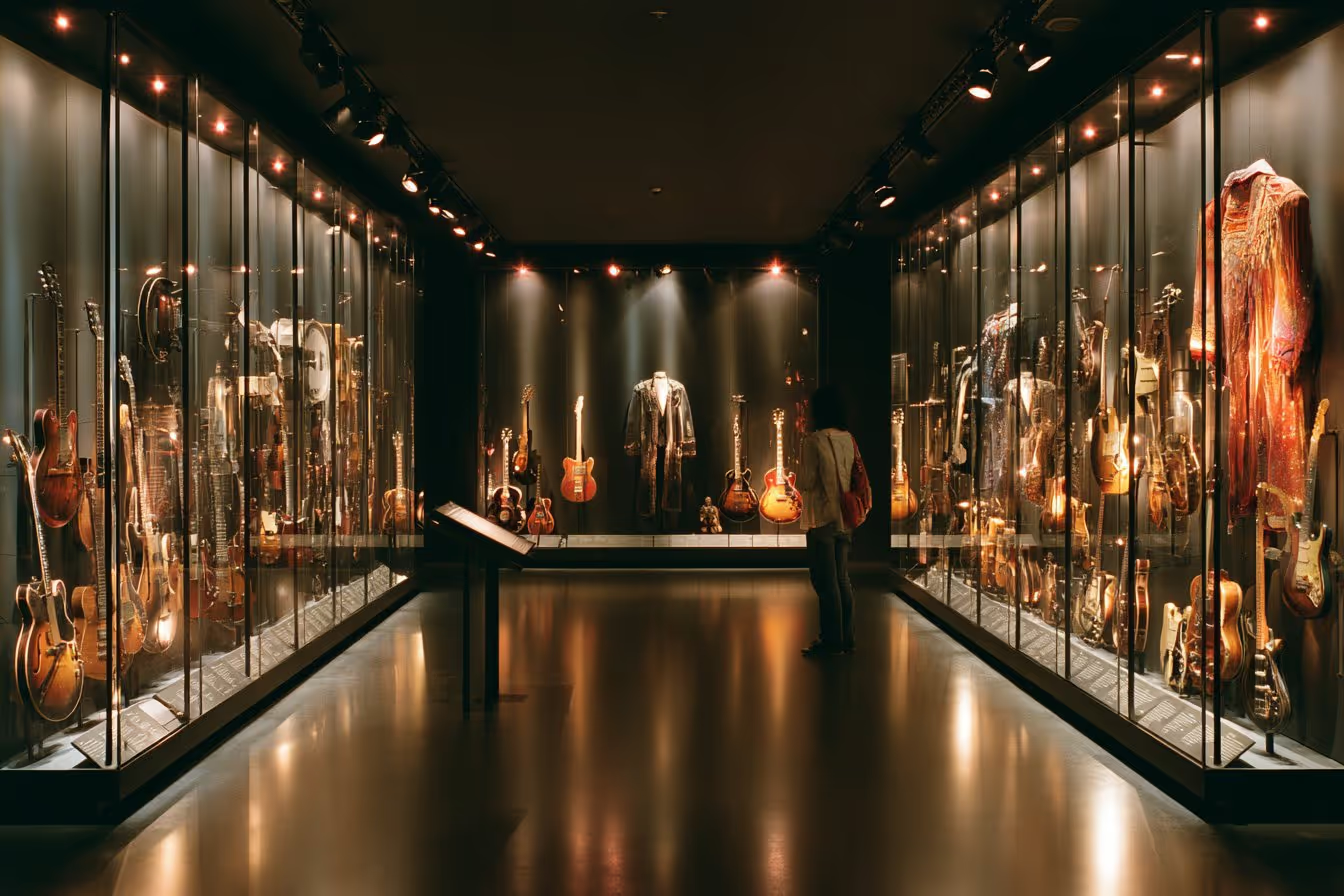
Nashville: Country Music Hall of Fame and Museum
Around $32 rather than the $30 budgeted above, and the one indoor stop that earns its 2.5 hours after two days in the car.
Check availabilityBest Tennessee Drives for Scenery
Tennessee has some genuinely good driving roads. The Great Smoky Mountains and the Tennessee Valley both offer wide-open panoramas worth planning around.
The Great Smoky Mountains National Park holds 800+ miles of trails through mountains, forests, and waterfalls. Newfound Gap Road and the Foothills Parkway are the marquee drives.
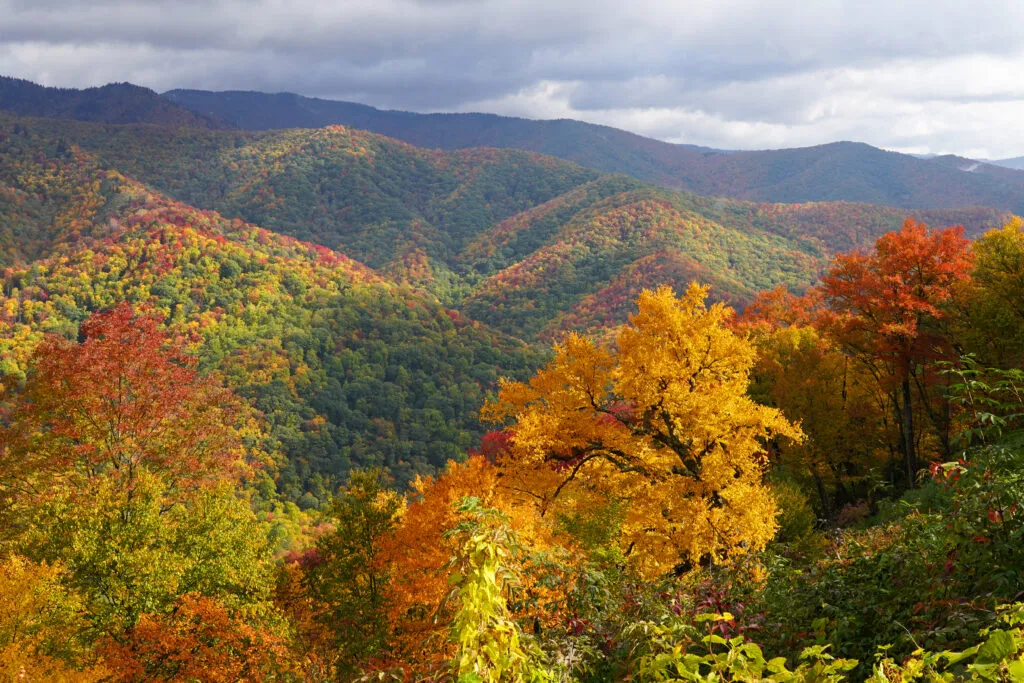
Vibrant Fall colors on the mountains in Great Smoky Mountains National Park
The Cherohala Skyway is a 42-mile scenic byway winding through the Nantahala and Cherokee national forests with views of mountains, valleys, and lakes. Speed limit is 45 mph; allow 2 hours one-way.
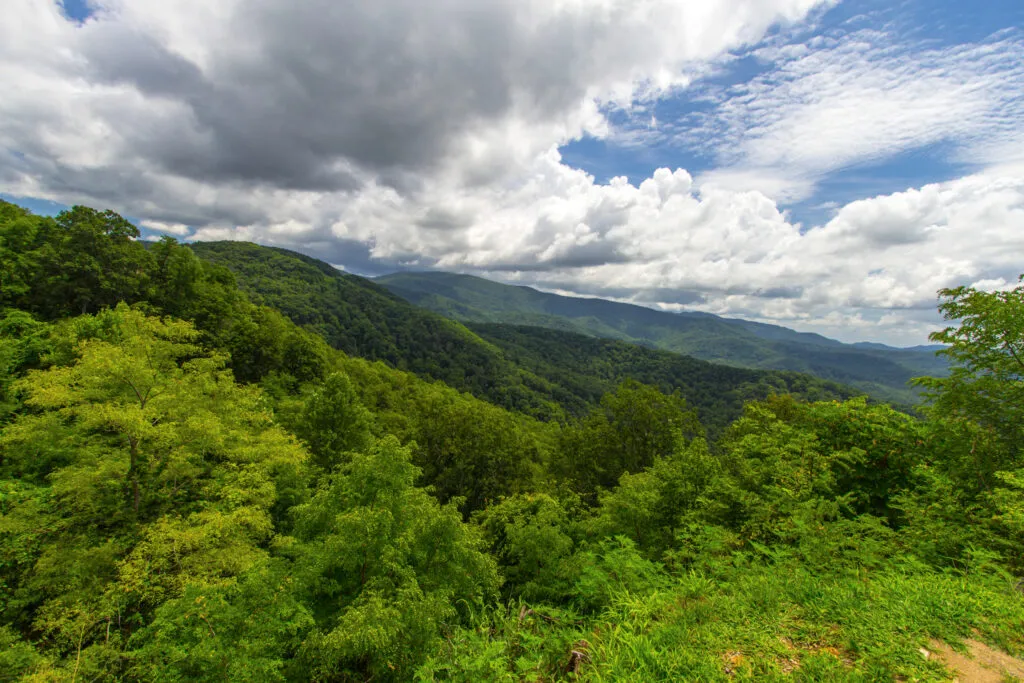
Cherohala Skyway - What a view!
The Natchez Trace Parkway runs 444 miles from Nashville to Natchez, Mississippi. Speed limit 50 mph, no commercial traffic, almost no intersections - it’s one of the most relaxing drives in the country.
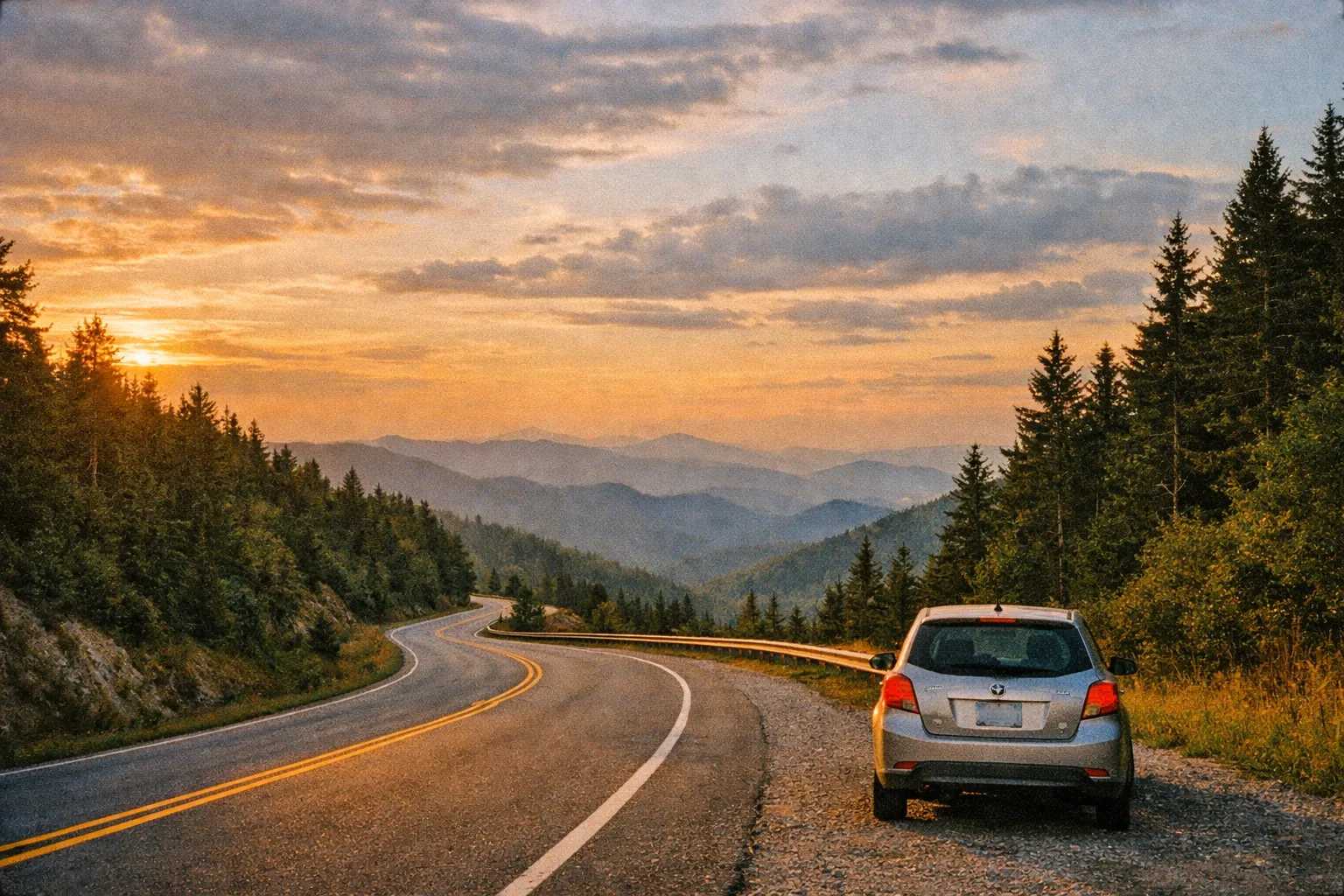
The Blue Ridge Parkway stretches 469 miles through the Appalachians from Virginia to North Carolina, connecting Shenandoah National Park to the Smokies.
The Tail of the Dragon (US-129): 11 miles, 318 curves at the Tennessee-North Carolina border. Famous among motorcyclists and sports car drivers. Drive it on a weekday morning to avoid traffic; weekends are packed.
What Is the #1 Tourist Attraction in Tennessee?
By visitor count, it’s Great Smoky Mountains National Park, which drew approximately 12.2 million recreational visits in 2024 (NPS) — more than any other U.S. national park. The park sprawls across the Tennessee-North Carolina border, with Tennessee gateways at Gatlinburg and Townsend.
If you’re measuring “tourist attraction” by paid attendance rather than total visits, Dollywood in Pigeon Forge is the largest ticketed attraction in the state. Nashville’s Broadway entertainment district, the Country Music Hall of Fame, and Graceland in Memphis round out the most-visited list.
For a road trip already covering 800+ miles, the Smokies are the obvious centerpiece. Plan at least one full day in the park, two if you want to hike anything substantial.
Accommodation Options Along the Route
Tennessee and the Mid-Atlantic states offer lodging from $70 motels to $500 boutique hotels. Here’s the breakdown for the route.
Hotels (mid-range, $110-$180/night midweek):
- Hampton Inn, Holiday Inn Express, Fairfield Inn, Hilton Garden Inn, Tru by Hilton. Reliable, predictable, free breakfast at most. Book through the brand site for points, not third-party aggregators.
Budget motels ($70-$120/night):
- Motel 6, Red Roof Inn, Super 8, Days Inn. Fine for one-night sleep stops along I-81. Read recent reviews - quality varies wildly by location.
Campgrounds:
- State park campgrounds in Pennsylvania, Maryland, Virginia, and Tennessee run $20-$45/night. Reserve through ReserveAmerica or the state’s reservation system.
- National park campgrounds in the Smokies (Cades Cove, Elkmont, Smokemont) run $25-$30/night. Book on recreation.gov 6 months out for summer and October weekends.
RV parks:
- Full-hookup sites run $45-$90/night. KOA, Jellystone, and independent parks cluster near major exits on I-81.
Short-term rentals (Airbnb, VRBO):
- Strong in Gatlinburg, Pigeon Forge, Asheville, and Nashville. Cleaning fees ($75-$200) and service charges make 1- to 2-night stays uneconomical. Best for 3+ nights and groups of 4+.
Booking strategy:
- Book peak periods (summer, October foliage, holidays) 6 to 8 weeks ahead. Otherwise, 2 to 3 weeks ahead is fine for most of the route.
- Use Hotels.com or Booking.com to compare, then book direct with the property for the best price match and easier cancellation.
Food Along the Route
The food gets more interesting the further south you go.
Pennsylvania to Maryland: Pennsylvania Dutch country (Lancaster, near Hershey) means smorgasbord-style restaurants, shoofly pie, and scrapple. Baltimore is crab cakes - go to Faidley’s at Lexington Market or LP Steamers in Locust Point.
Virginia: Charlottesville has a serious food scene (Citizen Burger, Bodo’s Bagels, The Local, Mas Tapas). Roanoke is barbecue and Southern comfort.
North Carolina: Asheville’s restaurant density is the surprise of the trip - Buxton Hall Barbecue, Cúrate (Spanish), Biscuit Head, French Broad Chocolate Lounge.
Tennessee: Memphis-style barbecue (dry rub ribs, pulled pork) shows up in Knoxville and Nashville too. Hattie B’s for hot chicken in Nashville (or Prince’s, the original). Loveless Cafe outside Nashville for biscuits. In Gatlinburg, the Pancake Pantry is the line everyone stands in for a reason.
Driving Safety on Long Hauls
Whenever you’re on the road, take precautions. Plot your route and pre-identify fuel and food stops - on I-81 and in mountain stretches, some service gaps run 30 to 40 miles.
Before setting out, check your tires (pressure and tread), fluid levels, lights, and wiper blades. A cheap tire pressure gauge from any auto parts store has paid for itself a thousand times over.
Carry first-aid supplies, flares or reflective triangles, jumper cables, and a flashlight. A small toolkit, duct tape, and zip ties handle most minor roadside issues.
Fatigue is the real risk on this trip. Limit driving to 8-9 hours per day, take a 15-minute break every 2 to 3 hours, and don’t push through if you’re getting drowsy - pull off and nap. If you’re alone, audiobooks and podcasts help; if you’ve got a passenger, trade off driving every 2 hours.
This stretch is hazardous in winter. I-81 from Pennsylvania through southern Virginia ices over fast. Truck traffic is heavy at all hours. The Blue Ridge Parkway closes sections during ice and snow events - never assume it’s open, check the NPS site the morning of.
Mountain driving notes:
- Use lower gears descending long grades (Newfound Gap Road, sections of I-40 through the Smokies). Riding the brakes overheats them.
- Watch for fog in the Smokies, especially mornings and after rain.
- Wildlife crossings are common on US-441, Cades Cove, and the Blue Ridge Parkway, especially dawn and dusk.
Keep your attention on the road. That sounds obvious until you’re trying to read a text at mile marker 200 on I-81 at 11 p.m.
✓ Pros
- Multiple route options to fit different trip lengths and interests
- Rich historical and natural attractions along the way
- Cost-effective for families and groups compared to flying
- Strong infrastructure for stops and overnight stays
- Scenic drives available for those who want to slow down
✗ Cons
- Long driving times require multi-day planning
- Winter driving can be hazardous due to ice and snow
- Cell service drops in mountain and park areas
- Peak seasons require advance lodging bookings
- Traffic congestion around DC and major cities
Frequently Asked Questions
- Can I drive the entire Blue Ridge Parkway from Pennsylvania to Tennessee?
- The Blue Ridge Parkway officially starts in Virginia at Shenandoah National Park and ends near Cherokee, NC. You can drive long sections but not the entire route from Pennsylvania. Speed limits are low, so plan for slow travel and pick segments that fit your schedule.
- Are there good options for overnight stops if I want to avoid big cities?
- Yes. Smaller towns like Wytheville, Staunton, and Harrisonburg in Virginia offer quieter, more affordable lodging options compared to Roanoke or DC. These are good choices if you prefer less urban overnight stops.
- Is it necessary to buy a parking pass for Great Smoky Mountains National Park?
- Yes. Since March 2023, vehicles parked longer than 15 minutes need a Park It Forward parking tag. The park itself remains free to enter, but plan to buy the parking pass online or at kiosks to avoid fines.
- What safety precautions should I take when driving the mountain sections?
- Use lower gears when descending steep grades to avoid brake overheating, watch for fog especially in mornings or after rain, and be alert for wildlife crossings at dawn and dusk. Winter conditions can make roads icy and dangerous.
- How do I handle navigation when cell service is spotty?
- Download offline maps on Google Maps or use a paper atlas as backup. Planning your route in apps like Wanderlog or Roadtrippers and exporting to Google Maps before you leave helps ensure you have turn-by-turn directions even without cell coverage.
- Are there family-friendly stops along the route?
- Yes. Hersheypark, Dollywood in Pigeon Forge, the National Aquarium in Baltimore, and the Tennessee Aquarium in Chattanooga are great for families. Plan your itinerary to include these if traveling with kids.
- What is the best way to avoid traffic in the DC area?
- Avoid driving into central DC during weekday rush hours (7-10 a.m. and 3-7 p.m.). Park at suburban Metro stations outside the Beltway and take the Metro in. Consider alternate routes like I-295 to bypass heavy congestion.